



ELECTROTHERAPY
"Pro-Therapist, OSIM ®"
 |
|
INTRODUCTION
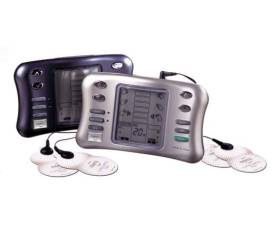 | Electrotherapy has been used for decades to treat a multitude of musculoskeletal and nervous system disorders. For our group, we chose to look into a home used medical device called Pro-Therapist which operates on the principles of electrotherapy. Pro-Therapist laid a claim to provide relief to soreness, muscular pains and neuralgia and is most suitable for users with aches in the neck, back or joints areas. The manufacturer also claimed the device can improve local blood circulation and expediting the recovery from fatigue. Furthermore, the Pro-therapist also claimed to work in body shaping and giving the user body-toning work-out effortlessly. |
In reviewing Pro-Therapist and its functioning principle of electrotherapy, we shall look into different aspect of the technical specification of the device. Parameters such as the frequency (rate), amplitude (intensity), waveform of the electrical stimulation in respect to the therapeutic and body shaping outcome shall be looked into.
BRIEF DESCRIPTION OF DEVICE
Electrodes
The force of muscle contractions induced with surface electrodes is influenced by electrode size and alignment. The size of the stimulating electrode depends on the size and mass of the muscle to be stimulated. Larger surface electrodes result in a more forceful muscle contraction and are often used on large muscles of the leg or arm. Smaller electrodes require less amplitude of current because as the electrode's size decreases, the current density increases. Pro-Therapist has 4 electrode pads made of a durable and flexible gel material that enables a closer contact with the body.
Phase
 | The phase refers to the direction of current flow for a defined period of time. The monophasic waveform has only one phase that deviates in one direction from the baseline and returns to the baseline (Figure 1). In contrast, the biphasic waveform deviates in one direction from the baseline (one phase) and then deviates in the opposite direction from the baseline (the second phase) before the pulse is complete (Figure 2). |
A biphasic waveform may be symmetrical or asymmetrical. The symmetrical biphasic waveform has the same amplitude and duration on both sides of the baseline. The symmetrical biphasic square waveform, preferred for stimulation of large muscle groups, has been reported to be more comfortable than the monophasic waveform at amplitudes high enough to produce a muscle contraction. |  |
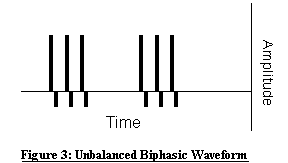 | In the asymmetrical biphasic waveform, the amplitude and/or the duration of one phase is unequal with respect to the phase on the other side of the baseline. The asymmetrical biphasic square waveform is clinically effective in the recruitment of smaller muscles. The asymmetrical biphasic waveforms maybe balanced or unbalanced (Figure 3). |
Frequency
The frequency is the number of pulses per second (pps) for pulsed current. The user will experience different sensation with different frequencies. The table below shows the sensation that may be felt by the user.
Frequency (pps) | Sensation |
1 - 4 | "Pins and Needles" |
5 | Muscle Twitch / "Tapping" |
10 - 20 | Vibration-like quality of muscle contraction |
25 - 30 | Fused titany |
50 - 70 | No significant increase in muscle tension |
The frequency used by Pro-Therapist is 250 Hz. While the intensity of the power used can be controlled and adjusted by the users according to their liking and comfort. The intensity of the device can go from low intensity, i.e. Level 1 to high intensity, Level 10. The sensation resulted would then differ according to the levels.
The Pro-Therapist is also programmed to start-up gradually so that the user does not experience sudden jolts of current. While using the device, user should gradually increase the level of intensity manually. This is because our nervous system will accommodate to the electrical stimulation after about 5 minutes. Hence, to maintain the desired level of muscle contraction, the intensity level should be increased gradually.
Electrical Stimulation To Strengthen Muscles
Electrical stimulation to increase strength in normal innervated muscle is useful in postoperative cases involving immobilization or contraindication to dynamic exercise. Electrical stimulation has been shown to be an effective adjunct to voluntary exercise when pain, swelling, fatigue, or the lack of motor control prevents a strong muscle contraction.
Fatigue of the electrically stimulated muscle occurs when the on time is prolonged (18 seconds or more) or if the on:off ratio is 1:1. This ratio is useful for building muscle endurance, but for strengthening without inducing fatigue of the muscle, the off time should be four to six times that of the on time.
The observation and results of various experiments that had been carried out by different people:
Case 1:
A comparison of the strength gain following either exercise, electrical stimulation with exercise, and electrical stimulation alone found no significant difference between the three methods when used on the normal quadriceps femoris.
Case 2:
In healthy, non-surgical subjects, the knee extensor strength increased in groups that exercise at the equivalent amount as those who exercise in conjunction with electrical stimulation.
Case 3:
No significant difference noted between the quadriceps strength gain with exercise when compared with the gain from electrical stimulation alone.
Therefore, it can be conclude that the therapeutic value of electrically stimulated muscle contractions should be used for patients who are no-compliant, poorly motivated or who have poor tolerance for near maximal isometric muscle contractions.
Safety Features
Pro-Therapist is powered by a 9V battery and not on any A.C. current. Therefore, there is a limited amount of current that comes into contact with the user even in the case of electric shock due to current leakage. Furthermore, the device is also programmed so as that at anytime, any one of the pads loses contact with the user's skin, electrical pulses will be automatically shut-off.
CONCLUSION
Generally, the torque and subsequently the effect produced during an electrically stimulated contraction is not consistently related to the amplitude of the current, but it is influenced by the user's tolerance to the electrical stimulation secondary to postoperative status, pain, or motor control capabilities; muscle fatigue at the end of a training session; and the individual's strength limit.
In the case of Pro-Therapist, it has 2 modes of electrical pulses, i.e. the Therapy and Body Shaping mode. The therapy mode specializes in providing relief to soreness, muscular pains and neuralgia. It is also suitable for users with aches in the neck, back or joints areas. By sending out a preprogrammed series of different waveforms in various combinations, the user gets a feeling of being massaged. The gentle currents also stimulate the nerves and muscles, improving the local circulation of blood and expediting the recovery fatigue. The body shaping mode tone up the muscles while the user sit back and relax. Mimicking the way the body controls the muscles; Pro-Therapist works these muscles with its pulsating currents, toning the body muscles hence giving the effect of body shaping.
In conclusion, we would say the Pro-Therapist offers the user a "lazy-man" way of toning their bodies. The effect of the Pro-Therapist can also be achieved through cost effective and healthy channel, which is through the traditional method of exercising. For example, performing sit-ups for toning of the abdominal muscles, jogging for the thigh muscles and pushing up for the arm muscles. Besides shaping the body, we also gain the extra benefit of getting total body and cardiovascular workout, which gives us a healthy heart. Therefore, it is up to the individual consumer to decide on the percentage of benefit of the device.
REFERENCES
http://www.spine-health.com/topics/conserv/electro/el01.html
Kitchen, Sheila. Electrotherapy: evidence-based practice. 11th ed. New York: Churchill Livingstone. 2002.
Nalty, Theresa. Electrotherapy clinical procedures manual. New York:McGraw Hill Med. Pub. Div. 2001.
Clinical electrotherapy. 3rd ed. Stamford, Conn.: Appleton & Lange.1999.
Kahn, Joseph. Principles and practice of electrotherapy. 3rd ed. New York: Churchill Livingstone. 1994.
Low, John (John L.).Electrotherapy explained: principles and practice.1994.