



Continuous Positive Airway Pressure (CPAP)
"minni MAX nCPAP® with.out"
 |
|
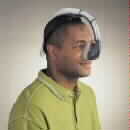 | CPAP stands for Continuous Positive Airway Pressure. A Nasal CPAP device is prescribed by a medical doctor for the treatment of moderate to severe obstructive sleep apnea (OSA). CPAP has been in use for over 50 years, mainly for weaning patients from mechanical ventilation. In 1981, Sullivan and associates described the use of a nasal mask so that CPAP could be applied more conveniently and comfortably. They first used nasal CPAP to treat |
obstructive sleep apnea, whereby the air pressure acts as a pneumatic splint to prevent pharyngeal collapse during sleep. Nasal CPAP is now widely used at home for this indication. |
This treatment provides air pressure, which acts like a pneumatic splint to keep the airway open. The air is delivered through a mask applied over the person's nose. The air pressure prevents the airway from collapsing in sleep, thereby abolishing the apneic episodes and associated frequent awakenings from sleep. The level of air pressure required to keep a person's airway open is determined through an overnight sleep study with nasal CPAP called a CPAP titration. After determining an optimal pressure, the patient's CPAP unit is set at that pressure for home use. Continuous home use of CPAP will lead to improvements in sleep quality, blood oxygen levels, and daytime symptoms such as sleepiness and/or fatigue.
The amount of pressure necessary to keep the throat open is measured in centimeters of water pressure, or CWP. Typical CPAP pressures run in the range of 8-16 CWP, and vary from person to person. The specific pressure for any given patient can be determined at a sleep study - either during the initial night of study (a so-called "split-night study") or at a subsequent study.
CPAP usually brings immediate relief. Snoring stops. A smooth breathing pattern is restored. Blood oxygen levels stabilize. During the first week of CPAP therapy, the sleep pattern may still be grossly abnormal, but with peaceful stretches of sleep gradually growing, as if the body is trying to catch up. Sleep eventually settles down to a more normal pattern, often for the first time in years.
DESCRIPTION OF minni MAX nCPAP®with.out
 | minni Max nCPAP® is the world's only respiratory therapy device with.out an integrated humidifier. It is the result of consistent further developments in close co-operation with physicians, patients and health insurers of the Max II nCPAP®. minni Max is smaller, lighter and even more versatile than its older brother, Max II. Quality standards set by MAP including air humidification, pressure stability, minimal pressure variation and low noise levels remain signs of quality and have even been improved. |
Patients have the freedom to decide whether to use minni Max - for example on business trips - with or without the integrated humidifier.
Physicians have the freedom - depending on the indication - to prescribe minni Max for their patients without the integrated humidifier. Even if there is an indication for therapy involving an humidifier from the outset, minni Max is still the ideal solution: minni Max is also available with an integrated humidifier. Should an humidifier need to be prescribed at a later date, it can easily be integrated by the patient into the minni Max at home. Given the unique equipment concept of minni Max, integration can be carried out at the sleep laboratory without having to reset the pressure. In other words, without incurring extra costs for the health system, without unnecessarily overtaxing users?sleep laboratory capacities and without any need for an extra patient check-up.
EVIDENCE (OR LACK) OF SCIENCTIFIC PRINCIPLES
To prove the effectiveness of nasal CPAP, a clinical trial has been done by a group of researchers in France in 1998 by using an auto-nasal CPAP (REM + auto; NPBFD, Nancy, France). The auto-nCPAP device was tested on 10 previously untreated patients with obstructive sleep apnea during a single night, with ambulatory polysomnography performed in a conventional hospital room; the efficacy of the fixed pressure determined by the auto-nCPAP device was assessed by an ambulatory full polysomnography 2 weeks after the initiation of treatment at home. The fixed nCPAP pressure was effective (apnea/hypopnea and arousal indices <10 events�h-1) in all but two of the 10 patients studied. When the fixed nCPAP pressure was increased by 2 cmH2O in these two patients, sleep and respiration were normalized. Since only 12 ambulatory polysomnographic recordings were used to determine the effective nasal continuous positive airway pressure level, and as the device restored normal breathing and sleep in all 10 patients, it was concluded that this method of nasal continuous positive airway pressure titration may improve cost-effectiveness and reduce waiting lists in sleep laboratories.
Another evidence, a group at the Western Pennsylvania Hospital conducted a study in which it randomized OSA patients using CPAP to receive either heated humidification, cool passover or no humidity. 19 patients in each arm of the study were covertly monitored for CPAP use. By the conclusion of the study, patients with heated humidification were more compliant with their CPAP therapy and experienced less drying of the airway passages.
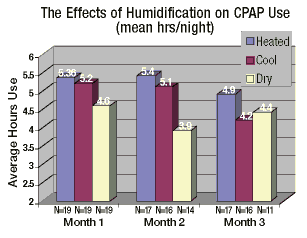 | Patients with heated humidification complied with their CPAP therapy on average 42 minutes longer per night and experienced less drying of the nasal passages than those with cold passover humidification. As CPAP is such an intrusive therapy, patient compliance is a very important issue. This graph shows that heated humidification improves compliance more than cool passover. By the end of month 3, eight of the original nineteen patients (42%) without humidity discontinued therapy vs two patients (10%) in the heated humidified arm and three |
patients (15%) in the cool passover arm. Of the eight patients who dropped out of the group with no humidity, 5 complained of excessive drying of the nasal passages, mouth and throat, 1 developed nose bleeds, 1 could not breathe due to congestion and 1 gave no specific reason. Of the subjects who dropped out of the cool passover group, 2 complained of unacceptable nasal congestion and rhinorrhea and 1 experienced excessive drying of the nose and throat. In the heated humidification group, 1 discontinued therapy due to hospitalization for an acute myocardial infarction and 1 disliked all masks that were offered after the initiation of therapy. |
It should, however, be noted that nasal CPAP prevents this collapse of upper airway during use, but it does not "cure" snoring and sleep apnea. It can stop the snoring while using it, but there is still no scientific evidence saying that nasal CPAP can cure snoring and sleep apnea.
POTENTIAL HAZARDS TO THE USER
Hazards and complications associated with equipment include the following:
Obstruction of nasal prongs from mucus plugging or kinking of nasopharyngeal tube may interfere with delivery of CPAP and result in a decrease in FIO2 through entrainment of room air via opposite naris or mouth.
Inactivation of airway pressure alarms
-
Increased resistance created by turbulent flow through the small orifices of nasal prongs and nasopharyngeal tubes can maintain pressure in the CPAP system even when decannulation has occurred. This can result in failure of low airway pressure/disconnect alarms to respond.
Complete obstruction of nasal prongs and nasopharyngeal tubes results in continued pressurization of the CPAP system without activation of low or high airway pressure alarms.
Activation of a manual breath (commonly available on infant ventilators) may cause gastric insufflation and patient discomfort particularly if the peak pressure is set inappropriately high.
-
Hazards and complications associated with the patient's clinical condition include:
lung overdistention leading to
-
air leak syndromes,
ventilation-perfusion mismatch,
CO2 retention and increased work of breathing,
impedance of pulmonary blood flow with a subsequent increase in pulmonary vascular resistance and decrease in cardiac output.
-
gastric insufflation and abdominal distention potentially leading to aspiration.
nasal irritation with septal distortion.
skin irritation and pressure necrosis
nasal mucosal damage due to inadequate humidification.
Dry, burning sensation in the sinuses either during the night or upon awakening from sleep.
Nosebleeds after using the Nasal CPAP or specks of blood in the mucosa.
A feeling of tightness or constriction in the nasal passages after a few hours use of the CPAP.
RECOMMENDATION OF USE
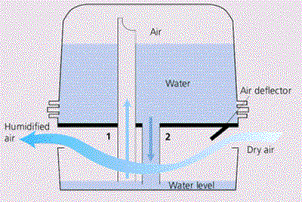 | This nasal CPAP device (minni MAX nCPAP® with.out) is a device comes with a double chamber humidifier. Different from other nCPAP device, it is a better device because it has a humidifier which can prevent some hazards such as irritations, nose bleeds etc. It is up to the users whether they want to use the nCPAP with or without the integrated humidifier. Nasal continuous positive airway pressure (CPAP) is currently the most effective |
treatment for obstructive sleep apnea-hypopnea (OSAH). Patients who use CPAP report less daytime sleepiness and better quality of life. The major side effects--dry mouth, rhinitis, and nasal/sinus congestion--can usually be managed with humidification and the use of an intranasal corticosteroid or antihistamine at bedtime. The oral or dental appliances available for managing OSAH include tongue-retaining devices and mandibular-advancement devices. The mask fit will also be critical to a user. It is recommended that he or she should talk to the doctor and home care company representative about the choices, and keep in mind that the mask may be manufactured by one company and the CPAP by another. If the mask is still uncomfortable, then it should change to a nasal pillow which is now being proved to be better than a nasal mask. However, nasal CPAP is not a good option if:
REFERENCES
http://www.talkaboutsleep.com/disorders/apnea/Humid/Humid_5.htm http://www.map-med.com/germany/4products/4110/index.htm http://www.personal.u-net.com/~ersj/ERJ/1998%20ERJ%20Journal/ABS%20No.%204/berkani759-763.html.htm http://www.update-software.com/abstracts/ab001106.htm http://www.sleepapnea.org-cpap.htm http://www.sleep-breathing.bc.ca/treatme6.htm http://www.dreamdoctor.com/better/apnea/14.shtml http://www.brainandsleep.com/tips.html http://www.cma.ca/cmaj/vol-162/issue-4/0535.htm http://www.muhealth.org/~shrp/rtwww/rcweb/aarc/acpapcpg.html
|