Characteristics


Characteristics:

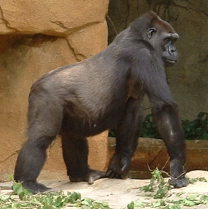
Gorillas move around by knuckle-walking. Adult males range in height from 165-175 cm (5 ft 5 in – 5 ft 9 in), and in weight from 140–200 kg (310–440 lb). Adult females are often half the size of a silverback, averaging about 140 cm (4 ft 7 in) tall and 100 kg (220 lb). Occasionally, a silverback of over 183 cm (6 feet) and 225 kg (500 lb) has been recorded in the wild. However, obese gorillas in captivity have reached a weight of 270 kg (600 lb). Gorillas have a facial structure which is described as mandibular prognathism, that is, their mandible protrudes farther out than the maxilla.

Behavior:

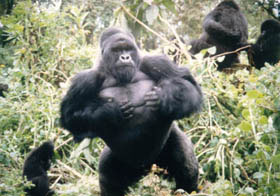
A silverback is an adult male gorilla, typically more than 12 years of age and named for the distinctive patch of silver hair on his back. A silverback gorilla has large canines that come with maturity. Black backs are sexually mature males of up to 11 years of age.

Silverbacks are the strong, dominant troop leaders. Each typically leads a troop of 5 to 30 gorillas and is the center of the troop's attention, making all the decisions, mediating conflicts, determining the movements of the group, leading the others to feeding sites and taking responsibility for the safety and well-being of the troop.

Males will slowly begin to leave their original troop when they are about 11 years old, traveling alone or with a group of other males for 2–5 years before being able to attract females to form a new group and start breeding. While infant gorillas normally stay with their mother for 3–4 years, silverbacks will care for weaned young orphans, though never to the extent of carrying the little gorillas.

If challenged by a younger or even by an outsider male, a silverback will scream, beat his chest, break branches, bare his teeth, then charge forward. Sometimes a younger male in the group can take over leadership from an old male. If the leader is killed by disease, accident, fighting or poachers, the group will split up, as the animals disperse to look for a new protective male. Very occasionally, a group might be taken over in its entirety by another male. There is a strong risk that the new male may kill the infants of the dead silverback
Social Structure:

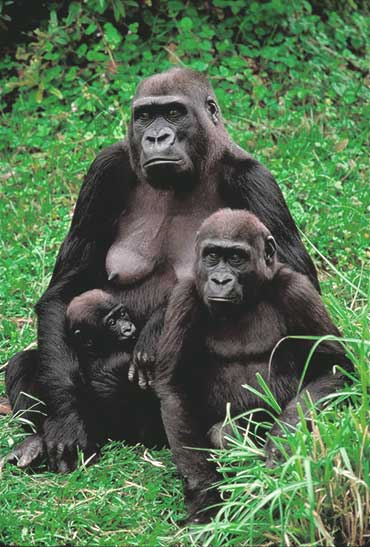
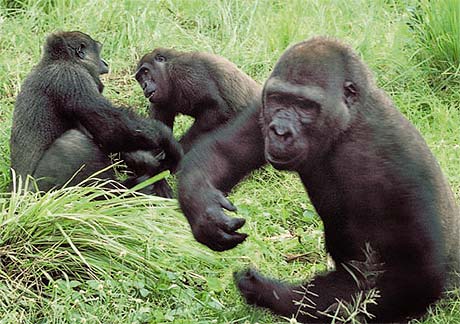
Gorillas live in groups of 3-30. A typical group consists of one silverback, one immature silverback, one immature male, three to four adult females, and three to six youngsters under eight years old. A female will usually transfer to another group, particularly if the silverback is her father and there are no other suitable males to mate with. Adult males usually leave after sexual maturity and start their own group or join other "bachelors."

Nutrition:

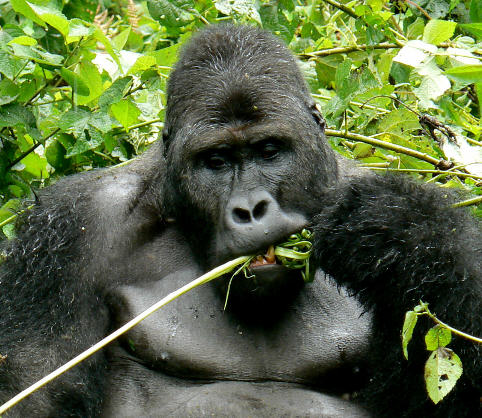
Gorillas eat some 200 types of leaves, tubers, flowers, fruit, fungus and some insects. Favorite foods include bamboo, thistles and wild celery. Gorillas do not drink water. They obtain all the moisture they need from the vast amounts of foliage they consume. Males consume approximately 50 lbs. a day.

Reproduction:

A. Sexual Maturity.

1. Female gorillas reach sexual maturity at about eight years and generally conceive for the first time at 10 to 11 years.

2. Males mature at about 12 years but seldom breed successfully before 15 years.

B. Reproductive Cycles.

1. The gorilla menstrual cycle is about 30 to 32 days long. Ovulation occurs mid-cycle during a 2 to 3 day period.

2. Labial swelling during estrus is minimal, especially in comparison with a chimpanzee.

C. Breeding.

1. Gorillas breed throughout the year.

2. Immature males check a female for olfactory cues to estrus. A receptive female solicits the dominant silverback by special glances and touches.

3. Only the dominant silverback breeds with adult females in estrus. He allows subordinate males to court immature or pregnant females.

D. Captive Breeding.

1. As recently as 20 years ago, gorillas did not reproduce well within zoological parks. Now that zoos understand more about gorilla behavior and can provide facilities that meet their social requirements, western lowland gorillas in zoological parks are successfully breeding.


Resources:


Top

Hosted by www.Geocities.ws

1