(Gay Stereotypes and Controversy)
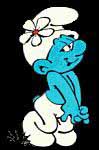
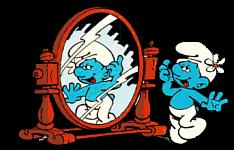
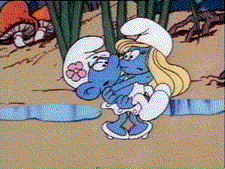
***I am not suggesting that Vanity was meant to be gay, but merely would like to point out the effeminate stereotypes illustrated by the character.***
Gay Stereotypes:
- flower in hair
- constantly concerned with appearance
- no real job in village, flits around from place to place
- haughty, lispy voice
A manifesto created by a man named J. Marc Schmidt, suggests that even more of the Smurfs than just Vanity are gay archetypes, and that the Smurf community makes comments on Socialism and Feminism. (For his entire paper, follow the link below.)
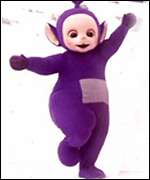
- Purple is the gay-pride color
- Triangle on his head is representative of the pink triangle symbol
- Though he has a male voice, he carries a handbag
Falwell's allegations produced advocates for the Teletubbies and also created protests against it that have since died down, though Gay Rights groups have taken to mocking Falwell's claims by making Tink-Winky a symbol for the cause.