
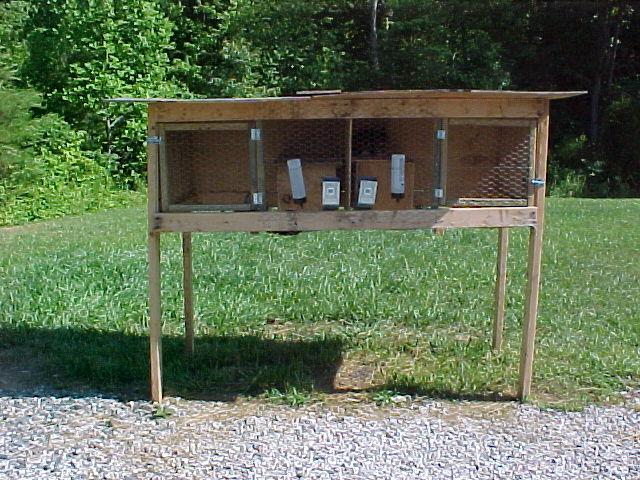

If kept outdoors you can keep your rabbits in hanging wire cages or in outdoor hutches. If using either make sure that there are not any loose wires that could allow escape or injury. Make sure that the area they are in has access to food and water. The cage size should be at least large enough for your rabbit to lie down stretched out from tip of nose to tip of toe in at least one direction. It should be wide enough for the rabbit to turn around. The rabbit's cage should be portected from the elements. If the cage does not have some kind of shelter over it than a pianter's tarp comes in handy in the event of bad weather. The tarp does however have a tendency to strech and tear and the waste can accumulate so the tarp must be replaced often. Also, be sure to have an area where if disired the rabbit can get out of the sun fully.
If using a hutch, make sure that there are no leaks.
If you are keeping your rabbits indoors you can keep your rabbits in cages with litter pans or you might choose to keep your rabbits in a "rabbit proofed" room. If using a cage with a litter pan be sure you do NOT use cedar products which can cause respiratory problems and have oils and other materials though pleasant to us are harmful to rabbits. Do not use kitty litter which if ingested can block their intestines. The best litters are those based with pine or pure pine litter. Make sure there are not places the rabbit can harm itself and has plenty of room to move around.
If you have an area or room you keep your rabbit in make sure that there is nothing in the area that they could get hurt on. Keep out of areas with cords, or woods, or plastics that they could chew on on. Keep plenty of toys like hard plastic baby toys, cat toys, or bird toys. Or carboard paper towel rolls or cardboard boxes are fine as well. The boxes must be removed for sanitary reasons every few days. Try to avoid towels or blankets if possible unless your rabbit does NOT show any interest in chewing them. The towels or blankets if swallowed may block their intestinal tract. If you keep your rabbit like this you may want it to be litterbox trained.
When litterbox training you need to find a corner that your rabbit prefers to use and place the litterbox in that corner containing pine litter or something simalar with examples of there feces in it. Timithy hay or orchard grass may be place in it as well to promote using the litterbox. The litterbox must be changed every few days or when it begins to get too dirty.


