 |
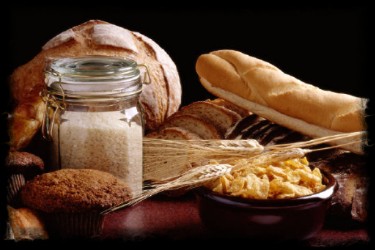 |
| Bosk: Bosk is an ox like creature - huge shambling animal Thick humped neck, long shaggy hair Wide head and tiny red eyes Two long horns that can exceed the length of two spears (14 feet) Bosk have a temper. Bosk meat may be roasted, broiled, boiled, stewed, fried, or dried. Bosk tips 2 tefas bosk roast, cut into 1 inch cubes 8 cloves garlic, lightly crushed and peeled 3 spoons of olive oil salt and pepper to taste 2 splashes of ka-la-na Combine meat and garlic, heat oil in large skillet till very hot, add garlic and meath mix, fry over high flames stirring constantly, until meat is done, sprinkle with salt and pepper stir in ka-la-na, transfer to to serving dish with slotted spoon, leave juices in skillet. Scraping the bottom of the pan for leaving stir in small spoons of water�pours sause over beef and garlic. Serve hot with lots of sa-tarna bread for dipping! The bosk, without which the Wagon Peoples could not live, is an ox like creature. It is a huge, shambling animal, with a thick, humped neck and long, shaggy hair. It has a wide head and tiny red eyes, a temper to match that of a sleen, and two long, wicked horns that reach out from its head and suddenly curve forward to terminate in fearful points. Some of these horns, on the larger animals, measured from tip to tip, exceed the length of two spears. Not only does the flesh of the bosk and the milk of its cows furnish the Wagon Peoples with food and drink, but its hides cover the domelike wagons in which they dwell; its tanned and dew skins cover their bodies; the leather of its hump is used for their shields; its sinews forms their thread; its bones and horns are split and tooled into implements of a hundred sorts, from awls, punches and spoons to drinking flagons and weapon tips; its hoofs are used for glues; its oils are used to grease their bodies against the cold. Even the dung of the bosk finds its uses on the treeless prairies, being dried and used for fuel. The bosk is said to be the Mother of the Wagon Peoples, and they reverence it as such. The man who kills one foolishly is strangled in thongs or suffocated in the hide of the animal he slew; if, for any reason, the man should kill a bosk cow with unborn young he is staked out, alive, in the path of the herd, and the march of the Wagon Peoples takes its way over him. Nomads of Gor, pages 4-5 Tabuk: Golden Gorean one-horned antelope. The sweet tasting meats of the tabuk are often roasted over an open flame, but they may be served in a variety of ways, such as boiled cubes or chunks, steaks, or any way in which you would serve the venison of earth. One way in particular would be to marinate the tabuk meat in ka-la-na wine over night, then cook in a covered clay dish with onions, garlic and peppers, serve with a side dish of roasted suls and wedges of sa-tarna bread. In taverns, cubes of meat may be cooked and served with a variety of sauces for dipping and in the same case but in a different corner was a small herd, no more than five adult animals, a proud male and four does, of tabuk, the single-horned, golden Gorean antelope. Priest Kings of Gor, page 191 Tarsk: Similar to the boar, of earth, its meat is eaten in various ways, normally roasted or baked, sometimes whole. Tarsk is served roasted and basted over open fires on spits or roasted, stuffed with peppers and suls. The entire roasted tarsk maybe served on a platter with a larma in its mouth, garnished with suls and Tur-Pah. Tarsk strips may be fried like bacon; sausage too is mentioned in the books. Although not found in the books, meals similar to pork chops, tenderloin, or shredded pork might also be prepared. 2 teaspoons olive oil 2 (1-hort) thick tarsk chops 4 splashes vulo stock 5 splashes ka-la-na 2 tefs mushrooms 2 spoons bosk butter Splash of bosk cream 2 spoons of herbs (your choice) Heat 2 spoons oil in a heavy skillet . Sprinkle tarsk with salt and pepper. Add tarsk to the skillet and saute until brown, about 3 ehn per side. Remove from heat and transfer the tarsk to a square baking dish. Add the vulo stock and ka-la-na to the skillet. Place over fires. Boil until reduced by half, scraping up browned bits, about 6 ehn. Pour over the tarsk. Clean and slice the mushrooms. Heat 2 spoons butter in the tarsk skillet. Add mushrooms to the skillet and saute until softened and brown. Bake tarsk until tender, about 25 ehn. Transfer tarsk chops to serving plates. Place sauce over heat. Add mushrooms and a splash of cream into the sauce and bring to a boil. Stir the herbs into the sauce just before serving, reserving some to sprinkle over the tarsk chops. Spoon sauce over the tarsk chops. Sprinkle with more fines herbs. I thought of the yellow Gorean bread, baked in the shape of round, flat loaves, fresh and hot; my mouth watered for a tabuk steak or, perhaps, if I were lucky, a slice of roast tarsk, the formidable six-tusked wild boar of Gor's temperate forests. Outlaw of Gor, page 76 Tumit: A large, flightless, carnivorous bird hunted with bolas by the Wagon Peoples. The sport lies in who gets to eat that night, the hunter or the bird. perhaps most like an ostrich? you can bury it into the ground and slow cook it for a day the meat grows very tender This suggestion was given to a girl by her sister essence {ASC} when she could not figure out a recipe for it I gathered that the best season for hunting tumits, the large, flightless carnivorous birds of the southern plains, was at hand, for Kamchak, Harold, and others seemed to be looking forward to it with great eagerness. Nomads of Gor, page 2 Verr: A mountain goat raised for wool, meat and milk. One may wish to serve the verr as suggested below in the recipe or in a variety of ways such as roasted and cut into tidbits, or spiced and served in cubes, cooked slowly in a pit wrapped in green ta grape or ka-la-na leaves, used in a stew, or served in a pastry with vegetables GRILLED VERR SKEWERS 1 stone of verr, cubed Salt and pepper 5 splashes of olive oil Pinch of crushed red pepper 2 spoons of chopped garlic 4 bay leaves, crumbled 12 tem wood sticks, about a foot or 12 � horts long 1 loaf of black bread 1 tefa of figs 1 tefa of larma, cubed 1 tefa of verr cheese Season the verr with salt and pepper. In a mixing bowl, whisk the olive oil, red pepper, garlic and bay leaves together. Season with salt and pepper. Toss the verrwith the marinade, cover and put in the chill pit overnight. Spear a cube of verr meat followed by a cube of larma on the sticks till you have five of each. Place the reserved marinade in a saucepan and bring up to a boil. Boil the marinade for about 2 ehn and remove from the heat. Place the sticks on the grill and grill for 2 to 3 ehn on all sides. Baste the skewers with the marinade every few ehn. Remove the skewers from the grill and place on a large platter. Slice the bread into 1-hort slices and place on the platter. Arrange the figs and cheese around the skewers and black bread The verr was a mountain goat indigenous to the Voltai. It was a wild, agile, ill-tempered beast, long-haired and spiral-horn. Priest-Kings of Gor, page 63 Vulo: A domesticated pigeon, raised both for its meat and for the eggs it lays. The meat may be roasted, fried, or used in a stew and the eggs used for cooking or baking. 4 small whole vulo breasts olive oil, for drizzling, plus 2 spoons 4 sprigs fresh thyme, stripped and finely chopped 2 spoons fresh chopped flat-leaf parsley Coarse salt and black pepper 2 spoons butter 2 spoons sa-tarna flour 2 blackwine cups of vulo stock 2 tefas of katch Arrange the vulo in a shallow baking dish and drizzle meat with extra-virgin olive oil to just coat the vulo, about 1 1/2 spoons, total. sprinkle herbs over the vulo. Season the vulo with salt and pepper. Using your hands, rub the vulo and coat evenly with the herbs and seasonings. Using tongs, transfer vulo in a single layer to hot skillet and cook vulo cutlets 3 or 4 ehn on each side. Return pan to heat and add butter. When the butter melts, add flour to the butter and cook, stirring with whisk, a minute or 2 to make a light roux. Whisk in vulo broth. When broth thickens to just coat the back of a spoon, remove pan from heat Toss salad greens with coarse salt. Drizzle 2 spoons olive oil around the bowl and re-toss greens. To serve, cover the bottom of a dinner plate with warm sauce. Top with a small pile of salad greens and 2 vulo cutlets. She had been carrying a wicker basket containing vulos, domesticated pigeons raised for eggs and meat. Nomads of Gor, page 1 Fish/Seafood Eel: Various types of eel are raised on Gor to be consumed. Many types are considered to be a delicacy. Some of these pools contain voracious eels, of various sorts, river eels, black eels, the spotted eel, and such, which are Gorean delicacies. Magicians of Gor, page 428 Oysters: Presumably much the same as oysters from earth, a delicacy. oysters might be prepared steamed in a broth of water, ka-la-na or ta-wine and spices with garlic, onion and bosk butter to enhance the flavor. They could also be grilled over a grate until they pop open or shucked and made into a stew with bosk cream, salt and bosk butter. Serve with sa-tarna bread or fried cakes of rence paste on the side. Fresh oysters could be simply served raw, opening and removing the top shell (be certain to loosen the meat from the lower shell) and nestling them among a bed of rock salt upon a large tray. Slender eating prongs should be provided and perhaps with tospits sliced into quarters and a sauce made from peppers in which to dip them, placed in a small bowl in the center of the oysters. As always, the preparation and serving would be in whatever manner the Free instructs. Other girls had prepared the repast, which, for the war camp, was sumptuous indeed, containing even oysters from the delta of the Vosk, a portion of the plunder of a tarn caravan of Ar, such delicacies having been intended for the very table of Marlenus, the Ubar of that great city itself. Captive of Gor, page 301 Parsit Fish: A light, flaky, delicate fish that is sometimes mixed, raw, into bondmaid gruel. Most often the head and tail is removed, then the fish is smoked and dried and stored in barrels. It is also served raw in bond-maids� gruel as a source of protein. The Parsit current is the main eastward current above the polar basin. It is called the parsit current for it is followed by several varieties of migrating parsit, a small, narrow, usually striped fish. Beasts of Gor, page 38 Sorp: A type of shellfish The sorp is a giant shellfish found in the Vosk River, similar to an oyster. It produces pearls and its blood is used as a dye for dyeing cloth blue. The shell of the sorp is large enough to be used as a throne by the rence people, and is also used to make jewelry and decoration. "they are probably false stones," I said, "amber droplets, the pearls of the Vosk sorp, the polished shell of the Tamber clam, glass colored and cut in Ar of trade with ignorant southern peoples." Nomads of Gor, page 20 Wingfish: A small blue four-spined fish, about the size of a tarn disk when curled in one's hand, it has three or four poisonous spines on its dorsal fin. It is regarded as a delicacy, its liver the delicacy of delicacies. The blue, four-spined wingfish is found only in the waters of Cos. Larger varieties are found farther out to sea. The small blue fish is regarded as a great delicacy, and its liver as the delicacy of delicacies. Nomads of Gor, page 85 Carrots: No description given, assuming is the same as the earth vegetable. Would not be eaten by the Wagon People At the oasis will be grown a hybrid; brownish Sa-Tarna, adapted to the heat of the desert; most Sa-Tarna is yellow; and beans, berries, onions, tuber suls, various sorts of melons, a foliated leaf vegetable, called Katch, and various root vegetables, such as turnips, carrots, radishes, of the sphere and cylinder varieties, and korts, a large, brownish-skinned, thick-skinned, sphere-shaped vegetable, usually some six inches in width, the interior of which is yellowish, fibrous and heavily seeded. Tribesmen of Gor, page 37 Garlic: Presumably the same as garlic on earth. "I have peas and turnips, garlic and onions in my hut," said the man, his bundle like a giant's hump on his back. Outlaw of Gor, page 29 Katch: A foliated leaf vegetable At the oasis will be grown a hybrid; brownish Sa-Tarna, adapted to the heat of the desert; most Sa-Tarna is yellow; and beans, berries, onions, tuber suls, various sorts of melons, a foliated leaf vegetable, called Katch, and various root vegetables, such as turnips, carrots, radishes, of the sphere and cylinder varieties, and korts, a large, brownish-skinned, thick-skinned, sphere-shaped vegetable, usually some six inches in width, the interior of which is yellowish, fibrous and heavily seeded. Tribesmen of Gor, page 37 Kes: the salty blue secondary root of the kes shrub can be eaten and is a primary ingredient in sullage, a form of Gorean soup. First she boiled and simmered a kettle of Sullage, a common Gorean soup consisting of three standard ingredients and, as it is said, whatever else may be found, saving only the rocks of the field. The principal ingredients of Sullage are the golden Sul, the starchy, golden-brown, vine-borne fruit of the golden-leaved Sul plant; the curled, red, ovate leaves of the Tur-pa, a tree parasite, cultivated in host orchids of Tur trees; and the salty, blue secondary roots of the Kes Shrub, a small, deeply rooted plant which grows best in sandy soil. Priest-Kings of Gor, page 45 Kort: A large brownish-skinned, sphere shaped vegetable with a thick skin, usually six inches in width. It has a yellowish interior that is fibrous and heavily seeded. a kort with melted cheese and nutmeg At the oasis will be grown a hybrid; brownish Sa-Tarna, adapted to the heat of the desert; most Sa-Tarna is yellow; and beans, berries, onions, tuber suls, various sorts of melons, a foliated leaf vegetable, called Katch, and various root vegetables, such as turnips, carrots, radishes, of the sphere and cylinder varieties, and korts, a large, brownish-skinned, thick-skinned, sphere-shaped vegetable, usually some six inches in width, the interior of which is yellowish, fibrous and heavily seeded. Tribesmen of Gor, page 37 Mushrooms: No description given other than it was prepared as a stuffed mushroom. One could stuff mushrooms with sausage, or satae them and serve them with meats or salads made with katch. "Have a stuffed mushroom." Mercenaries of Gor, page 81 Onion: No description given, assuming it is similar to the earth onion. At the oasis will be grown a hybrid; brownish Sa-Tarna, adapted to the heat of the desert; most Sa-Tarna is yellow; and beans, berries, onions, tuber suls, various sorts of melons, a foliated leaf vegetable, called Katch, and various root vegetables, such as turnips, carrots, radishes, of the sphere and cylinder varieties, and korts, a large, brownish-skinned, thick-skinned, sphere-shaped vegetable, usually some six inches in width, the interior of which is yellowish, fibrous and heavily seeded. Tribesmen of Gor, page 37 Peas: Presumably the same as the earth vegetable. They may be steamed or simmered in a small amount of hot water, dried, included in soups, or baked into casseroles or breads "I have peas and turnips, garlic and onions in my hut," said the man, his bundle like a giant's hump on his back. Outlaw of Gor, page 29 Peppers: Hot peppers found in the Tahari, used in cooking. Some of the peppers and spices, relished even by children in the Tahari districts, were sufficient to convince an average good fellow of Thentis or Ar that the roof of his mouth and his tongue were being torn out of his head Tribesmen of Gor, page 47 Radish: There are two types of radish, a sphere shaped version and a cylinder shaped variety. Would not be eaten by the Wagon People At the oasis will be grown a hybrid; brownish Sa-Tarna, adapted to the heat of the desert; most Sa-Tarna is yellow; and beans, berries, onions, tuber suls, various sorts of melons, a foliated leaf vegetable, called Katch, and various root vegetables, such as turnips, carrots, radishes, of the sphere and cylinder varieties, and korts, a large, brownish-skinned, thick-skinned, sphere-shaped vegetable, usually some six inches in width, the interior of which is yellowish, fibrous and heavily seeded. Tribesmen of Gor, page 37 Rence Cakes: A type of cake made from fried rence paste, on flat stones, often sprinkled with rence seeds. In a moment the woman had returned with a double handful of wet rence paste. When fried on flat stones it makes a kind of cake, often sprinkled with rence seeds. Raiders of Gor, page 25 Sul: A tuberous root of the sul plant, it is a Gorean staple. Would not be eaten by the Wagon People The sul is the yellow, tuberous, starchy root of the sul plant, similar to a potato, and is a staple of the Gorean diet. There are a thousand ways to prepare suls. It may be baked and served with melted bosk cheese, fried, roasted, stewed, distilled into sul-paga, and it is a principle ingredient in sullage. Sul paga is, when distilled, though the Sul itself is yellow, as clear as water. The Sul is a tuberous root of the Sul plant; it is a Gorean staple. Slave girl of Gor, page 134 Turnips: Presumably the same as on earth. Turnips are also an import to the Tahari region. Would not be eaten by the Wagon People "I have peas and turnips, garlic and onions in my hut," said the man, his bundle like a giant's hump on his back. Outlaw of Gor, page 29 Tur-Pah: A tree parasite whose red, ovate, leaves are edible. First she boiled and simmered a kettle of Sullage, a common Gorean soup consisting of three standard ingredients and, as it is said, whatever else may be found, saving only the rocks of the field. The principal ingredients of Sullage are the golden Sul, the starchy, golden-brown, vine-borne fruit of the golden-leaved Sul plant; the curled, red, ovate leaves of the Tur-pah, a tree parasite, cultivated in host orchids of Tur trees; and the salty, blue secondary roots of the Kes Shrub, a small, deeply rooted plant which grows best in sandy soil. Priest-Kings of Gor, page 45 Biscuits: Flat pressed biscuits baked from Sa-Tarna flour Grunt, from his own stores, brought forth some dried, pressed biscuits, baked in Kailiauk from Sa-Tarna flour. Savages of Gor, page 328 Black Bread: A type of bread, not other otherwise described. The great merchant galleys of Port Kar, and Cos, and Tyros, and other maritime powers, utilized thousands of such miserable wretches, fed on brews of peas and black bread, chained in the rowing holds, under the whips of slave masters, their lives measured by feedings and beatings, and the labor of the oar. Hunters of Gor, page 13 Chocolate: The beans originally taken from Earth, chocolate is now grown and used on Gor as well. "This is warmed chocolate," I said, pleased. It was very rich and creamy. Kajira of Gor, page 61 Pemmican: a soft cake This is the Kaiila word for pemmicn. A soft cake of this substance was pressed into my hands. I crumbled it. In the winter, of course, such cakes can be frozen solid. One then breaks them into smaller pieces, warms them in one's hands and mouth, and eats them bit by bit. Blood Brothers of Gor, page 46 Salt, Red: Known as the "Red Salt of Kasra" it contains ferrous oxide which gives it its color. Most salt at Klima is white, but certain of the mines deliver red salt, red from ferrous oxide in its composition, which is called the Red Salt of Kasra, after its port of embarkation, at the juncture of the Upper and Lower Fayeen. Tribesmen of Gor, page 238 Salt, White: Untainted Sea Salt. The main type of salt found at the salt mine of Klima. Most salt at Klima is white, but certain of the mines deliver red salt, red from ferrous oxide in its composition, which is called the Red Salt of Kasra, after its port of embarkation, at the juncture of the Upper and Lower Fayeen. Tribesmen of Gor, page 238 Salt, Yellow: A table salt mentioned and spoken of as "of the south" but not otherwise described. It had been expected, I gathered, that I would sit at one of the two long side tables, and perhaps even below the bowls of red and yellow salt which divided these tables. Assassin of Gor, page 86 Sa-Tarna Bread: Bread baked from Sa-Tarna grain. It is yellowish in color and usually split into eight divisions. It is baked as a round flat loaf. Sa-Tarna, or Life-Daughter, is the plant, the yellowish-grain of which forms the staple of the Gorean diet. The sa-tarna crop is grown in most regions of Gor, from the north region of Torvaldsland to the desert regions of the Tahari. The ground grain or meal is used in bread, biscuits, porridge, bond-maid gruel, or fermented and brewed into Sa-Tarna paga. The bread and biscuits are specifically mentioned as being flat, and so should be prepared either in the fashion of a cornbread or a flatbread. The bread is a round, flat loaf that is usually split into eight divisions. The biscuits are flat pressed. Then, while the other fellow took his place on the wagon box and started the ponderous draft beast into motion, he gave me two generous pieces of bread, two full wedges of Sa-Tarna bread, a fourth of a loaf. Such bread is usually baked in round, flat loaves, with eight divisions in a loaf. Some smaller loaves are divided into four divisions. Kajira of Gor, page 216 Sa-Tarna Grain: A yellowish grain that forms a staple of the Gorean diet. Far to my left, I saw a splendid field of Sa-Tarna, bending beautifully in the wind, that tall yellow grain that forms a staple of the Gorean diet. Outlaw of Gor, page 19 Sugar: There are various colors of sugars, though their flavors are never spoken of. There is specifically mentioned four Gorean sugars though only two, white and yellow, are ever mentioned by color. Lola now returned to the small table and, kneeling, head down, served us our dessert, slices of tospit, sprinkled with four Gorean sugars. Rogue of Gor, page 132 With a tiny spoon, its tip no more than a tenth of a hort in diameter, she placed four measures of white sugar, and six of yellow, in the cup; with two stirring spoons, one for the white sugar, another for the yellow, she stirred the beverage after each measure. Tribesmen of Gor, page 89 Tasta: Small, round, succulent candy coated in syrup or fudge and then mounted upon a stick for easy handling and eating. Literal translation is "stick candy." He yelled something raucous and ribald. It had to do with "tastas" or "stick candies." These are not candies, incidentally, like sticks, as, for example, licorice or peppermint sticks, but soft, rounded, succulent candies, usually covered in a coating of syrup or fudge, rather in the nature of the caramel apple, but much smaller, and, like the caramel apple, mounted on sticks. The candy is prepared and then the stick, from the bottom, is thrust up, deeply, into it. It is then ready to be eaten. Dancer of Gor, page 81 Apricot: Not described but presumably similar if not identical to the same fruit found on Earth. It can be found sold in the markets of the Tahari. I brushed away two sellers of apricots and spices. Tribesmen of Gor, page 45 Dates : The principal export of the Tahari. sold either by the basket or in pressed-date bricks. Dates are the oblong fruit that grow from the date palms. They are among the principle exports of the Tahari and are sold in varying quantities: tef (handful), tefa (tiny basket), huda (medium basket), large baskets, or pressed-date bricks. They may be served whole, in dishes, rolled in sugar, or as a part of a platter. One suggestion would be an arrangement of dates, sugared tospit slices, plums, grapes, and larma. Dates are also excellent when served with soft cheeses or when baked into tarts or pastries. A veiled woman was hawking dates by the tefa. Tribesmen of Gor, page 46 Ka-la-na Fruit: The red fruit of the Ka-la-na tree. Presumably sweet, it is used to make a type of wine as well as being edible on its own. "Over there," I said, "are some Ka-la-na trees. Wait here and I'll gather some fruit." Tarnsman of Gor, page 96 Larma: A brittle, hard-shelled fruit, the fleshy endocarp being very sweet and juicy. Women are sometimes referred to as larma as under their frigid exteriors, it is said, they are sweet and juicy. There are two types of the larma fruit on Gor. The type most commonly called for in the rooms is the succulent larma. It is a segmented, fleshy endocarp, often imagined as being similar to a citrus fruit, surrounded by a hard, brittle shell. When a female is referred to as a 'larma', it is meant that her frigid exterior conceals a quite different interior. Larma or other fruit may be offered by a kneeling slave to her Master in a silent plea for his sexual use of her. The second type, commonly called pit fruit, is more similar to an apple with a single seed. The succulent larma may be served whole (the brittle shell is easily broken), segmented, juiced, sliced, broiled (sprinkled with sugars which form a syrup), or as a sauce. The pit fruit may be served whole, sliced, juiced, stewed, baked (with sugars and spices for a wonderful dessert), or fried (as described in the books). The larma is luscious. It has a rather hard shell but the shell is brittle and easily broken. Within, the fleshy endocarp, the fruit, is delicious, and very juicy. Sometimes, when a woman is referred to as a "larma," it is suggested that her hard or frigid exterior conceals a rather different sort of interior, one likely to be quite delicious. Once the shell has been broken through or removed, irrevocably, there is, you see, exposed, soft, vulnerable, juicy and helpless, the interior, in the fruit, the fleshy endocarp, in the woman, the slave. Renegades of Gor, page 437 Melon: A yellowish red-striped fruit "Buy melons!" called a fellow next to her, lifting one of the yellowish, red-striped spheres towards me Tribesmen of Gor, page 45 Nuts: Not described but presumably similar to an earth nut of some kind, possibly peanuts or cashews. It is an import of the Tahari. To the oases caravans bring various goods, for example, rep-cloth, embroidered cloths, silks, rugs, silver, gold, jewelries, mirrors, kailiauk tusk, perfumes, hides, skins, feathers, precious woods, tools, needles, worked leather goods, salt, nuts and spices, jungle birds, prized as pets, weapons, rough woods, sheets of tin and copper, the tea of Bazi, wool from the bounding Hurt, decorated, beaded whips, female slaves, and may other forms of merchandise. Tribesmen of Gor, page 47 Pit Fruit: Also known as the hard larma, this is a firm, single-seeded, apple like fruit. I took a slice of hard larma from my tray. This is a firm, single-seeded, apple like fruit. It is quite unlike the segmented, juicy larma. It is sometimes called, and perhaps more aptly, the pit fruit, because of its large single stone. Players of Gor, page 267 Plums: No description given, presumed similar to earth plums. I had nearly stepped into a basket of plums. Tribesmen of Gor, page 45 Ram-berries: Small reddish berries with edible seeds, much like tiny plums excepting the many seeds within. A guard was with us, and we were charged with filling our leather buckets with ram-berries, a small, reddish fruit with edible seeds, not unlike tiny plums, save for the many small seeds. Captive of Gor, page 305 Red olives: Grown in Tyros, presumably the same as earth olives. Clitus, too, had brought two bottles of Ka-la-na wine, a string of eels, cheese of the Verr, and a sack of red olives from the groves of Tyros. Raiders of Gor, page 114 Ta-Grapes: Purple grapes grown on the terraces of Cos. The grapes were purple and, I suppose, Ta grapes from the lower vineyards of the terraced island of Cos some four hundred pasangs from Port Kar. Priest Kings of Gor, page 45 Tospit: Bitter but edible peach like fruit about the size of a plum. It is yellowish-white in color. On the back of the kaiila, the black lance in hand, bending down in the saddle, I raced past a wooden wand fixed in the earth, on the top of which was placed a dried tospit, a small, wrinkled, yellowish-white peach like fruit, about the size of a plum, which grows on the tospit bush, patches of which are indigenous to the drier valleys of the western Cartius. They are bitter. Arctic Gant Eggs: eggs I stepped aside to let a young girl pass, who carried two baskets of eggs, those of the migratory artic gant. They nest in the mountains of the Hrimgar and in steep, rocky outcroppings, called bird cliffs, found here and there jutting out of the tundra. The bird cliffs doubtless bear some geological relation to the Hrimgar chains. When such eggs are frozen they are eaten like apples. Beasts of Gor, page 196 Bosk Cheese: Quite simply, cheese made from the milk of the bosk. Has a lighter taste than verr cheese. The Tarn Keeper, who was called by those in the tavern Mip, bought the food, bosk steak and yellow bread, peas and Torian olives, and two golden-brown, starchy Suls, broken open and filled with melted bosk cheese. Assassin of Gor, page 168 White Grunt Eggs: Perhaps comparable to caviar, as they are served with the first course during the dinner along with fruit and pastries. Before each guests there were tiny slices of tospit and larma, small pastries, and in a tiny golden cup, with a small golden spoon, the clustered, black, tiny eggs of the white grunt. Fighting Slave of Gor, page 276 Soups/Porridge Bondmaid Gruel: a thick gruel that of dampened Sa-Tarna meal and raw fish. Another of the bond-maids was then freed to mix the bond-maid gruel, mixing fresh water with Sa-Tarna meal, and then stirring in the raw fish. Marauders of Gor, page 63 Slave Porridge: Extremely nourishing though very bland porridge made for consumption by slaves. I, mixing the water with the precooked meal, formed a sort of cold porridge or gruel. I then, with my fingers, and putting the bowl even to my lips, fell eagerly upon that thick, bland, moist substance. Kajira of Gor, page 257 Sullage: a common Gorean soup consisting of three standard ingredients, the golden Sul, the curled, red, ovate leaves of the Tur-Pah, a tree parasite, and the salty, blue secondary roots of the Kes. First she boiled and simmered a kettle of Sullage, a common Gorean soup consisting of three standard ingredients and, as it is said, whatever else may be found, saving only the rocks of the field. The principal ingredients of Sullage are the golden Sul, the starchy, golden-brown, vine-borne fruit of the golden-leaved Sul plant; the curled, red, ovate leaves of the Tur-pa, a tree parasite, cultivated in host orchids of Tur trees; and the salty, blue secondary roots of the Kes Shrub, a small, deeply rooted plant which grows best in sandy soil. Priest-Kings of Gor, page 45 |
 |