This is the rough draft of a presentation I gave at Ruskin College in November '02 on the subject of British film censorship in the first half of the 1970's. It was part of a larger presentation given by myself, Paul White, Jo Harrison and Gary Somebody on the subject of cinema censorship in the UK. This was an oral presentation punctuated by film clips from some of the films discussed - Miles Pieri
During the early-mid 1970's the British Board Of Film Classification (BBFC) would face some of the toughest decisions in its 50 year history. While the last years of the sixties had their fair share of controversial films it was mild compared with what they would During the early to mid 1970�s the BBFC faced some of the toughest decisions in its face in the first half of the new decade. The sixties had seen a rapid acceptance, at least in some quarters, in the appearance of nudity and graphic violence on the cinema screen. As these became more mainstream film makers began to push the boundries of what was acceptable still further.
Sam Pekinpah�s The Wild Bunch and Robert Aldrich�s The Killing Of Sister George (Both 1969) caused much criticism of the BBFC for its supposed leniency. Wild Bunch for it�s excessive violence and Sister George for its supposedly lurid handling of the story of a middle aged alcoholic lesbian.
It wasn�t so much that films were getting increasingly blas� in their use of violence and sex. Arthouse films such as Alain Robbe-Grillet�s Trans-Europe Express and Bunuel�s Belle de Jour had both come under close scrutiny by the censor a few years before for scenes of sexual violence although, perhaps tellingly, Belle de Jour from the internationally respected film maker Luis Bunuel remained uncut while the work of the lesser known Robbe-Grillet was denied a certificate.
The problem for the BBFC at this time was that ,increasingly, more mainstream films often with high budgets and name directors were proving problematic when it came to contentious material. By the late sixies the emphasis had changed for the BBFC. Subject matter was no longer the issue, almost any topic was acceptable for discussion in film but now it was the BBFC�s job to look more closely at how the subjects were dealt with on screen.
The first of this new breed of problem films was Ken Russell�s The Devils, loosely based on the novel The Devils Of Loudon by Aldous Huxley. This tale of political and religious corruption in 17th century France is largely set within the walls of a convent where Vanessa Redgrave�s hunchbacked mother superior claims that her lover (Oliver Reed) is the devil, bringing a sadistic inquisitor into the town.
With its masturbating nuns, forced enemas and blatantly sexualised religious imagery the film was asking for trouble. It didn�t help that Mary Whitehouse�s �Festival Of Light� campaign to clean up filth on TV and in the Cinema was at the height of its popularity and getting much press. The Festival was appalled that the BBFC would allow the film a release in any form.
With the surprise victory of Edward Heath�s tory government and more sober conservative political climate it was no surprise that The Devils ran in to problems when it was submitted to the BBFC in 1971.
Despite protests from Ken Russell, a practicing catholic at the time, that the film was a serious study of the way in which power, political or religious, leads to corruption the BBFC insisted on severe cuts - mainly to orgy scenes and moments of sadism. One board member referred to the film as �nauseating� and another as �thoroughly sick and kinky�.
Despite criticism from the press the BBFC managed to ride out the storm of protest over the decision to allow The Devils a release. Just a few months later, however, came Sam Pekinpah�s Straw Dogs. Straw Dogs has an American writer (Dustin Hoffman) and his English wife (Susan George) seeking refuge from the pressures of modern life in the Cornish countryside. Here they find themselves under siege from a gang of locals in increasingly brutal acts of violence culminating in the wife�s rape.
Pekinpah, best known for his extrememly violent westerns, was essentially just remaking them in Straw Dogs with a different location. The BBFC picked up on this and concluded the film was harmless entertainment save for the rape scene which was slightly edited.
This proved to be a huge mistake for the board when the film critics, even from the more liberal newspapers, attacked the films violence and perceived misogyny. The claims that had increased sice the late 60�s that the BBFC was �soft� rang louder than ever and sections of the right wing press called for the government to take cinema censorship into its own hands.
This was still 1971 and a film was about to be released that represents perhaps the best known, yet most misunderstood, example of film censorship in the UK. Stanley Kubrick�s Clockwork Orange.
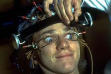
Kubricks film, based on a novel by Anthony Burgess, was set in a near future dystopian London where teenager Alex De Large (Malcolm MacDowell) and his gang, or �droogs�, spend their days prowling the streets for tramps, other gangs or women and commit acts of �ultraviolence�. When Alex is arrested for rape and murder he agrees to undergo an experimental new aversion therapy which makes him physically sick at the thought of ever again committing violent acts.
Clockwork Orange addresses some important points on the individuals right to free thought, whatever the consequences, and this was recognised by the BBFC. However, the press was out for blood after the year�s previous controversies and punced upon the film. The Daily Telegraph called it �Muck in the name of art� and a �Sick film for a sick society�.
Of all the films under attack, so far, in this shift within the media to self-appointed moral guardians Clockwork Orange was perhaps the most thoughtful and vital. The BBFC themselves referred to it as �A valuable contribution to the whole debate about violence�.
The film was released in 1972 unedited. However, after its general release was up Stanley Kubrick, so appalled at the media treatment of a film he himself called �almost perfect�, had the film withdrawn from release in the UK. The film was not screened, with one exception that resulted in legal action and the closing down of the offending cinema, until Kubricks death almost 30 years later. Clockwork Orange remains the only film in Britain that was ever banned by its own maker.
It might be interesting to speculate on why the media reacted so viciously to this particular film, who�s violence is actually much less shocking that that of Straw Dogs or the excessive imagery of The Devils. Was it simply one outrage too many of was Clcokwork Orange, with its themes of freedom of thought and choice between doing what society deems morally acceptable and the transgressive just too much for the increasingly conservative climate of the UK.
That same year the BBFC, clearly feeling the pressure, cut ten secons from what they termed the �butter and buggery� scene in Bertolucci�s Last Tango In Paris. The board openly admitted that this was done purely to appease Mary Whitehouse�s �Festival Of Light� moral crusade.
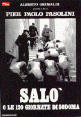
In 1975 the BBFC would face certainly the most extreme film it had ever dealt with. Salo, from the Italian film maker Pier Paulo Pasolini was based on the Marquis De Sade�s unfinished masterpiece. During the final days of world war 2 Mussolini created a mini fascist republic in the town of Salo in northern Italy. Into this historical setting Pasolini had four burocrats who kidnap the towns most beautiful youths and, over the course of five days, subject them to a series of the worst and most humiliating sexual tortures. The film had been hugely controversial around Europe but Pasolini, who had been stabbed to death just weeks after completing the project, was considered a major film maker and the BBFC believed the film should be seen due, like Clockwork Orange, to the fact that here was a film that could be interpreted as a work about violence as much as it was a violent work itself. The BBFC advised the distributer that, rather than cutting the film, it should be released to members only �cinema clubs� therefore bypassing the need to censor some of the more extreme acts of sadism.
Within 24 hours of the films release a London cinema was raided by the police, the film being deemed obscene and �likely to deprave and corrupt�. The BBFC were forced to re-examine Salo butcher it severely even adding their own prologue explaining the historical context and the works of De Sade. Although the film had been banned in many countries, and distributers prosecuted for supplying it around the world, it was finally granted a BBFC 18 certificate in its fully restored form in 2000.
The last film to cause real problems for the BBFC before emphasis was switched to a new technology was from Japan, by way of France. Nagisa Oshima�s Ai No Corrida (Loves Bullfight) AKA In The Realm Of The Senses (1976) was based on the true story of the affair between a soldier and a prostitute in 1930�s Japan featured not only full frontal nudity (commonplace by 1976) but erections, vaginal insertions, genuine intercourse and pretty much every sexual position imaginable. Plus a few that aren�t. Th film was banned in its own country and the negative had to be smuggled out of Japan and developed in France. Oshima went to prison for publishing the illustrated screenplay of the film. Sada Abe, the prostitute and something of a folk heroine in her homeland, becomes so deeply obsessed with her man that she begins to lose her mind. Although the climax is shocking, Sada strangles him in the throes of orgasm then cuts off his penis and escapes to the countryside, this was not the problem for the board. A key scene featured the first sign of Sada�s insanity when, while lounging in a public bath, she grabs a small boy by the penis and drags him towards her. The boy, traumatised, begins to scream. This moment, clearly not simulated, would constitute genuine child sexual abuse under UK law and so the BBFC devised an ingenius way around it. At the crucial moment they employed an optical zoom that magnified a portion of the screen (The faces of Sada and the boy) and so obscured her grabbing him. Whether or not this kind of �invisible censorship� is better than a more jarring and obvious cut is debatable. Is it better to see where a cut has been made and lose the flow of a scene, or to be oblivious to it and never know you have been denied something?
By the early 80�s the emphasis changed again. The BBFC was put in charge of the classification of the video format shortly after the Daily Mail began a campaign against what it termed �video nasties�. And so the BBFC would adapt yet again. It could be argued that, with the video age, censorship of adults became an irrelevance. The lowest common denominator now would be the theoretical small child who might accidentally stumble across a copy of The Exorcist. Now that the cinema and the home had become much the same thing the arguments for, or against, film censorship would become a much more public debate.