|
|
LEBANON
|
|
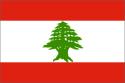
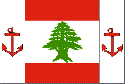
Official name
Republic of
Lebanon
Map

Capital
Beirut
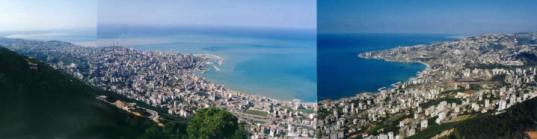
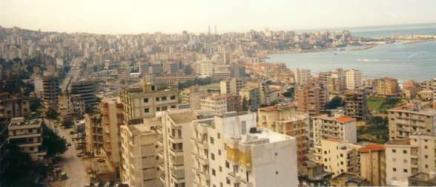
Population
Between 3 and 4 million. No official census has been taken since 1932.
Land area
10,452 sq km
Lebanon is located on the
eastern shore of the Mediterranean Sea.
The country is 215km long, and
from east to west the distance ranges from 25 to 90km.
It is bordered by Syria to the
north and east, and by Israel to the south.
Language
Arabic is the official language, but French and English are widely spoken. Armenian is also spoken by a minority group.
Major religions
50% Muslim; 50% Christian
The largest Christian group are Maronites, followed by the Greek Orthodox,
Greek Catholics, Armenian Orthodox, Armenian Catholics, Syrian Catholics,
Chaldeans, Protestants and Syrian Orthodox. The largest Muslim group are the
Shiite, followed by the Sunni and the Druze.
Electricity
Both 220 and 110 are used. Sockets take 2-pin round and flat plugs.
Weights and measures
Metric system
Business hours
Government offices: 8am-2pm Mon to Sat; 8am-11am
Friday
Banks: 8:30am-12:30pm Mon to Sat
Shops and commercial business: 9am-6pm Mon to Sat. Many stores keep later hours
and open on Sunday as well.
The Lebanese regard Sunday as the end of the week.
International dialling code
+961
Time zone
GMT + 2 hours
Climate
Lebanon has a Mediterranean climate -- hot and dry summers and cool, rainy winters. The sun shines 300 days a year. The annual rainfall on the coastal plain is around 35in, and more than 50in in the mountains. Humidity is high along the coast in summer and daytime temperatures average 30°C with night temperatures not much lower.
Beirut in summer becomes a commuter society as families move to the mountains to enjoy the cool dry climate. Winters on the coast can be dry and mild one day and wet and chilly the next.
Winter daytime temperatures
average 15°C. In the mountains summer daytime temperatures average 26°C and the
nights are pleasantly cool. Winters are cold and it snows at the higher
elevations. The snow ensures good skiing from December through April.