 |
| Coffee and its Effects on Humans |
| by Karen J. Jusay , R.. N. Far Eastern University - NRMF Institute Of Medicine |
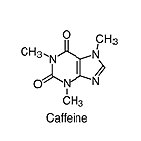
| I. INTRODUCTION Whether waking up to a steaming mug of coffee, enjoying lunch with an ice cold cola, or relaxing in the afternoon over a cup of tea, these daily pleasures often have a common ingredient - caffeine. Caffeine, or 1,3,7-trimethylxanthine, is a purine alkaloid with a melting point of 238 C. It exists at room temperature as a white, odorless, crystalline compound with a slightly bitter taste. Related methylxanthines with milder effects and no health risks occur in chocolate, tea, mat� and coffee. Caffeine is a naturally occurring substance found in the leaves, seeds or fruits of more than 60 plants. These include coffee and cocoa beans, kola nuts and tea leaves, which are used to make many favorite beverages such as coffee, tea and cola drinks, and foods such as chocolate. Caffeine also is extracted from plants and manufactured synthetically for use as a flavor in some food products. People have enjoyed caffeine-containing beverages since ancient times. As long ago as 2700 B.C., the Chinese Emperor Shen Nung sipped hot brewed tea. Coffee originated in Africa around 575 A.D. where beans were used as money and consumed as food. Eleventh century Arabians were known to have coffee beverages. And while exploring the New World, Spanish conquistadors were treated to a chocolate drink by Aztec Emperor Montezuma in 1519. The coffee "tree" is indigenous to Ethiopia, but its cultivation and use as a beverage stem largely from Arabia. In Arabic it was referred to as gahwah, the poetic term for wine. The Turkish equivalent is kahveh, which became cafe in French and kaffee in German. Apparently the Ethiopians mixed crushed dried coffee beans with fat which they rolled into balls and used as food on journeys. By the early 16th century the beverage made from infusing ground roasted beans was well-established in the Islamic world, although a fundamentalist element felt that coffee was an intoxicant and it was banned for a time in several places. Coffee shops sprang up throughout Europe - coffee was the fashionable drug of the 17th and 18th centuries; its delights, and the cravings for it, were the subject of J.S. Bach's "The Coffee Cantata". The British were the first to tax coffee; in 1660 a duty of 4 pence per gallon was imposed. The popularity of coffee lead to anti-coffee petitions such as "What a curse it is that ordinary working men should sit the whole day in coffee houses simply to chatter about politics, while their unhappy children are wailing at home for lack of bread!" Caffeine is found primarily in coffee, tea and cacao plants. The coffee beverage is obtained from cultigens of Coffea, a genus well known for caffeine synthesis. The alkaloid is produced in leaves and fruits, but only that present in seeds benefits people. Advantages to the plant remain uncertain, though toxicity suggests defense against predators. Similarly, it may serve as an allelochemical. Caffeine ingested from tea and cacao is procured from the leaves and fruits, respectively. Though most caffeine is consumed from its natural source, many manufactured products such as Coca-Cola contain the chemical as an additive. Pain relievers, diet pills, stimulants, decongestants and other medications frequently contain caffeine. Recently, drinking water and breath mints joined the list. The amount of caffeine present in a typical serving ranges from 3-200 mg. Most tea beverages and all chocolate products contain less than 30 mg while brewed coffee ranges from 75-180 mg. Plant species, roast level, brew method and grind size all effect caffeine content of coffee. Most soda beverages contain 30-60 mg of caffeine and over-the-counter stimulant pills contain 200 mg each. Serving sizes are 5-7 ounces for coffee and tea and 12 ounces for soda. The volume of caffeine required assures a lethal dose is virtually impossible. The LD50 for caffeine is estimated at 150 mg/kg body weight or approximately 10 grams for the averaged size human. A standard 6 ounce cup of coffee contains 1-2 mg/kg of caffeine. It's usually presumed that a regular cup of coffee contains 100mg of caffeine but it may range between 40 and 176 mg and the mean is closer to 85mg. There's probably less caffeine in a cup of tea - one study showed a median of 27mg per cup with a range of 8 to 91 mg. An ounce of sweet chocolate may contain between 75 and 150mg of combined methylxanthines and a cup of chocolate or chocolate milk may contain 150-300mg. The principal dietary sources of caffeine are overwhelmingly coffee and tea. Coffee accounts for some 54 per cent of ingested caffeine, while tea accounts for some 43 per cent. The remaining 3% consists mostly of caffeine ingested in the form of cocoa and chocolate products, various fabricated soft drinks and mate. |
|