A woman is defined based on her biology. She is a womb, a highly sophisticated machine with the sole purpose of making babies. It is biologically correct to say that men and women are not created equally[20], as a man's reproductive system includes a penis and testis, whereas a woman's reproductive system includes a uterus, ovaries and a vagina.
Historically, Woman has had to rely on man for support because she was at the mercy of
her reproductive processes; menstruation, pregnancy, and later in life,
menopause [20].
Woman seems to be physically handicapped by a long pregnancy,
breastfeeding and is bound to the home because of dependent infants and children.
Consequently, woman has historically been tied down to domestic areas of work with the
segregation of labor
[20,21]. Men, on the other hand, are free to move about,
and because of biology, they are more suited for roles as the hunter and the
protector[21]. Marx and Engles described this segregation of labor as deeming women
as oppressed beings with limited knowledge of the outside world. Woman was
simply a producers, her offspring were laborers, and her husband was the owner
[22].
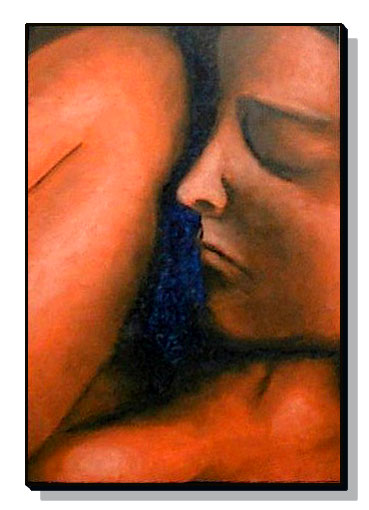
Woman in the Womb
by Adriana Prat
Over the centuries, doctors and healers perceived the womb differently than what is known today. Hippocratics believed that the womb moved about because it was attracted to moisture, and thus this could be avoided by intercourse and childbirth[23,24]. Plato compared the womb to a wild animal or creature, in the female's body, with a desire to become fertilized to bear children[23,24]. If unfruitful for long, the womb became restless and angry and left its proper place and wandered about the body. In doing so, the womb was said to close air passages whereby stopping respiration, and causing severe feelings of anxiety, dread and other symptoms of illness[23,24]. The idea that the womb wandered about Woman’s body was said to be the cause of female diseases such as "hysteria". This idea was quite popular within those who practiced medicine until dissections proved that the womb is in fact incapable of movement[23,24].
These
Greek male writers determined the womb to be a object that was
"good to think with" as they tried to distinguish Woman from
Man and justify to justify Man's control over Woman[23,24]. Thus, these medical and
scientific authorities would accuse woman of being governed by her womb, and
essentially her glands. This implied that Woman's behavior is strictly limited
to inert drives. Only having the ability to think with her womb strictly
limits Woman's behavior to inert drives and actions that are
fuelled by her hormones.[22] Thus she has no subjectivity because she has no real
control over her own mind.
How
can this stereotype of woman’s behavior be taken seriously when it is just as
easy to apply this theory to men as well? Robin Williams accurately depicts this
theory in a male context as follows:
Men
have glands, hormones, and inert drives as women do, so how is it that man can
have subjectivity and women cannot?
Advertisements have long enforced the idea that one of Woman's important roles is the bearer and the caregiver of children. Currently on the television, there is a commercial for Wonder Bread. The mother is running around the kitchen trying to get the children ready for school, and she is defining the ingredients on the bread label for her middle son. This advertisement enforces the idea that Woman belongs at home with her children and should be the one responsible for their upbringing because she is biologically wired to do so.