 |
|
|
|
|
|
|
|
|
|
|
|
|
|
|
|
|
|
|
|
|
|
|
|
|
|
|
|
|
|
|
|
|
|
|
|
|
|
|
|
|
|
|
|
 |
|
|
|
UNITS, UNITS, UNITS... |
|
|
|
|
|
|
|
 |
|
|
|
Right, this is the technical bit. In order to understand how much you or someone you know is drinking you need to convert the quantities into 'units' of alcohol.
This is not the mathematical challenge that it sounds and in fact is very easy to do. To make things even easier most producers of wine, beer and spirits print the units on the side of the container (certainly this applies in the UK). |
|
|
|
|
|
|
|
|
|
Alcohol unit quantities per measure of liquid differ by country, the units given below apply to the United Kingdom. On the links page on this site you will find a link to a unit calculator which will enable you to convert measures in your country. |
|
|
|
|
|
|
|
 |
|
|
|
SO WHAT DO ALL THESE UNITS MEAN TO ME ? |
|
|
|
Half a pint of non-premium beer or lager at 3.5% is one unit, therefore a standard pint is two units. Be aware that premium beers are around 5% and super strength as much as 9% ! |
|
|
|
|
|
|
|
|
The figures given on the left are your 'benchmark'.The unit content of any drink will vary according to size and ABV (Alcohol By Volume) which is the percentage figure. You will find this value printed on every alcohol container and can use the units calculator on the links page to find the unit content of any drink.
Adding up your units per day and then multiplying by seven will, obviously, give you your unit intake for that week.
Why is it important to know that ? Well...
Up until recently the recommended safe drinking level for a healthy adult male was considered by the medical profession to be no more than 21 units per week and 14 for women.
This has now been revised and the current thinking is that no discernable ill-effects will occur in men under 28 units per week and 21 units for women per week. |
|
|
|
|
|
|
|
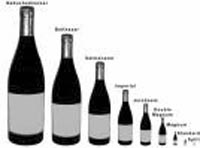
One small glass of wine (125ml) at 9% is one unit. Bear in mind most wines are around 12% and that most pubs serve large glasses. The average bottle of wine (75cl) at 12% (grape colour is irrelevant) contains roughly 10 units ! |
|
|
|
 |
|
|
|
|
|
|
|
|
|
One pub measure of spirit such as whisky, vodka, brandy, gin, etc. (25ml) at 40% is one unit. Most pubs however now sell in measures of 35ml and it is difficult to measure a 'shot' at home ! |
|
|
|
 |
|
|
|
|
|
|
|
|
|
|
|
|
|
Put simply, 28 units is equal to 14 pints of beer (remember half a pint is a unit), 28 SMALL glasses of wine (about 4 bottles at 9%), or 28 shots of spirits. That is your 'safe' limit for a week (for men). However a bottle of 12% wine is about 10 units, so if you are drinking a bottle of wine a day you are taking 70 units weekly, equally if you are drinking five imperial pints a day you are also taking 70 units a week. That is over twice your weekly 'safe' limit ! So you can see that it all adds up very quickly. |
|
|
|
|
|
|
|
IDENTIFYING PROBLEM DRINKING |
|
|
|
So do you have a drink problem ? |
|
|
|
Essentially, if you have to ask yourself this question then you probably do. On the links page of this site you will find links to sites describing the criteria for alcoholism and even a link to a quiz to help you understand the extent of your drinking and whether it is a problem or not. There are many different pointers to problem drinking and lots has been written about them. A simple search with your browser using the keywords 'alcoholism+criteria' will bring up plenty of relevant sites with this information. However there are four simple questions you can ask yourself and four simple criteria for alcoholism as follows. |
|
|
|
Questions... |
|
|
|
Have you ever felt you should cut down on your drinking ? |
|
One 'yes' answer suggests a possible problem with your alcohol consumption.
More than one 'yes' answer strongly indicates that a problem already exists.
Admitting the problem is always the hardest bit. |
|
|
 |
|
|
|
|
|
|
|
|
|
Have people annoyed you by criticising your drinking ? |
|
|
|
|
|
|
|
|
|
|
|
|
|
Have you ever felt bad or guilty about your drinking ? |
|
|
|
|
|
|
|
|
|
|
|
|
|
Have you ever had a drink first thing in the morning to steady your nerves or get rid of a hangover ? |
|
|
|
|
|
|
|
|
|
|
|
|
|
|
Four criteria... |
|
|
|
Unlike the questions, if you have any of these symptoms you have a problem with alcohol.
Alcoholism IS a disease, many people do not understand this but it is actually classified as such.
It cannot be 'cured', any recovering alcoholic may relapse, however it can be treated.The next page discusses withdrawal from alcohol. |
|
|
CRAVING: A strong need, urge or desire to drink. |
|
|
|
|
|
|
|
|
|
|
|
|
|
LOSS OF CONTROL: Not being able to stop drinking once drinking has begun. |
|
|
|
|
|
|
|
|
|
|
|
|
|
PHYSICAL DEPENDENCE: Withdrawal symptoms such as nausea, sweating, shaking and anxiety after stopping drinking. |
|
|
|
|
|
|
|
|
|
|
|
|
|
TOLERANCE: The need to drink larger amounts to get the same 'high'. |
|
|
|
|
|
|
|
|
|
|
|
|
|
|
|
|
|
 |
|
|
|
|
|
|
|
Click the glass to continue |
|
|
|
|
|
|
|
|
|
|