 |
 |
 |
 |
 |
|
|
 |
 |
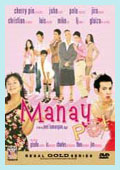
| MANAY MANAY PO 2005 - 125 mins - Feature - Color Director: Joel Lamangan |
| Genre: Comedy, Gay & Lesbian Films, Coming-of-Age, Family Comedy - Drama Location: Manila Cast Cherry Pie Picache John Pratts Polo Rovales Jiro Manio Christian Vasquez Luis Alandy Mike Tan LJ Reyes Glaiza de Castro Giselle Sanchez IC Mendoza Charles Christianson Theo Bernados Jim Pebangcol Reviews CInEMA (Catholic Initiative For Enlightened Movie Appreciation) Date Reviewed: 02 June 2006 Technical Assessment: 1 and a half Moral Assessment: 2 Ang pelikula tungkol kay Luz (Cherry Pie Picache) ay isang single-mom na alahera at kung paano niya malalagpasan ang mga dagok sa kanyang buhay. Una, ang pagtuklas na ang kanyang tatlong anak na lalaki ay may kani-kanilang libel ng pagkabakla: si Oscar (Polo Ravales) ay isang closet queen, si Orsen (John Pratts) ay lantaran at nagbibihis babae at si Orwell (Jiro Manio) ay isang umuusbong na binatilyong homosekswal. Ikalawa, ang pagkawala niya sa hikaw na ibinenta niya na nagkakahalaga ng 2 milyong piso. Samantala, may kani-kaniyang problema rin ang kanyang mga anak. Si Oscar ay hati ang kalooban kung pakakasalan niya ang kanyang kasintahang si Pauline (Glaiza de Castro) o kanyang lalaking kalaguyo (Luis Alandy). Si Orsel ay nagpupumilit na mapansin ng kanyang kinahuhumalingang lalaki at si Orwell naman ay unti-unting namumulat sa kanyang pagkabinabae. Napakababaw ng takbo ng istorya ng pelikula na halos puro kalokohan at hindi kapani-paniwala ang mga eksena. Ang mga dialogue ay walang laman at may ka-kornihan. Pilit ang pagpapatawa dahil umasa lamang ito sa slapsticks. Walang bagong pag-unawa sa homesekswalidad na naihatid ang pelikula. Bagkus ay sumakay lamang ito sa kakatawanan at kontrobersya ng pagiging bakla. Maging ang pagganap ay walang rin kwenta. Sayang ang talento ni Cherry Pie at Giselle dahil sa nipis ng katauhang ibinigay sa kanila. Mali ang pagpili kay John Pratts na maging lantarang bakla dahil napakatigas nitong kumilos at ang kanyang pangangatawan ay hindi bagay. Kahit maayos sana ang teknikal na mga aspeto ng pelikula tulad ng sinematograpiya, editing, disenyong pamproduksyon at iba pa, hindi naman ito sapat upang maisalba ang walang kwentang pagkakasulat rito. May isang napakababaw na mensahe ang pilit na ipinahahatid ng pelikula ang pagkakabuklod ng pamilya sa gitna ng mga pagkakaiba, kakulangan at suliranin. Marangal sana ang intensyon na ipakita na ang mga homosekswal ay tao rin sa kaibuturan ng kanilang puso kaya nga lang ay natatakpan ito mababaw na pagtrato sa mga tauhan, lalo sa usaping relasyong homosekswal. Para sa mga may-akda ng pelikula, tila isinasalarawan lamang nila ang ilang realidad ng mundo ng isang bakla at sinasabing dahil ito ay talamak at ordinaryo na dapat nang tanggapin na parang normal at tama. Bagamat ayaw natin manghusga, malinaw ang katayuan ng Simbahan ukol sa relsyon homosekswal at kasalan ng parehong kasarian. Dagdag pa rito, ikinakaila rin ng pelikula ang komplikasyon at sikolohikal na sakit ang naidudulot ng homosekswalidad at ang mga relasyon kaakibat nito. Hindi rin magandang halimbawa, lalo sa kabataan, na ang bida ay may kinakasama nang walang basbas ng kasal, na ang bunsong kapatid kapatid ay turuang makipagtalik para lamang magkaroon ng karanasan, na ipapakita na tila normal ang pagpapakasal ng 2 lalaki. May mas malalim sanang paraan, na paglalakbay sa homosekswalidad subalit dahil komedya ang pelikula, piniling maipit na lamang sa walang kwentang pagpapatawa at pasundot sundot na drama para magtali sa samu't saring eksena. Sayang lang ang pera at panahon sa pelikulang ito. RIANNE HILL SORIANO Film Works: Rianne's Film Blog The gay theme of 'Manay Po' joins the bandwagon after the recent success of art films of the same genre including 'Brokeback Mountain' and 'Ang Pagdadalaga ni Maximo Oliveros.' This movie may be falling under the same genre, but it is completely made for 'masa appeal' considering its totally mainstream presentation. With its 'masa audience' target, it does work with its comedy. However, there is really nothing new about this kind of movie. It is developed with the same old theme, concept, characterization, conflict, plot and storyline - just presented with new faces of actors and actresses and some new details to account for its story. With my experience in watching this movie in a certain mall, I would like to address the moviehouses to give proper training to their 'lagaristas.' Indeed, it is very annoying to watch a movie with the next reel being played on the wrong cues for the whole duration of the movie. Normally, a feature film has 5 reels of prints with each print having a length of 2,000 feet. Every 90 feet is approximately 1 second of footage. And so, 1 reel is more or less 20 minutes worth of the movie. So you can just imagine how irritating it is to get bothered by either the advanced or late playing of the next print by the irresponsible, untrained or maybe undisciplined 'lagarista/s.' Also, though it has not happened for this movie, let me address that there are a couple of times when those people working behind the projector play some cheesy boy band, novelty songs or some other non-complementing tunes for the CBB (closing billboard) - which, obviously, are not the ones the filmmakers have made for their films. This may sound like a very trifle thing to take a look into but it is something really important because people should pay respect to the creators of the film. And even the credits is a part of the film and it should be given due respect. 'Manay Po' is your typical Regal movie. All the elements of a Mother Lily formula can be seen: quirks for the characters, song and dance number, a sequence in a beach as a breather - all these and even more have been seen in countless movies since the 80's. The movie's mainstream comedy works. And with the more budget-friendly cost of a more advanced filmmaking technology as compared to what the not so distant past has offered, it is a great improvement to see a more digitally-enhanced OBB (opening billboard) for this movie. It may not be as spectacular as the OBBs of the likes of 'LOTR,' 'Star Wars' or 'The Matrix,' but at least there are efforts made nowadays to utilize digital technology for the almost always tightly-budgeted Pinoy commercial films. However, with the sound, Pinoy movies are still in the trying times - not being able to achieve good sound quality to come in par with international films. This movie, just like most Pinoy movies, gets out-of-synch with some of its dubbed lines. Although it's minimal, it's still a weakness. On the surface, the comedy brought by the actors playing gay roles tends to be funny. However, they do not completely justify their gay roles as the sincerity in their acting is questionable. This may not be caused by the idea that they are straight guys in real life but this shows how far their acting can become convincing to the audience. And this becomes clearly seen with the effective punchlines thrown by the real-life gay actor IC Mendoza as compared to the acting of John Pratts, Polo Ravales and Jiro Manio. With the story revolving around the life of Luz, a jeweler, and her three gay children Oscar, Orson, and Orwell, 'Manay Po' tries to project a family movie image with its wholesome and family-oriented gay theme. The various issues on identity crisis and 'gayhood,' the unconditional love of a mother to her children, the value of friendship, the struggle in a competitive and discriminating society, the effort to make stable relationships and overcome adolescent insecurities, the financial and emotional struggle of loved ones, and the search for freedom are all presented in the story. Cherry Pie Picache's efforts for her 'S' defect is quite obvious and it becomes inconsistent as there are times that it sounds authentic but at times she sounds too conscious of it - it looks forced on her tongue and it tends to sound fake. IC Mendoza is the most effective gay of the characters. Charles Christianson gives some good efforts for his supporting gay role, but just like the major characters John Pratts, Polo Ravales and Jiro Manio, his gay acting does not reflect a sincerely gay character still. Many can relate to the movie's theme and this becomes an edge for it. The 'Magpakatotoo ka' attitude, the manifestations of true and unconditional love, and the ups-and-downs in love and relationships - all these crawl their way towards the heart of the viewers who get to attach themselves and relate to the feelings of the characters. And it could have been better if these issues have been presented in a more creative fashion and not too contrived in a box of formula. Noticeably, particular issues as the relationship of best friends (a male and a gay) in their adolescent days do not ingeniously address the issue. It only provides a physical stream for the story. And if the viewers don't try to analyze further, they won't be able to dissect what the script tries to offer beyond its surface. 'Manay Po' is not an A-list Pinoy film but it gives the audience some laughs. And with the rising number of Pinoy films nowadays, I believe that the film industry is starting to survive death. Let's continue to support Pinoy films, and who knows, a few years from now, great improvements may come. OLIVER PULUMBARIT Inquirer Posted date: June 07, 2006 FOR a gay movie that's created for a wider audience, "Manay Po" manages to poke into the complexities of some problematic gender identity issues. Director Joel Lamangan isn't big on subtlety but this comedy-drama, for all its faults, is still watchable. Scenes meant to elicit laughs become highly campy and unrealistic, but oddly, that adds to this film's deliberately "alternative" feel. It certainly is easier to watch than his previous gay-centric "dramedy" effort, "So Happy Together," because of this new movie's smarter, snappier script, and the nice mix of actors. It pushes the right angst and feel-good buttons, as it focuses on three gay siblings and their loving, devoted single mother. It's good to see versatile Cherry Pie Picache evolve by taking on disparate roles through the years, and this specific mom is just exceptionally delightful. As Luz, she conveys and deals with rapid emotional shifts along with her three sons, closeted architect Oscar (Polo Ravales), flamboyant art student Orson (John Prats), and volatile teen Orwell (Jiro Manio). The three brothers have gotten accustomed to not having a father around, but the film doesn't conclusively get into the root of specific sexuality issues that some of the characters experience. Oscar, for example, has a secret boyfriend (Luis Alandy), and has kept the relationship hidden for seven years. But he also has a clueless girlfriend who wants to start a family with him! Paradox The Oscar character is traditionally macho, but is an overtly homophobic paradox. His self-hate, unfortunately, manifests in repeated bullying of his effeminate and loud brother Orson (whose gay-dar has detected a blip from his older sibling). What isn't clear is the cause of that inner conflict. Had a concrete reason been given, by flashback or just a casual line, the character would've been perfect. Still, Oscar is used well, and is sewn into a sizable portion of the drama. Prats' openly gay Orson is more of the comic relief, even when he's experiencing heartbreak. Prats is good, but his mostly over-the-top delivery downplays the urgency of his character's romantic foibles. And because of the actor's angular body type and masculine facial contours, the transvestite look isn't convincing. But Prats' lines are some of the funniest and most enlightening, thanks to his consistent swish and sashaying. Diversity "Manay Po" captures the diversity of the gay community through these characters, as well as its third main gay character, Orwell. Manio's decently played young teen is typically the impressionable kid, but he's still his own person. The boy can do well enough in schoolyard fisticuffs, but shrieks like a girl when startled. This character shows a formative stage in one's sexuality, where peer pressure plays a huge role. His innocence is an interesting foil to his older brothers' more complicated situations. Sanitized As a whole, the film is a sanitized, wholesome look at homosexuality, and the heartaches and triumphs of certain gay people. It could've done without the eye-rolling music video-dream sequence, where Ravales, Prats and Manio sing and dance in drag-way too long and pointless. But there are messages about tolerance aplenty and funny supporting characters that embody acceptance, such as the busybody housekeeper (Giselle Sanchez) and the generous father figure (Christian Vazquez). "Manay Po" unfolds without visual or storytelling spectacle, but it succeeds in creating this flawed yet hopeful world, even when the characters' lives and choices are occasionally easy to map out from our perspective. |
|
 |
 |