 |
 |
 |
 |
 |
|
 |
 |
| M BUTTERFLY 1993 - USA - 100 min. - Feature, Color Director - David Cronenberg |
| Genre / Type - Drama, Spy Film, Action, Erotic Drama Flags - Not For Children, Violence, Nudity, Adult Situations, Strong Sexual Content, Profanity MPAA Rating - R Keywords - actor, extramarital-affair, agent [representative], China, diplomat, double-agent, employment, espionage, France, iron [metal]. love, scandal, opera, play [recreation], politician, relationship, sex-change, songwriter, stage, wine, impersonation, tragic-love Themes - Gender-Bending, Interracial/Cross-Cultural Romance, Actor's Life, Fall From Power, Star-Crossed Lovers, Mistaken Identities Tones - Atmospheric, Deliberate, Elegiac, Stylized, Melancholy, Literate Box office - $1.492 million Sound by - Dolby Produced by - Warner Brothers Cast Jeremy Irons -- Rene Gallimard John Lone -- Song Liling Ian Richardson -- Ambassador Toulon Annabel Leventon -- Frau Baden Shizuko Hoshi -- Comrade Chin Richard McMillan -- Embassy Colleague Vernon Dobtcheff -- Agent Etancelin David Neal -- Judge Philip McGough -- Prosecution attorney Peter Messaline -- Diplomat at party Barbara Chilcott -- Critic at Garden Party Barbara Sukowa -- Jeanne Gallimard Viktor Fulop -- Marshal Deirdre Bowen - Damir Andrei -- 2nd Intelligence Officer Antony Parr -- 3rd Intelligence Officer |
 |
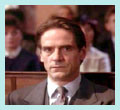
| Plot Synopsis David Cronenberg's cinematic intensity eviscerates this adaptation of David Henry Hwang's passionate stage production. Based on a true incident involving a French diplomat who carried on an affair for 18 years with a man the diplomat thought was a woman, M. Butterfly begins in 1964 Beijing when French foreign service employee Rene Gallimard (Jeremy Irons) becomes smitten with Chinese opera performer Song Liling (John Lone). Before long, Gallimard is enamored with Song, and they begin an inflamed affair - bracketed by the stipulation that Gallimard will never be allowed to look upon her in a state of complete undress. Gallimard agrees to the rules, but, as he climbs up the diplomatic ladder, the communist government gets involved, corralling Song to become an informer for the government. When, at last, Gallimard's passion demands nudity, Song flees the relationship. Gallimard, pining for his lost love, then becomes a physical and mental wreck. He leaves China and accepts a two-bit diplomatic position, but then Song appears once again to Gallimard. At that point, Gallimard is arrested and, during the subsequent sensational trial for treason, his affair is exposed for the sham that it is. - Paul Brenner, All Movie Guide Reviews MARC SAVLOV Austinchronicle.com The lost Cronenberg? Well, almost. Warner Bros. apparently had the devil of a time puzzling over how to market this decidedly non-mainstream adaptation of David Henry Hwang's award-winning Broadway play. Relegated to the shadowy recesses of their release schedule, the film is appearing in a few select theatres across the country with virtually no push behind it. It's understandable, though, that Hollywood suits might find themselves scratching their heads over this film; it's an odd mix of historical drama, love story, and spy thriller, with just enough of director Cronenberg's trademark hyper-realism thrown in to keep things charged. Set in 1964 Beijing, the film follows the budding romance between a French consulate member (Irons) and a Beijing Opera diva (Lone). That men traditionally play all the female roles in Beijing Opera is a fact that seems known to everyone except Irons's consul. Irons is excellent as a heretofore meek, lower-ranking dignitary who finds his entire life transformed by his escalating obsession with the diva, whom he calls "my butterfly," in reference to Puccini's opera. Eventually leaving his wife behind, Irons forsakes both his family and his allegiance to his government and eventually begins to willingly assist in the treasonous movement of classified information to the Chinese. Less a lesson in espionage than a love story, Cronenberg uses the film as a vehicle for his recurrent theme of personal transfiguration: Irons's character is so transformed by this experience (and one that he never could have predicted to begin with), that he eventually ends up mad, both his mind and soul crushed by the weight of it all. It doesn't work as often as it should. The relationship between Lone and Irons too often seems staged, or forced; there's little if any of the spark that needs to be there in order for the audience to swallow some of the more, um, unconventional aspects of the story, and a love story sans spark is, at best, a wounded beast. Peter Suschitzky's cinematography, on the other hand, is absolutely stunning. Filmed in dark ambers, reds and blues, he brings Sixties-era Beijing to life in a way few people ever have (a shot of Lone and Irons having a picnic beside the Great Wall is downright breathtaking). M. Butterfly is Cronenberg's most strenuously flawed movie to date. Despite the sheer gorgeousness, it ends up feeling false and, towards the end, rushed. How much of this is due to Warner's lack of confidence in the finished product is anyone's guess. BRIAN J. DILLARD The stage version of M. Butterfly was based on a titillating true story, but the play used its premise to pose compelling questions about notions of male and female, West and East, as embodied by diplomat Rene Gallimard and opera singer Song Liling. In adapting his own play for the screen and teaming up with auteur David Cronenberg (as demonstrated by Naked Lunch, not the most respectful director when it comes to the integrity of his source material), David Henry Hwang fails to compensate for the differences between the mediums. It's not that he and Cronenberg fail to translate the stylized drama into a realistic film, but that, with the exception of the pat and stalely ironic finale, they succeed too well. With its sumptuous Chinese cityscapes and reverent interiors, M. Butterfly threatens to become nothing more than a Merchant-Ivory production of The Crying Game -- a picturesque period piece with a kinky twist. The stage version maintained dramatic tension by leaving it ambiguous as to whether Gallimard knew his lover's gender all along; naturalism, though, demands that the film hedge its bet, so the script goes to great lengths to explain the methodology behind Liling's deception. Cronenberg and Hwang's emphasis on the relationship between the central characters, rather than on the political and cultural dialogue between them, dulls the material's rhetorical edges. It doesn't help that Jeremy Irons plays Gallimard with the same hollow-eyed angst he brought to films such as Damage and Lolita rather than the wittier, more wicked edge he showed in Reversal of Fortune and Cronenberg's Dead Ringers. John Lone is compelling as Liling, but the script makes only a few half-hearted attempts to explain his character's motivations. With the same tunnel vision as Gallimard himself, then, M. Butterfly tells us only half of an admittedly interesting story |
|
|
 |
 |
 |
 |
 |