 |
 |
 |
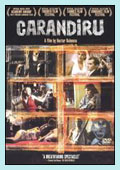
| CARANDIRU 2003 - Brazil / Argentina - 148 min. - Feature, Color Director -Hector Babenco |
| Genre/Type -Drama, Prison Film Artistic/ Production Styles -Episodic Flags -Graphic Violence, Sexual Situations, Drug Content, Not For Children, Adult Language MPAA Rating -R Keywords -drugs, prison, HIV, murder-attempt, solitary-confinement, oncology, doctor Themes -Doctors and Patients, Fighting the System Tones -Angry, Biting, Claustrophobic, Disturbing, Forceful, Gruesome, Visceral Moods -Abandon All Hope From book -Carandiru Station Produced by -Br Petrobas / Columbia Tristar do Brasil / Globo Filmes / HB Filmes / Sony Pictures Classics Release -Apr 11, 2003 (Brazil) / May 14, 2004 (USA - Limited) Premiere -2003 05 18 (Cannes Film Festival) Released by -Sony Pictures Classics Cast Luis Carlos Vasconcelos -- Doctor Milhem Cortaz -- Dagger Milton Goncalves -- Chico Ivan de Almeida -- Ebony Ailton Graca -- Highness Maria Luiza Mendonca -- Dalva Aida Lerner -- Rosirene Rodrigo Santoro -- Lady Di Gero Camilo -- Too Bad Caio Blat Lazaro Ramos Nelson Machado |
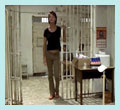
| Plot Synopsis Brazilian filmmaker Hector Babenco directs the confrontational drama Carandiru, based on the best-selling novel by Dr. Drauzio Varella. The episodic story is set in Sao Paulo's House of Detention (referred to as Carandiru), one of Latin America's largest prison systems. The doctor (Luiz Carlos Vasconcelos) is an oncologist who arrives in the jail to test patients for HIV infection. Seeing the disease, overcrowding, and rampant circulation of drugs, the doctor comes to realize the internal power structure among the prisoners. Several narratives develop, including the attempted murder of Dagger (Milhem Cortaz), the solitary confinement of Chico (Milton Goncalves), and the romance between Lady Di (Rodrigo Santoro) and Too Bad (Gero Camilo). The doctor eventually establishes a routine and sees the prisoners as survivors, leading up to the violent conclusion: a reconstruction of the October 2, 1992, prison riot known as the Carandiru Massacre. - Andrea LeVasseur, AMG Reviews Rich Cline, SHADOWS ON THE WALL |
| Based on a true account of life in Sao Paulo's notorious Carandiru Detention Centre, this gripping and sprawling film is quite unlike any prison drama we've ever seen--funny, endearing and deeply disturbing. Carandiru housed some 7000 prisoners, more than double its capacity, and the warden (Grassi) knew there were simply too many inmates to enforce any harsh discipline. So a carefully balanced society was allowed to grow, observed daily by the prison doctor (Vasconcelos). Over the course of the film we meet a large number of prisoners through his eyes, seeing their stories in flashback as we begin to understand how their interrelationships with fellow inmates keep Carandiru ticking along smoothly ... for the most part. Then in 1992 a fight escalates into an all-out siege, with tragic results. Essentially, this is a Short Cuts-style multistrand drama featuring a series of interlocking stories and strongly engaging characters. Babenco's direction is so assured that he manages to make the film both horrifically gritty and seriously warm-hearted at the same time, with humour and real emotion running alongside the violence and suspense. The various areas of the prison are like different stages of hell, and yet the cast is so staggeringly good that we become fully invested in these men (and some of their women outside), seeing beyond their crimes to the people they really are. Aids, drug use and brutality are rampant, but more devastating is a contagious sense of unspoken guilt that hits the characters at all kinds of levels, but never where we expect. The film is shot (by ace cinematographer Walter Carvalho) in a colourful, cluttered 1970s style that's so intentionally cheesy and offhanded that it draws us in brilliantly. And in between the viciousness, we get complex stories of real affection--romantic (Camilo and Santoro), brotherly (Blat and Moura), loyal friendship (Breda and Blat) and twisted marriage (Graca, Mendonca and Leiner). As the energy in the prison boils over in the end, Babenco makes a pointed and chilling comment on who the real murderers are here. This is powerfully gripping, extremely entertaining and vitally important filmmaking. And it has implications far beyond Sao Paulo. [18 strong adult themes, violence and gore, drugs, language] 6.Nov.03 lff |
|
 |
 |
 |
 |
 |
 |
 |
 |