Okinawa
World BudoSai 21st – 27th
July 2004
Kam-wing Pang
After
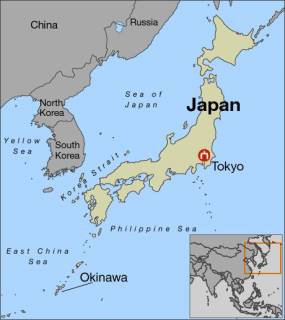
19 years training in Karate, I finally got my opportunity to travel to and
train in Okinawa, the birthplace (‘Mecca’) of what is now known as Karate.
|
Okinawa
has always been a trading route between Japan and China, and to this day, you
still see a lot of people traveling to Naha on their way either to Japan,
China or Taiwan. Its close proximity to China and Japan means that many of
the Okinawan culture, cuisines etc have had a Chinese and Japanese influence.
During the Second World War, Okinawa was devastated by the conflict and many
people lost their lives, half of which were Okinawans. Okinawa
struggled since the war to become what it is today, but it is nevertheless
still one of the poorest prefectures of Japan. With some expectations and
stories of what it would be like, I set forth to find out for myself, the
Okinawa of today and what it might be like to train there. |
|
I
went with the Singapore contingent: Chris (South African), Mal (Australian) and
Moorthy (Singaporean), who left the day before me. We also had two more guys
who were already there, Peter (American), and Josef (German who used to live in
Singapore but now resides in Australia). So out of six of us, only one is
actually Singaporean, two are actually Asian and two are actually members of
IOGKF (International Okinawan Gojuryu Karate Federation) that organized the
event.
The
Budosai is a world martial arts event that hopes to bring many countries
together to train in traditional Goju Ryu as well as getting a taste of the
other Okinawan martial arts. All styles were welcomed, with about 700 people
participating in the event.
21st
July – Singapore/Taipei/Naha
Woke
up at 5am and it’s still dark. It’s been raining all night and I’m worried
about getting a taxi because when it starts to rain in Singapore, taxis
mysteriously disappear. Had a last read
of my emails (not porn) and replied to some while I waited for the taxi to
arrive. I spent the night before going over stuff that I have packed, and tried
to whittle down the amount of stuff to carry. It’s amazing how one can survive
on one underwear, a couple of t-shirts, and a pair of shorts for 2 weeks. Lana
tells me differently.
The
taxi arrived and I’m off to the airport to check in to a China Airlines flight.
I’ve got my holiday insurance for the trip the day before, packed it into my
bags and contemplated morbidly how anyone would make a claim if the plane did
one of those China Airlines special.
The
plane is a small 737, and the seats are quite small even for me. So I wondered
how Chris, Mal, and Moorthy survived 4.5 hours the day before on the same trip.
Landed
in Taipei at around 12:30pm and walked around the airport for about 30 minutes
wondering why there were no shops and why it was so quiet. Then worked it out
after getting to the transfer gate and finding all the excitement was on the
next level… if you can call walking around the same few shops for 3 hours
excitement. Looking at bottles of cognac, Chinese books, pineapple pastries and
tacky souvenirs can only produce so much thrill and exhilaration!
With
time going so deathly slow, I made my way to the departure gate and caught some
shuteye. Eventually, we were allowed to board and I heaved a huge sigh of
relief. It takes less than an hour and a half to get to Naha from Taipei and I
busied myself on the plane reading my Japanese phrase book and practicing my
lines like ‘Where is the bus stop to Naha city?’ and ‘Can you please tell me
where to stop for Rainbow Hotel?’ I’m pretty sure that I got a few looks from
my fellow passengers as they saw an Asian with a Mohican haircut muttering
Japanese to himself over and over again.
Landed
in Naha International Airport at 6:45pm and the first thing that I saw out of
the window was a baseball field. I wondered if that was the taste of what
Okinawa would be like now. I always envisioned an idyllic town (probably from
old reruns of Karate Kid II), but looking out of the window, I found myself
looking at modern Japan, with monorail, crowded buildings and lots of traffic.
Going through immigration was quite quick, but I wore my cap in case they
didn’t let Chinese Mohicans into Okinawa for one reason or another. Through
customs, they asked to search my small backpack and if I was staying with
friends. I told them I was here for karate, and they asked who the Sensei
(teacher) was. I mentioned Sensei Morio Higaonna and they let me pass through
without searching the rest of my bags.
Nice to drop names about…
The
Naha International Airport is very old and very small. I later noticed that the
Domestic terminal next door is much more modern and larger with lots of shops,
and facilities. The newly constructed monorail connected to the terminal allows
passengers to travel to Naha and all the way to Shuri which makes it a lot less
expensive than taking the taxi.
Walking
out to the arrival gate, I found that Chris and Mal were already waiting for
me. It was a pleasant surprise as I thought I would have to negotiate my own
way to the hotel using my Japanese ‘phrasebook’. The taxi ride to Naha took
about 10 minutes or so and it would certainly be much easier than taking the
bus. The weather in Naha at night is pretty comfortable, if you like living in
preheated ovens. Coming from Singapore, it wasn’t all that bad, but carrying a
heavy luggage would probably do you in, in very short time.
The
hotel is situated about 5 minutes walk from the main high street called
International Street (Kokusai Dori). The hotel is 12 storeys high and the rooms
themselves were clean but small compared to European standards. I stayed with
Moorthy, but he was still training at the Budokan (Martial Arts Stadium) when I
arrived.
I met
Peter at the hotel and we all went out to a small Japanese restaurant across
the road for my first Japanese meal of the week. It was a simple meal of
chicken cutlet with soup and some local beer called Orion. Great little beer
that I first tried in Singapore at an Okinawan restaurant. After dinner, we
went to the local ‘Seven-Eleven’ equivalent called Family Mart to buy water for
training the next day. Mal and I decided to get some more Orion beers and
headed back for a talk about the week ahead.
It
was a long day and it was good to be around some good friends in a foreign
country. I slept thinking about the training due to start the next day and what
it might be like.
22nd July – IOGKF Budosai Starts
Woke
up at 7am to the wake up call of my roommate, Moorthy. Being a military man,
Moorthy managed quite easily to rouse me from my deep slumber. We headed down
to the hotel restaurant to join the others for breakfast. It was set up like a
buffet with scrambled eggs, stir-fried vegetables (with SPAM), baked fish,
seaweed, rice and miso soup. There were also pickles, yummy natto beans (sticky
stringy fermented beans that smells), fruits and the usual fruit juices, tea
and coffee. Not bad considering some of the other hotels only serve bread rolls
and some hot beverage to each guest.
Official
training started in the afternoon, so we had the morning free. Chris and Mal
decided to head down to the Budokan early to do some training for Mal’s
grading, while Peter, Moorthy and I took it easy for the morning.
I
went to the local travel agent in town, and using my minimal Japanese tried to
book trips down to the small remote islands south of Okinawa called Ishigaki
and Irimote. Lana and I decided to spend some time there after the Budosai.
|
The morning went quite quickly and it was
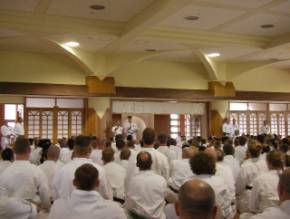
nearly time to start the first day of the Budosai. 700 hundred karate-ka from
all around the world congregated at the newly constructed Budokan (Martial
Arts Hall) on the second floor. After a welcome talk by Higaonna Sensei
and an introduction to the senior instructors, we lined up for our first
training session led by Higaonna Sensei. |
|
|
|
It was going to be a warm up session (Jumbi Undo), and after the first few routines, the air-conditioned dojo was getting warmer and warmer. With 700 people stamping their feet on the sprung floor, it really felt like the whole place would cave in. |
|
With Higaonna Sensei and the senior
instructors leading the session, it was exhilarating with so many people
punching and kicking. It was a sight to behold. All of us were in Okinawa for
one thing, and that was to train. |
|
|
Sensei Ernie Molyneux |
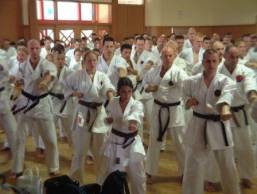
After an hour of warm up, we broke
up into smaller groups to train. I went with the all styles group, which was
led by Sensei Ernie Molyneux
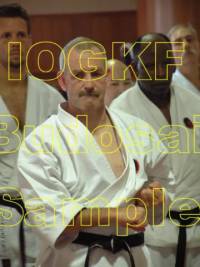
(from England) and Henrik Larsen (from Denmark). We practised Sanchin and I
was able to get more details about the breathing technique and also the small
nuances of the movements. It gave me more impetus to continue my Sanchin
training back at home. Sensei Ernie was great as he was open to questions and
was very clear in explaining the techniques and why we do them. Sensei Henrik
was able to give more medical explanations on how some of the techniques
should be performed. |
One
of the main things that was explained, was the feeling while performing Sanchin
such as the spear hand (nukite), where we should think of the forces being
applied to it as all directional. We should imagine someone applying pressure
to the hands, pushing down, pushing up, from the left and from the right.
It
was somewhat of a pleasant surprise that after doing Sanchin with proper
breathing, it really made one feel more alert. Although there is the usual
muscle ache from dynamc tension, it made me feel strangely stronger. The
Sanchin session lasted an hour and Moothy and I thoroughly enjoyed it. I found
Sensei Molyneux to be a very generous person and was very willing to answer all
our questions, and showed us the details in Sanchin.
After
a short break, we went back to the main hall where we were given a talk by
Sensei Higaonna’s Zen teacher, Sakiyama
Sougen Roshi. Luckily we didn’t have to sit in seiza during his hour long talk.
There was just about enough space for all 700 of us. Josef was there and we all
sat together. The Zen priest talked through Nakamura Sensei who was the
translator, so the pace was quite slow. After a while, Josef and I pondered the
amount of things that we could get from Japanese vending machines, we wondered
if we could buy Zen from it as well. Eventually we came to the conclusion that
we could, but couldn’t decide if it came in bottles with metal caps that needed
a bottle opener or ones that was twist-open.
In addition to our own thoughts on Zen, the Sakiyama Roshi talked about the benefits of Okinawan karate and how the traditional Okinawan life promoted longevity and stamina. With the proliferation of Macdonalds and fast food joints, Okinawa is definitely turning from the old ways.
After the talk, it was time to prepare ourselves for the welcome party. We all rushed back to our hotels to quickly get change and maybe do some laundry. The welcome party was to be held in the Beer Dome which IOGKF had hired out. We had already pre-paid and it was a buffet style type dinner with free flow drinks. The Singapore crew got changed quickly and jumped into a taxi for the long evening ahead.
People were already arriving at an increasing pace when we arrived. We handed in our ticket, found a table and went straight to the bar. Orion beer is light and extremely refreshing after a good workout. I had the strange feeling that with 700 karate guys from different countries, the beer was not going to last long, unless they had a brewery in the backroom!
|
|
|
|
With Josef, Mal and Aussie contingent |
With Josef |
|
|
|
|
Peter and Chris |
Peter, Moorthy, Me, Chris and Mal |
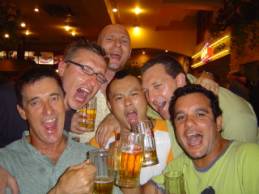
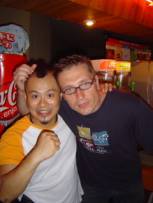
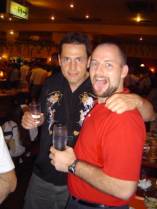
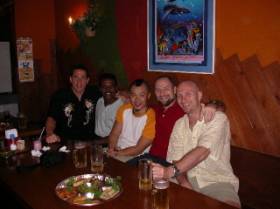
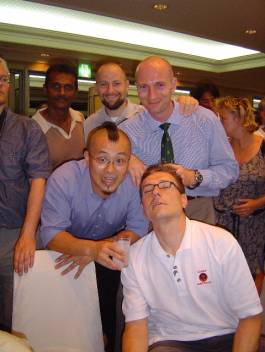
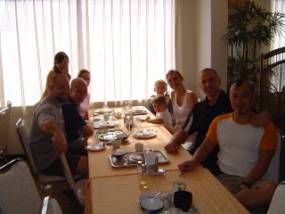
The place was quite small, but we managed to mingle around as the beer flowed. Chris introduced us to many of the instructors and people that he already knew, and it was a good event to break the ice. I met many of the Australian crew with Josef doing the introductions, and with a beer in my hand it was not that hard. In the course of the evening, people became more creative when going to the bar and started bringing trays in to get twelve glasses at a time. With 700 people, the bar staff was moving as fast as they could. With lots of beer and good food, it was a great evening. Nakumura Sensei had to come round to everyone to persuade them to leave. The bar ran out of beer, sake and food, so it was probably a good time to go anyway.
23rd
July – Training with the Big Boys
The
morning started with announcements from Nakamura Sensei and some birthday
wishes. There was even a birthday song sung as well by the 700 people there.
After the morning announcements, we were split up into groups again.
|
|
Sensei Morio Higaonna and Shuichi
Aragaki |
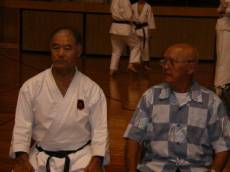
The
first training session was with Sensei Higaonna. Eventually I was able to train
with someone I have heard so much about from Chris. In the hour long session,
we concentrated on stance work, suri ashi (sliding feet techniques) and power
training. We did suri ashi in zenkutsu dachi and neko ashi dachi. Forward, backwards,
left and right. The thing that I found fascinating was that Sensei Higaonna was
able to slide around like he was on ice, while my feet seemed to be permanently
stuck to the wooden floor. I was lucky I didn’t fall over on my arse doing the
movements.
We
then did resistance training with punches and using a partner to help in the
outward and backward movements of a punch. This was quite a tiring exercise and
I could see how this would help immensely. Other resistance training was for
shoulders and with all these exercises, you wouldn’t need to see the inside of
a gym again. We then did conditioning exercises (tan ren), hitting different
parts of our arms against our partners. My partner was Moorthy and he has some
very bony arms. Ouch!
|
|
After a short break we started our next
session with Kazuo Terauchi Sensei and practiced the Kata Gekisai Dai Ichi.
Before we came to Okinawa, Chris, Mal, Moorthy and I spent a considerable
time preparing ourselves for this trip. We practiced most of the basic syllabus
of Okinawan Goju which meant doing kata, bunkai and the usual exercises like
San Dan Gi. I think it really helped prepare us for sessions like this. |
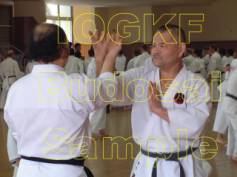
Terauchi
Sensei is very strong and compact and it was an eye opener to see how he
performs the kata. After seeing his opening movement of Age Uke (upper block),
I am starting to see how the age uke can be such a strong block, especially
when aligned properly with the rest of your body. We went over and over the
kata and some special notices were made on the ashi barai (foot sweep) and the
shuto uchi (knife strike). Terauchi Sensei has such a fierce face that it’s
hard not to be intimidated by him. The session was excellent and his display of
power in the kata was amazing.
|
Typical Japanese lunch |
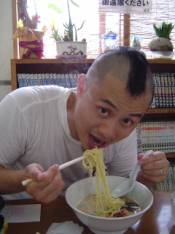
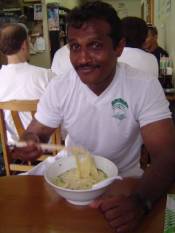
After an hour, we broke for lunch. Moorthy
and I headed down to the local ramen shop for some noodles. Quite a number of
the participants ordered Bento (lunch boxes), but going out to eat was a
great idea and meant we would sample more of the Japanese/Okinawan cuisine.
The place we went to was a Chinese style noodle shop, but it was more
Japanese than Chinese. It was quickly filled up with the Budosai
participants. The food was fresh and was a good filler after a morning of
training. |
Moorthy enjoying lunch |
At
3pm, it was back to the Budokan for a lecture with Shuichi Aragaki, who was a
student of Miyagi Chojun. He talked about his training with the founder of Goju
ryu and related stories that were told to him by Miyagi Chojun. For 75 year old
man, he was very nimble as he demonstrated some of the exercises that he did.
It is such people that makes me continue to train and hopefully one day I will
be as nimble as him when I am 75!
|
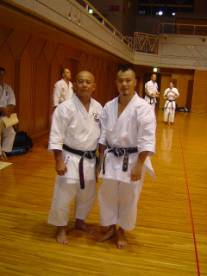
The open seminar for Ryuei Ryu started a hour
or so after the lecture and it was led by the World Kata Champion, Tsuguo
Sakumoto. Sakumoto Sensei and his female instructors first demonstrated
different Ryuei ryu katas, both empty hand and with Eku (Paddle), Sai and Bo.
Sakumoto Sensei explained the origin of Ryuei ryu karate and then proceeded
to teach us one of Ryuei Ryu’s kata called Heiku (Black Tiger). A kata that
contains some very dynamic movements typical of Shuri kata yet there are
circular movements typical of Naha. If we had more time, it would have been
very interesting to also go through the bunkai for the kata. |
|
One
of the things that was outstanding was that his instructors were very young but
their techniques were very fast and ‘snappy’. Sakumoto Sensei is a very easy
going guy, he is a school teacher and often joked throughout the seminar. After the seminar, Moorthy, Josef and I went
to an empty hall to get the kata video taped. It would be useful when we want
to redo the kata later.
|
|
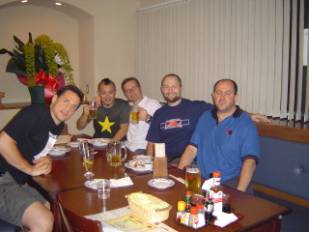
After the last session, we went back to the
hotel to freshen up and went out for food and drinks. We decided to explore the city at night and eventually found that
Okinawa night life is not as exciting as Singapore or Hong Kong. Or maybe we
were looking in the wrong places? |
24th July – Karate and Rugby
Waking
up to the call of Sergeant Major Moorthy was becoming routine. We went
downstairs to have our breakfast, trying to look awake and ready for another
day of training. After breakfast we made our way to the Budokan which was about
20 minutes on foot.
The
first session was with Sensei Leon Pantanowitz from Isreal, who went through
San Dan Gi with us. These are a series of preparatory techniques derived from
the Gekisai Dai katas and are very useful in teaching stance transition,
distance and control. As we were familiar with this because of Chris, it was
great to learn a little more in detail such as sliding of the feet rather
stepping. I partnered up with a German Karateka called Matthias Beschnidt who
is a senior in Shotokan karate and a friend of Senior IOGKF German Chief
Instructor Peter Lembke. Matthias and I had a great deal in common as we both
came from Shotokan backgrounds and it was great to train with a Shotokan
practitioner again.
After
a short break, we went back to be led by Sensei Ernie and Henrik again. This
time the session was on Yakusoku Kumite (Prearranged Sparring). The emphasis
was on adaptability to changing circumstances. Not all sparring goes according
to plan, even in a prearranged setup, so it was important to improvise as
things change. It was fun to go through the techniques as the general attitude
was the same as how Chris taught us. The point of the sparring was to practice
techniques that would inflict the greatest amount of harm to your opponent.
This meant we got to practice things like eye gouging and joint breaking.
Obviously, we didn’t do it for real, else we would quickly run out of partners,
but the intention is there.
|
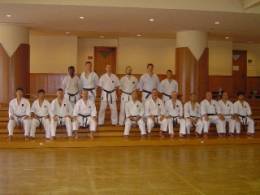
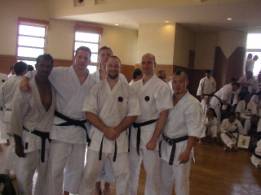
Afterwards we broke up for photo taking. Each
country and their members were to have their photos taken with Higaonna
Sensei and the senior instructors. After waiting for a long while, we finally
were able to get a photo. I think I must have stood out with my Mohican! |
|
|
|
The ‘Singapore’ Contingent Moorthy Punniya, Peter Shane, Josef Christek, Chris De Wet, Mal Brailey, Kam-Wing Pang |
We
went back to the hotel to change and a number of us skipped the Zen Seminar in
the afternoon. I personally didn’t want to suffer two hours of sitting on my
knees even if it meant enlightenment. So instead, Chris, Peter, Mal and I went
to the hairdressers up the road to get our head shaved. For me, I had a nice
trim for my Mohican which was looking the worst for wear after a few days.
Moorthy went to the seminar and told me afterwards that it was a challenge to
sit in seiza position for so long, especially as he already suffers from knee
problems.
|
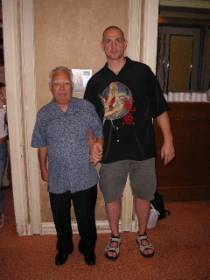
Peter with Sensei Anichi Miyagi |
Chris and Mal’s family arrived and they
headed over to the airport to pick them up. I went back to the Budokan for
the early evening talk by Anichi Miyagi, Higaonna Sensei’s instructor and one
of the last students of Chojun Miyagi.
One of the things that came out of the seminar was that Chojun Miyagi
understood very well that the training of students had to be in a structured
manner and patience is needed from both teacher and students as karate had to
be learnt from one step to another. I previously read Higaonna Sensei’s book
on the history of Goju Ryu Karate but actually listening to Anichi Miyagi is
a different experience as we got to hear first hand his perspectives on Chojun
Miyagi as a person and as a teacher. |
Afterwards
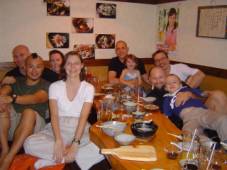
we went back to the hotel and met up with Mal and Chris’ family and headed over
to Akabanna restaurant which served authentic Okinawan dishes. Moorthy didn’t
come with us, and stayed on behind at the Budokan to learn more from
instructors in Shorin ryu and Kyokushinkai. I have lots of respect for Moorthy
as he usually stayed on in the evenings at Budokan to learn from any teachers
there. He made many friends in Okinawa and really made good use of his time there.
|
The Akabanna restaurant is near Kokusai Dori
and quite small. The staff doesn’t speak English so it was useful that I had
my phrasebook out. Lana previously passed me some recommendations of
restaurants from Hong Kong magazines and I basically chose the dishes right
from the article. The food was pretty good and a lot of the dishes involved
pork. It was good to unwind in a good restaurant. |
|
|
|
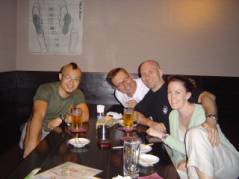
Afterwards, I went walking along Kokusai Dori
with Josef, Mal and Lynda looking for a drink. We came across a Sports Bar
and went in. The place was apparently hired out, but we were allowed to use
the private room which was fine with us. They had Rugby on and it was South
Africa vs. New Zealand. Chris would loved to have been there. It was a
perfect end to the evening with beer in hand and Rugby on TV. |
Outside
the party was full of men in suits and
women showing very large tattoos. It looked like a Yakuza convention. After the
beer, we walked around and did a bit of window shopping, and even met some of
the guys from the Budosai in one small bar. Naha being invaded by 700
international karate-ka, you’re bound to bump into one or two of them.
25th
July – Master’s Demonstration
|
Sunday
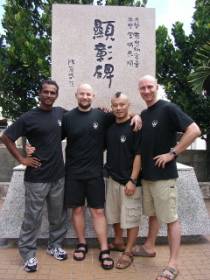
was a rest day and after breakfast, we made our way to the Chojun Miyagi Memorial
which was next to the Fujian Park near the Old Chinese Quarter. The memorial is nicely done and has some
comments from the Fujian association. After being almost eaten alive by
mosquitoes we took some photos and headed over to the Fujian Park for a short
walk. The park is a typical Chinese garden built by Fujianese, with
fountains, goldfish and little pagodas. It was rather strange to be walking
in a Chinese garden in Okinawa. |
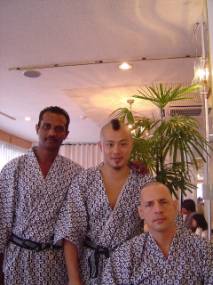
Breakfast at
Rainbow Hotel |
|
Chojun Miyagi
Memorial |
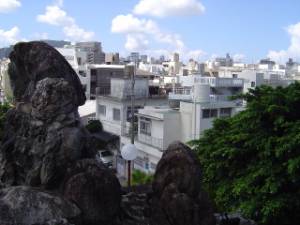
View of Naha from
Fujian Park |
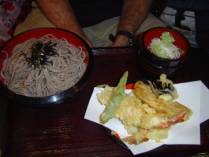
For
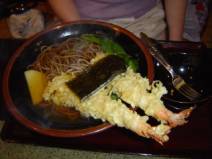
lunch we headed over to another recommended restaurant that serves really
delicious Tempura noodles. It was also good to go to an air-conditioned
restaurant after walking in the heat.
The noodles and tempura were freshly made and although a little expensive, it
was well worth the price.
|
Hot tempura soba with soup |
Cold tempura soba |
After
a short rest back at the hotel we headed over to the Budokan for the Master
Demonstration which was basically demonstrations from various Goju practitioners
and also instructors from other styles. Some highlights:
|
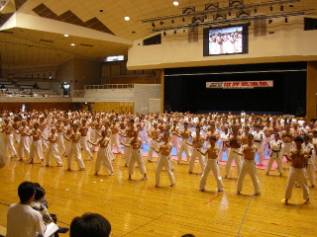
Sanchin -
performed by the IOGKF members. It was an amazing sight to see so many
people doing Sanchin together in the hall. |
|
|
|
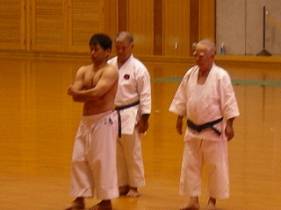
Sanchin Shime – performed by Senseis Katsuya
Yamashiro, Morio Higaonna and Anichi Miyagi. Having your body smacked by
Higaonna Sensei’s hand is probably not the most enjoyable thing in the world. |
|
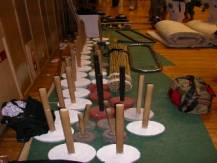
Hojo Undo – performed by the IOGKF members.
Different types of Hojo Undo using traditional equipment or empty hand.
|
|
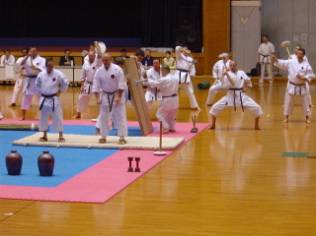
Kumite
– performed by Uechi stylist Kiyoshi Shinjo. I first saw him in a video on
Okinawan karate and he is very tall for an Okinawan. As well as kumite, he also
showed breaking of wooden boards and bats using his thumb, toes and shins. One
amazing guy!
Seisan
– performed by Takeshi
Kamimura. His performance really showed the meaning of muchimi and sticking to
the floor whilst being fluid and graceful.
After
the demonstration, we went back to the hotel to freshen up and I had to get
ready to go to the airport to pick up Lana (who was by then 4 months pregnant
with Abigail). I was quite tired from the heat and was quite prepared to just
lay back for a hour or two. Chris, on the other hand had other ideas and said
he had gotten a few guys plus the Singaporean contingent to do a SMARS session.
|
|
SMARS stands for Singapore Martial Arts
Research Society and we are made up of different types of people from
different martial arts background getting together to try and understand our
own experience and training through sparring. We have people from Kung Fu,
Jujitsu, Judo, Karate, Wing Chun, Boxing, Muay Thai etc. |
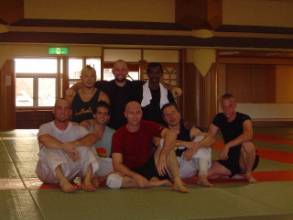
We
went to the Budokan and met two IOGKF members from Australia and one from
Denmark who wanted to try out what we did for SMARS. The training was a typical
Sunday session that we have in Singapore, instead this Sunday it was in
Okinawa. We started with standup fighting with contact levels dependent upon
the two participants, after sparring with all partners we would start on the
grappling section where each round lasted around 5 minutes. Then we would end
it by mixing the standup with groundwork.
In one half of the hall, some Tae Kwon Do guys were training, and we
invited them to train with us but they politely declined. It was a great
session in any case, and I was glad that Chris dragged me out of the hotel for
it.
I
left the Budokan after about an hour (the guys were still at it) and hurriedly
caught a taxi to the airport. Lana’s plane arrived on time and we headed back
to the hotel to prepare for dinner with Chris, Mal, Josef et al.
|
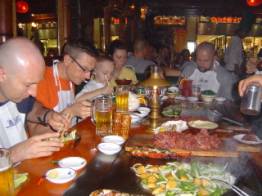
Dinner was at a Japanese teppanyaki place,
but from the outside you would have thought it served American food of fries
and burgers! The food was great, and the chefs made a great show of cooking
our food. |
|
26th
July – Kanazawa and Tomoyose
Morning
training today was especially early. Instead of starting at 10am, I had to be
at the Budokan at 9am for training. So after a quick breakfast, I headed off to
join the IOGKF seniors for training with Hirokazu Kanazawa Sensei of Shotokan
Karate. Kanazawa Sensei is famous for his technique and winning the All Japan
Karate Championships three times in a row. I got to the Budokan and met up with
Matthias and we settled down to start the session.
|
Kanazawa talked initially about what he
thought was the most important thing he learnt in all his years of training
and that it was breathing. He made special emphasis on how breathing affects
both your health and your training.
We then practiced some one step sparring drills and other techniques. The session was only an hour long but
relatively enjoyable since we were able to train with one of the legends of
Shotokan Karate. |
|
After
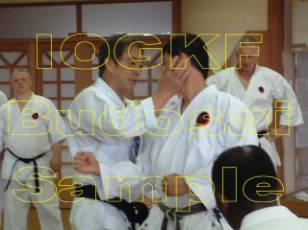
a short break I rejoined the others for a session with Terauchi Sensei going
through the bunkai for Gekisai Dai Ichi. It was again quite impressive to see
Terauchi Sensei perform the bunkai, and without control it was easy to see that
he can really damage his opponent. I would not want to get in his way!
|
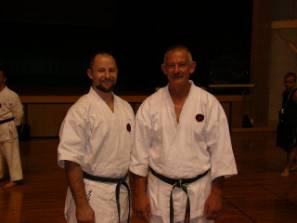
Sensei Bakkies with Chris |
The next session was with Sensei Bakkies
Laubscher from South Africa and Sensei George Andrews from England. Two great
figures in the martial arts world. We went through the bunkai for Saifa which
was fun as we were allowed to improvise somewhat. Sensei Bakkies has amazingly large hands and with his tall
stature, a formidable karate-ka. Sensei Bakkies was Chris’ instructor in
South Africa and Chris also trained
with Sensei George in London. So training with these guys brought back all
those stories of them that Chris told. These guys are strong and I was very
lucky to have trained with them. |
We
broke up again and rejoined with the everyone in the main hall with the senior
instructors. Sensei Higaonna talked about the week and thanked everyone for
making the Budosai what it was. We then trained with Sensei Higaonna leading.
We were in Shiko dachi and started punching forever. Every time the energy
level dropped, Sensei Higaonna would shout ‘Moichido’… and we would reply
‘Hai’. His ability to give us an extra push was incredible. The atmosphere was
electric and everyone gave everything they had. By the end of the training I
was drained but surprisingly felt great!
After
a short lunch, we gathered back for the Open Seminars. I had signed up for
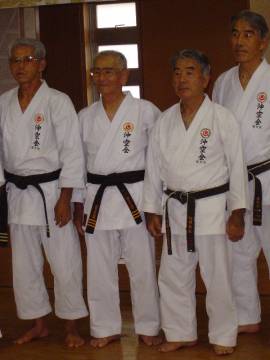
Shohei Ryu (Uechi) with Sensei Ryukou Tomoyose. The first thing that struck me
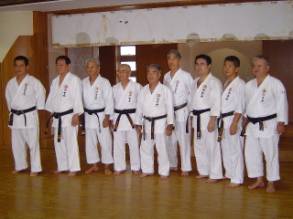
was that all the instructors were quite old, the youngest being mid-40s. Some
of the instructors present were Shigeru Takamiyagi, Kosuke Yonamine, Hirokuni
Yamashiro, Sakae Uechi. This was good, as they were all very experienced and
high in calibre. Sensei Tomoyose and Takamiyagi gave a small talk about the
history of Uechi Ryu. We then saw some kata performances by the Uechi
instructors and some of the IOGKF guys were then asked to perform the same
kata. It was great to compare the two styles and some of the differences in the
kata between Goju and Uechi. Apparently
both Goju and Uechi Ryu came from Fuzhou in Fujian province of China and some
say the same Chinese master. But the kata changed along the way to Okinawa.
Some of the bunkai and Yakusoku kumite were shown along with Goju’s. It really
made for some interesting demonstration.
|
Sensei Ryukou Tomoyose (2nd
from Left) |
Senior Instructors from Shohei Ryu |
Afterwards,
we split up into small groups and each instructor led the groups in Sanchin
Kata. I had done some Uechi with Wayne Otto and my interest in Sanchin kata
meant that I had practiced the Uechi style as well with it’s spear hand and
short breathing techniques. Actually being led by a senior instructor in
Sanchin was an amazing feeling. We stripped off our Gi top and after being
shown the kata, the instructor asked for a volunteer. I jumped up and
volunteered.
|
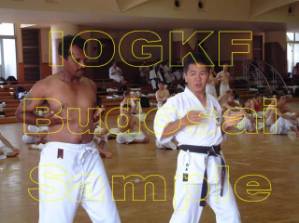
The instructor took me slowly through the
kata and helped me with my stance, hand technique and movement. He also did
some light Shime (testing) while I was going through the movement and this
made the kata a lot better. I wished I could have done it a few more times
with him, but there were a lot of people to get through. It was a really
enjoyable seminar and gave another perspective to Naha-te. Tomoyose’s and
Takamiyagi Sensei’s English are really good and they were able to field
questions about Uechi Ryu. As were most of the instructors at the Budosai,
they were very friendly and generous with their time. |
Moorthy getting guidance in Uechi
Sanchin |
Afterwards
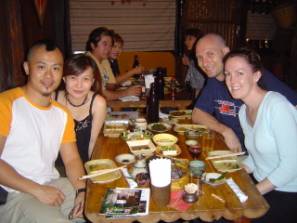
we went back to the hotel for a long shower and prepared for dinner. Mal and
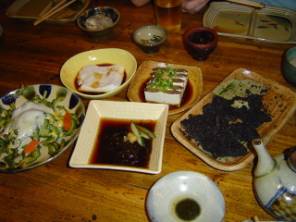
Lynda joined us for dinner at a small Okinawan restaurant that served some
wonderfully nice and somewhat weird Okinawan delicacies. One dish was some
small raw fish (whole) on top of blocks of tofu. The restaurant was like a
wooden hut and very quaint. Our next table was a group of women and men whom we
later found out worked at the local fish market. They even shared some of their
sashimi with us as the restaurant actually didn’t serve that. With sake and
good food, we talked about the past week.
|
Lana, Kam, Mal and Lynda |
Okinawan Delicacies |
27th
July – Naha Discovery & Sayonara Party
Lana
and I decided to discover a bit more of Naha and the surrounding area, so we
planned out the day doing the tourist thing before the evening Sayonara party.
Some of the things we saw:
|
Sashimi & Manju at Naha Market |
Okinawa Noodles for Brunch |
-
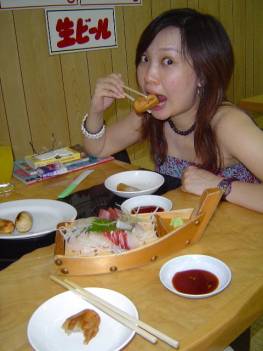
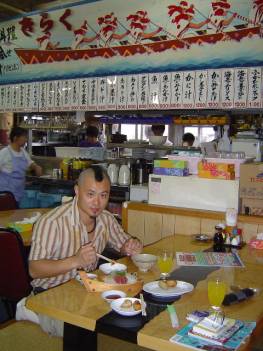
Naha
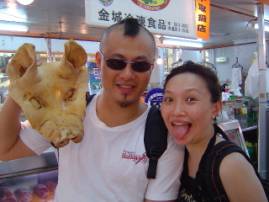
Wet and Dry Market : Fresh seafood, dry pickles, and pig faces were on sale. We
bumped into the same people at the restaurant the evening before at the fish
stalls. They had some beautiful live seafood on sale which made us hungry, so
we headed upstairs to the food stalls to eat some sashimi and noodles. The
prices here were a lot cheaper than in town and the fish obviously were very
fresh.
|
Tsuboya Pottery Lane |
Old Pottery Kiln |
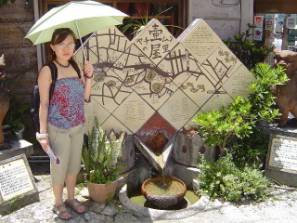
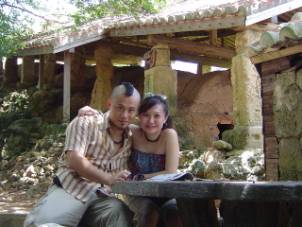
-
Tsuboya
Pottery Lane : One of the few places not destroyed in WWII. This street near
the Heiwa-dori shopping arcade is full of small pottery shops. There is even
one with a very old and now unused kiln that was used to make pottery.
|
Shuri Castle |
Shuri Mon (Gate) |
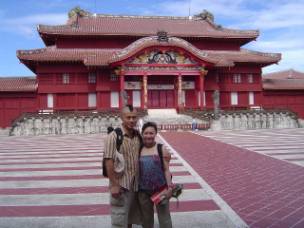
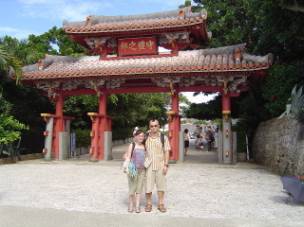
-
Shuri
Castle : Shuri was once the capital of Okinawa and the castle was the palace
for the royals. Shuri Castle was designated a national treasure of Japan in
1928, then was totally destroyed during WWII. It was restored and opened to the
public in 1992. The castle has major Chinese influences as Okinawa was once the
vassal state of China.
|
Mountain Bun Shop |
Foam Tea |
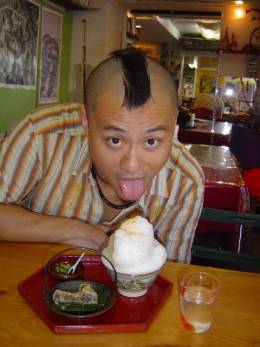
-
Mountain
bun shop : a little shop that looked more like a hut near the castle served
some traditional Okinawan buns with red bean paste filling. Served with some
tea, it was an enjoyable rest. The shop was operated by a very old woman who
spoke no English, but she knew what we wanted. Not really a challenge as that
was all she served.
-
Foam
Tea : a famous little craft shop also near the castle sold the famous foam tea.
It was basically green tea but looked like a cappuccino gone wild.
|
Outside Rainbow Hotel |
Sensei Higaonna and Nakamura |
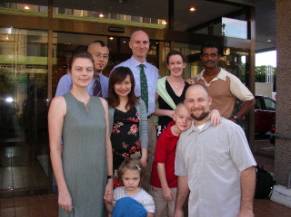
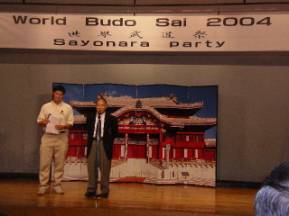
The
sayonara party started around 7pm and we got there a little later. Food was
already served and we headed over to the beer. It was time to watch some
traditional Okinawan culture such as drumming, dancing and singing. Some of the
member countries also performed songs and dances. Singapore opted not to
perform, as there was only one Singaporean and we didn’t really want to sing
the National Anthem. I made contact again with those I met during the week and
passed on contact details so that we could keep in touch. Josef and I had a few
cups of sake and enjoyed chatting about the good times in Singapore and how he
was doing in Australia. It was a good evening but it was also sad, as this
would be when I have to say goodbye to all the people I met, and especially old
friends like Josef and Mal who were heading back to Australia. It would
probably be a while before I would meet and train with these guys again.
|
With the ‘Singapore’ lads |
Lana with Chris’ kids Kale and
Mika |
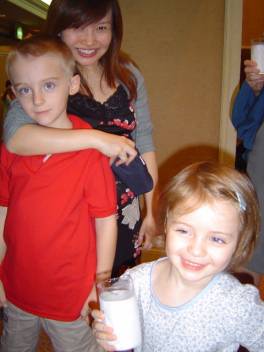
Lana
and I started packing our stuff for our trips to the last frontiers of Japan.
29th
July – 1st August – Ishigaki and Irimote Island
Lana
and I extended our stay after the Budosai to go a bit further off the beaten
track. We went to two islands in the south, one called Ishigaki and another
called Irimote.
|
Our
flight to the islands were scheduled to leave at noon, so we quickly had
breakfast and made sure we were all packed before leaving. Arriving at the
domestic airport by taxi, we checked in using their automatic check-in
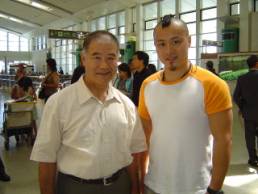
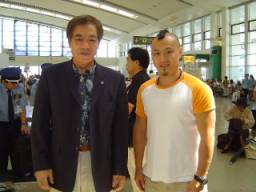
machines and bumped into Sensei Higaonna who was sending Sensei Kanazawa off. |
|
Having
not been able to get a picture of both while at the Budosai, I decided to ask
if I could take a photo. Sensei Higaonna and Kanazawa were happy to allow me
this opportunity and even asked where we were heading. We told them that we
were heading south to the islands and they commented how lovely it was there
and hoped we would enjoy the trip.
|
Sensei Morio Higaonna |
Sensei Hirokazu Kanazawa |
Ishigaki
is a small village island and we spent a couple of days there wondering around
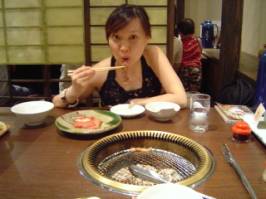
the quiet village, going snorkeling, eating some famous Ishigaki beef that
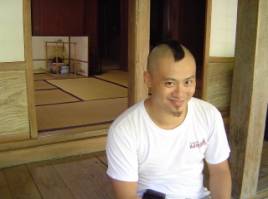
literally melts in your mouth. We visited a house of a samurai where an old man
explained to us in detail the history of the house and the occupants… all in
Japanese which we didn’t understand at all. He was probably telling us what he
had for lunch!
|
Pig Face for lunch? |
Miyara Donchi (Samurai’s House) |
|
Famous Ishigaki Beef |
More beef |
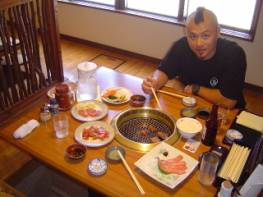
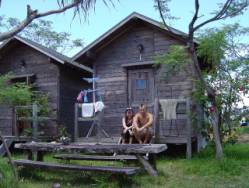
We stayed at some cheap accommodation which
were basically wooden huts with outside amenities. It was cheap but came at a
price. After our first night on the island, we walked back to the huts along
the quiet and darkly lit streets. As we opened the door, a massive cockroach
was inside waiting to greet us. Obviously Lana would not enter the hut until
she was sure that I had got rid of it. Being a firm Buddhist (NOT), I proceeded
to persuade our little friend to leave by spraying it with Japan’s best
insecticide. After some comforting, Lana came into the hut and we had a short
night’s sleep with the lights full on and the insecticide spray next to the
bed.
|
Accommodation on Ishigaki |
Snorkeling in Ishigaki |
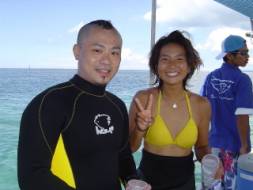
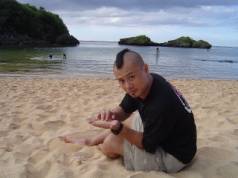
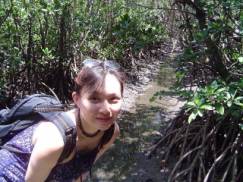
We
went to Irimote by boat and landed on the island famous for its mangrove and
forests. It is regarded as Japan’s last frontier and it has only one road on
the north side of the island. For other parts, you would have to charter a boat
or walk. It is also famous for the Irimote wildcat which is similar to a
domestic cat but is rarely seen and usually comes out at night. We stayed at
the Hoshisuna-no-Hama (star beach) resort, where the sand is made up of very
small star shaped coral. We even took some of this back with us. There were
excursions that we went on, that led into the mangroves and forests which was
interesting and we always enjoy our hiking, even though it was pretty hot and
sunny.
|
Star Beach |
Irimote Mangroves |
In
the evenings, there is really little to do, so we went to the local onsen (hot
springs) for a bit of a soak. We though the island was small, but by the time
we got to the onsen, it was very late. It was enjoyable though to sit in the
hot spring watching the night sky and relaxing in the quiet evening.
After
a couple of days, we went back to Ishigaki to catch our return flight back to
Naha for a couple more nights before flying out.
Okinawa
was a great trip and with karate training (I wished we could’ve trained more)
and sight-seeing, this is one destination that deserves a return visit.
(More
Photos at: http://www.kodakgallery.com/I.jsp?c=cere9u2f.96njva7n&x=0&y=-mrbbf)