| Electrical Stimulation of the Brain?!?!?! |
| Click it, or ticket: Joseph F. Smith's Medical Library Health A to Z: Electrical Stimulation of the Brain |
| Electric stimulation is used to treat Parkinson's disease. Parkinson's disease is caused by a lack of dopamine, a neurotransmitter. It affects movement and various processes in the brain. Often times a patient will suffer from chronic pain and the inability to control their muscle movements. |
| The ESB can negatively interfere with pacemakers, so people who have medical devices prrrrooobably should not consider ESB as treatment. Also some people have experienced acute headaches, dizziness and PARTIAL PARALYSIS!!! On the plus side, ESB is a viable solution for the extreme chronic pain associated with Parkinson's disease and other medical conditions. As quoted by Dr. Joseph Smith himself, "ESB is recommended for those with tremors severe enough to affect their quality of life." So take it from him...if your pain outweights your fear of being partially paralyzed for the rest of your life, GO FOR IT! |
| What is that anyway? |
 |
 |
| Professor Katherine prefers electrical stimulation of the brain instead of life-threatening invasive surgery. |
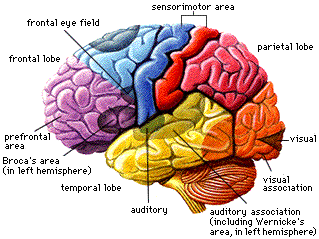 |
| This picture illustrates the functions of certain areas of the brain. Specific areas and lobes/cortices control their respective aspects of the human body. |
 |
| Electric stimulation lessens the adverse affects of Parkinson's. An electrode is implanted into the thalamus and a generator is implanted into the chest. A small electrical current is conducted and can be turned on and off using a magnet. Unfortunately, they need to be replaced every three to five years with surgery. For the patient's sake, a remote is given to them so they can control their pain on an "as needed" basis. |
| Purpose and Treatment |
| Benefits vs. Risks associated with ESB |
 |
 |
|
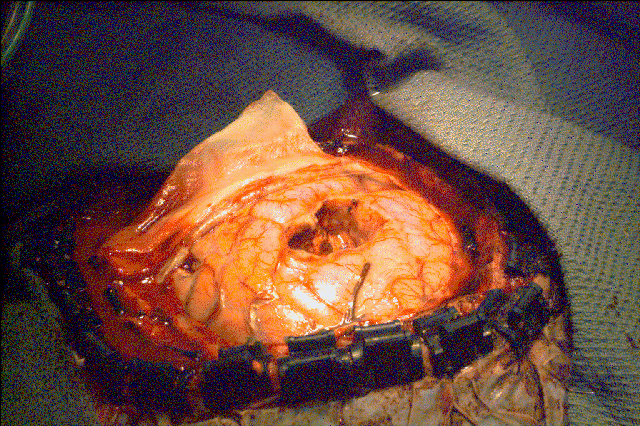 |
| No, this is not a picture of ESB. Actually this person is having a tumor removed. But first they had to implant an electrode in the brain. I just really like the picture. This person is extremely sedated, but surprisingly awake. |
|
|
| ESB After Care |
|
|
| ESB is a risky treatment for some candidates with Parkinson's disease or other medical illnesses. Proper after care is an essential part of the treatment and recovery process. After the surgery, patients should have frequent head-dress changes and minimize exposure to others (lessening the effects of infection). Proper hygiene and head elevation should also be practiced to prevent brain swellling and other serious complications. |