
Having heard so much, you don't know what to expect at Hampi. It's all stone. Most in such a state there's no way to find out what they once used to be. Still those pillars, crumbled halls and naked foundations bait you in a way only the mystery of history can.
Driving downhill into the Tungabhadra Valley that nestles the Virupaksha Temple, one cannot help but wonder the grandeur the city must have radiated during the time of Krishnadevaraya, who made Vijayanagar the greatest empire of the South. Incidentally, the Virupaksha Temple is the only un-destroyed structure in the whole of Hampi, a stark reminder of the six months of plunder and vandalism that followed the fall of the empire in 1565.
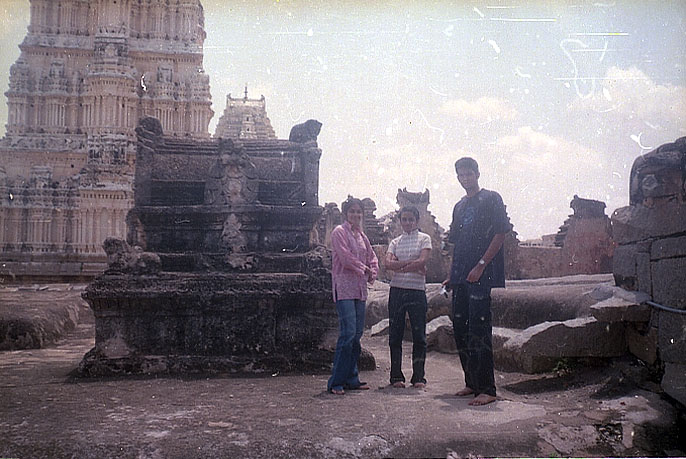
Half a millennia ago, travellers used to compare the city to Rome and Milan and told stories of its riches in faraway shores. Now, it's a ghost city, haunted by tourist guides, European and Israeli backpackers � thanks to its close proximity to Goa � droves of package tourists and lens-touting history buffs. About 15 km from Hospet, which has some reasonable hotels and eating joints, this world heritage site is about three hours from Hubli and 350 km from Bangalore.
It's ideal to get a tourist guide, otherwise the whole exercise could take at least a couple of days � the ruins lie scattered over 26 sq km. If on a time-strapped tour, it's better to book the guide for half a day and limit yourself to the more wonderful monuments of what this city of wonders has to offer.
A ghost city? Yes. But, Hampi is an active archaeological site as well. This means you could see a lot of new sites if you come back after a couple of years. In fact, half of the city was dug up in the last two decades.
The first stop is the Virupaksha Temple, the 120-foot tower of which is still the tallest in whole of Karnataka. The temple, parts of which are older than Vijayanagar, has some excellent specimens of roof paintings.
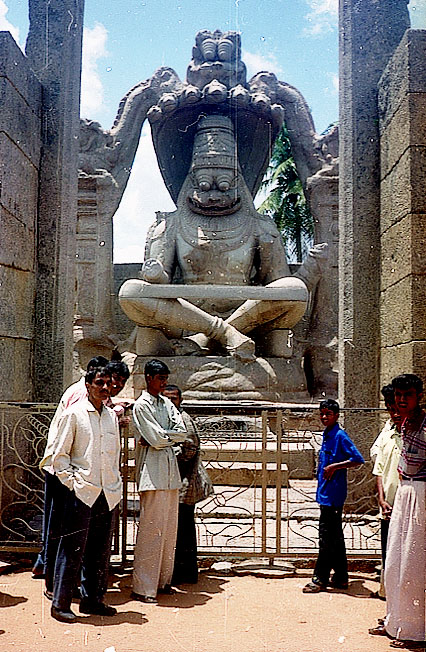
The 6.7-m monolith of Laxminarasimha is one of the more photographed icons of Indian history. Restoration attempts have brought back some of its mutilated grandeur, but legend has it that the original image with Laxmi sitting on the lap of the Narasimha, was, and maybe still is, unparalleled in Indian art.
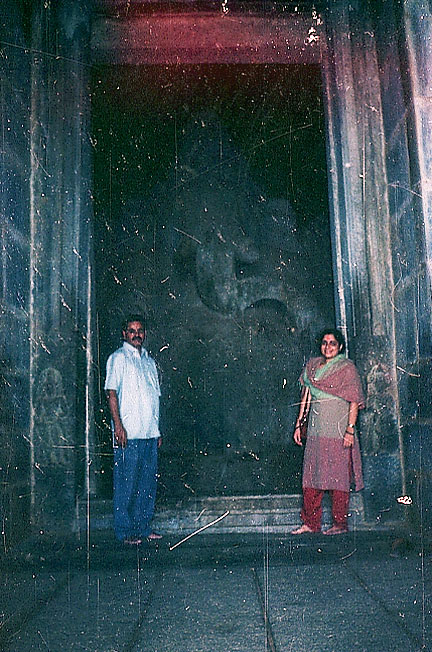
Similar are the monolith Mustard Ganesha and the even bigger Kadalekallu Ganesha, that can dwarf even the biggest idols of the Elephant God one has set eyes on. The latter for instance was carved out of a single granite stone into its present 4.5-m, though badly mutilated, existence.
The royal residential areas, the three great bazaars � one of which used to trade exclusively in precious stones � and the fort all stand tall even in their vandalised forms. Such is the opulence that the elephant stables can easily pass off for a wing of the Rashtrapati Bhavan.
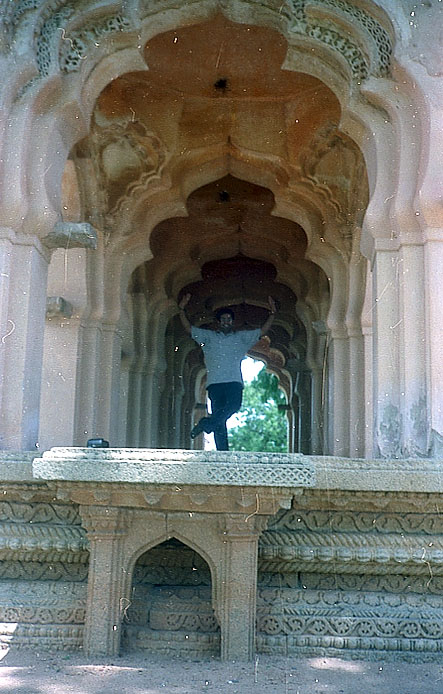
The Lotus Mahal, in the water-cooled confines of which the queens used to spend sultry summers days, and the equally regal Queens Bath, both in early Islamic style, were thankfully saved from the axe of the plundering hordes.
The Vijaya Vittalla Temple, the grandest of the metropolis' structures, was however not that lucky. This temple was an ode in stone to the great victories of Krishna Devaraya and his illustrious predecessors. The stone chariot, for instance, marks his conquest of Orissa � a small-scale attempt to recreate the ones at Konark.
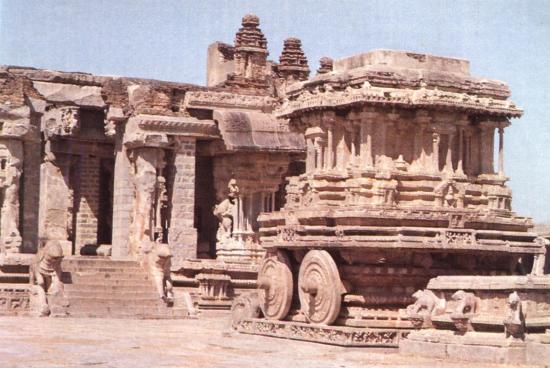
But the real wonder lies within the Hall of Musical Pillars. Even with half its roof on the temple floor, each pillar emanates a different note or sound of a musical instrument. The carvings on the temple walls are also unique because of its eye for detail and craftsmanship.
However, great stone foundations are all that remain of the palaces and darbars where Tenali Rama honed his craft, their sandalwood structures long reduced to ashes. It is said that when the city burnt, the whole region was filled with the scent of sandalwood, and that too for 45 days.
A round of Hampi, however short, takes you back into an age when the city and its inhabitants had no counterparts in the realms of power and wealth. But to put the experience to words is no easy task.
Fernao Nuniz, a Portuguese traveller who set foot on the city when there were still idols in the temples and sandalwood roofs on the palaces had just the words: �But I cease to speak more of this because I should never finish�� Five violent centuries later, I could not agree more.

