


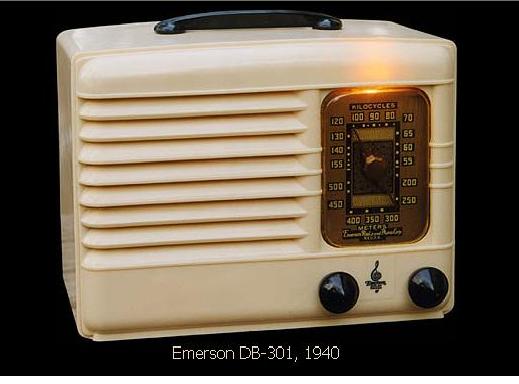
shooting for.

|
|
|
|
|
|
|
|
|
|
|
|
|
|
|
|
|
|
|
|
|
|
|
|
|
|
|
|
|
|
|
|
|
|
|
|
|
|||||||||||||||||||||||||||||||||||
| Radio Restoration | |||||||||||||||||||||||||||||||||||
|
|||||||||||||||||||||||||||||||||||
| Cabinet Repair and Restoration of the Emerson DB-301 | |||||||||||||||||||||||||||||||||||
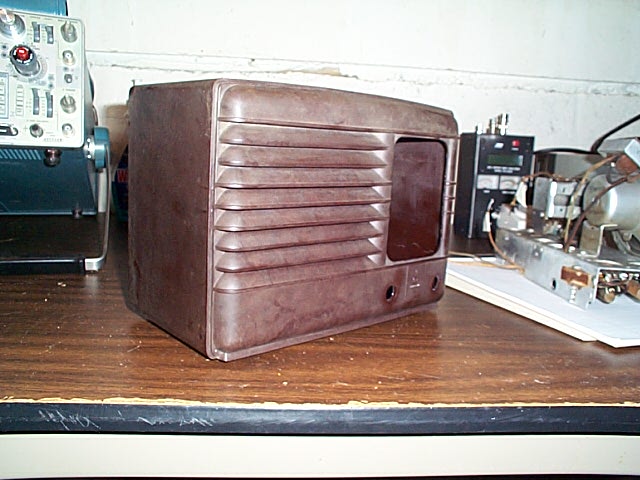
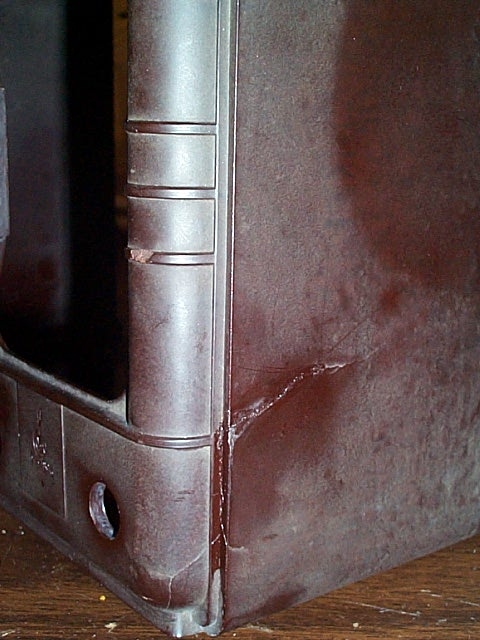
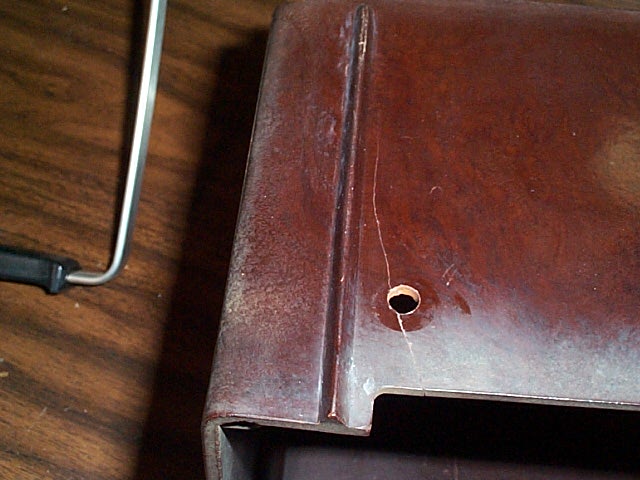
| The cabinet is made from bakelite, an early press-mold plastic made from phenol resin and wood flour. Some preliminary clearning revealed a surface that no longer shined, a condition attributable to exposure to the elements for years. Unfortunately, no amount of polishing will recover the original appearance. Photos below show the condition of the cabinet after cleaning it with Bon Ami, a "scratchless" cleanser. Most of the dirt was cigarette tar that made the kitchen smell like an ash try while I was removing it. (Lots of people smoked back in the 40s!) Also pictured are cracks on the bottom and lower left side, as well as a chip near the hole for the dial, that must be repaired. | |||||||||||||||||||||||||||||||||||
|
|
|
|||||||||||||||||||||||||||||||||
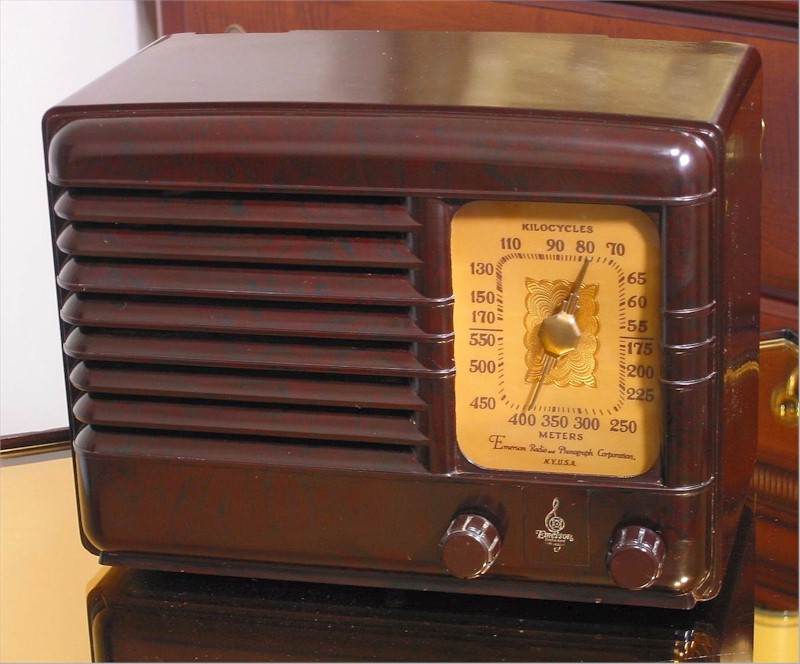
| My preference is to restore the set's original appearance, and the photo below (left) of another Emerson radio with the same cabinet shows what it's suppose to look like. Unfortunately, because of the damaged, unrecoverable surface, and the cracks and chip, I've decided to paint the cabinet white. I chose this color because I know Emerson also produced a translucent white "Plaskon" version of this set, a photo of which is also shown below (right). If not original, its new appearance will at least be "historically consistent." I have a friend quite skilled in working with plastics and adhesives who's offered to help with this part of the restoration. | |||||||||||||||||||||||||||||||||||
|
What it should look like... | ||||||||||||||||||||||||||||||||||
|
|||||||||||||||||||||||||||||||||||
| ...but this is what we're shooting for. |
|||||||||||||||||||||||||||||||||||
|
|||||||||||||||||||||||||||||||||||
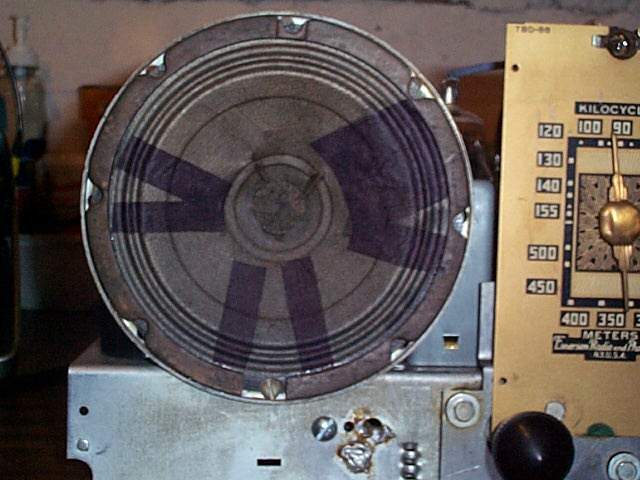
| The speaker is very fragile, and during disassembly I managed to tear it in a few places. I fixed this damage by pasting over it with strips of thin, handmade, colored paper from Thailand. The paste was Elemer's wood glue diluted with water to the consistency of milk. The stips were dipped in this paste and applied to the tears. | |||||||||||||||||||||||||||||||||||
|
|||||||||||||||||||||||||||||||||||
| Click on the icon to see where I'm doing all this work. | |||||||||||||||||||||||||||||||||||
| That's all for now. Stay tuned! | |||||||||||||||||||||||||||||||||||