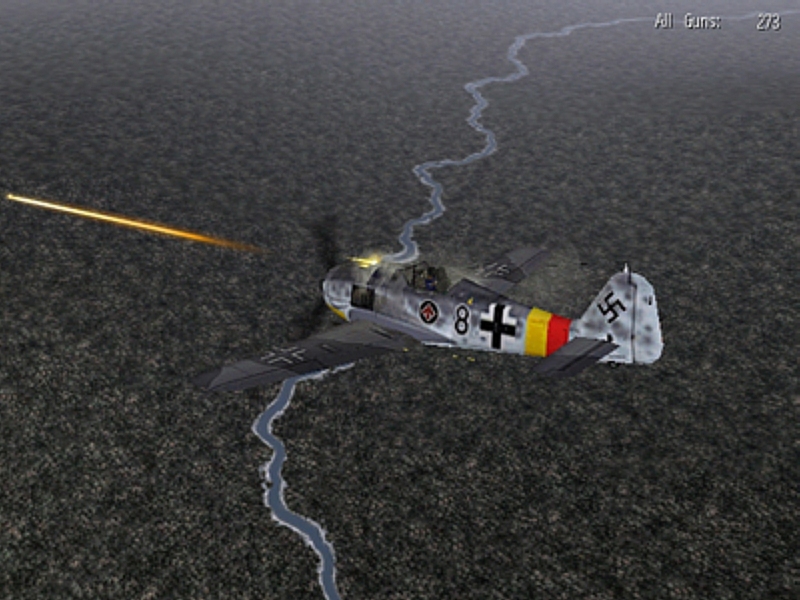
Focke Wulf 190


Focke Wulf 190A-8/F-8
Type: Ground attack/close support fighter-bomber

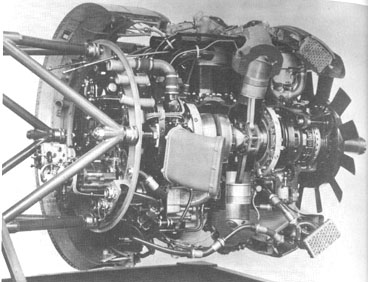
Engine: BMW 801 D-2 14-cylinder air cooled, twin-row radial

Propeller Unit: VDM 9-12176A three blade, constant speed. Diameter: 3,300mm (10 ft. 11.75 in.)

Horsepower: 1,730 hp at take-off. 1,440 hp at 5,700 m.

Performance Maximum Speed: 644km/h (400 mph) at 6,700m. (22,000 ft.)

Take off: 180km/h @ 2,700rpm 15 degree flaps 23.5 lbs (1.6 atas) boost

Landing Speed: 200 km/h 30 degree flaps. Stall speed: 204 km/h. Corner Speed: up to 354 km/h.

Range (Maximum Fuel): 1,370km (850 miles) @ 5,000m. Range (Maximum Bomb Load): 610km (380 miles)

Fuel Capacity: 530 litres (140 U.S. Gallons) Range: 1,035km @ 7,000m

Rate of Climb: 717m/min. (2,350 ft./min.) Climb to Altitude: 9.35 Minutes to 6,100m (20,000 ft.)

Endurance: 2 hours at 2,000m (6,500 ft.) at 450 km/h. (280 mph)

Service Ceiling: 10,360m. (34,000 ft.) 11,400m. w/ GM1 (nitrous oxide No2)


Armament: Two 13mm Mg 131 Rhinemetall-Borsig nose-mounted machine guns. Firing 850 rpm @ 822m/sec. 475 rpg.

Two 20mm Mg 151/20E Mauser outer-wing mounted cannon. Firing 750 rpm @ 762m/sec. 140 rpg.

Two 20mm Mg 151/20E Mauser inner-wing mounted cannon. Firing 750 rpm @ 762m/sec. 250 rpg. Triangulated at 200m.

Avionics: N/A

Dimensions: Wing span 10.5m (34 ft. 5.5 in.) Wing Surface Area 18.3 sq. m (197 sq. ft.) Length 9.00m (29 ft. 6 in.) Height 3.96m (13ft.) Stabilizer Span: 3,650mm (11 ft. 11.75 in.) Wheel Track: 3,500mm (11 ft. 5.75 in.

Weights: Empty: 3,060kg (6,750 lbs.) Gross: 4,865kg (10,725 lbs.)


Advantages

High speeds.

Compression of controls above <644 km/h.

At low speeds, rudder is positive and effective.

Tremendous acceleration in a dive, E-bleed during pull-out. Recovery must be progressive.

High rate of roll, with or withour rudder...AT ALL SPEEDS.

Superb initial turn radius, but cannot sustain a turn. At low speeds the FW "tightens up" in the turn, above 354km/h, backpressure must be used to "hold" the turn.

Fast aileron roll-reversals at high speeds.

MG 151 cannons triangulated at 200m (220yds) rather than 450m

Self-centering tail wheel, and good wheel brakes.

Tough, durable air-cooled engine.

Disadvantages

Poor sustained climb rate because of E-bleed.

E-bleed...can be advantage in tight lead turn.

Above 7,010m climb is very poor.

Elevators heavy at all speeds, particularily + <565km/h.

Trim change above 354km/h noticable in turns.

Take-off tendency to swing to port,corrected by rudder.

Harsh stall characteristics. (204km/h)_ Sudden and violent stall, with left wing dropping. In a tight turn at G-stall, the FW190 will "flick-out" in the opposite direction into an incipitent spin.

Focke Wulf Fw 190D-9

Type: Single Seat Fighter-Bomber

Origin: Focke-wulf Flugzeugbau Gmbh.

First Flight: Late 1942

Engine: Junkers Jumo 213A-1 Inline inverted V12-cylinder water cooled

Horsepower: 1,776 hp (2,240 hp Emergency Boost)

Performance: Maximum Speed: 704km/h (404mph)

Range: 900km (560 miles)

Initial Climb: 3,300 ft. (1000m)

Service Ceiling: 10,000m. (32,810 ft.)

Armament: Two 13mm MG 131 Rhinemetall-Borsig engine cowling-mounted machine guns.

Two 20mm MG 151/20 Mauser cannons in wing roots.

Two 20mm MG 151/20 Mauser or 30mm Mk 108 Rhinemetall-Borsig cannons in outer wings.

Bomb Load: One 500kg (1,100 lb.) bomb on centerline.

Dimensions: Length: 10.2m (33 ft. 5.25 in.) Height: 3.35m (11 ft. 0.25 in.)

Weights: Empty: 3,500 kg (7,720 lbs.) Loaded: 4,840 kg (10,670 lbs.)

Notes: The Dora 9 went into production in the Autumn of 1944. The mating of a bomber engine to a fighter airframe resulted in an extremely fast aircraft. Later the D-models were redesignated the Ta 152.


Focke Wulf Ta 152H-1

Type: Single-seat high-altitude fighter "Die schnellster Jäger der Welt."

Engine: Jumo 213E-1 12-cylinder inverted Vee, liquid cooled with MW-50 injection and GM-1 boosting.

Propeller Unit: Junkers wooden three blade unit Diameter: 3.6 m (11 ft. 9.75 in.)

Horsepower: Take-off: 1,750 hp at 3,250 rpm (2,050 hp with MW-50) Climb And Combat: 1,580 hp at 3,000 rpm Maximum: 1,320 hp at 32,810 ft. (1,740 hp with GM 1 boost)

Performance: Maximum speed: 695km/h (431mph) at 10,500m (34,451 ft.) 750km/h (466mph) at 9,000m (29,529 ft.) with MW-50 760km/h (472mph) at 12,500m (41,012 ft.) with MW-50 and GM-1

Range (Internal fuel): 1,200km (745 Miles)

Fuel Capacity: 1,618 litres (364 Imperial Gallons) Type: B4 (87 Octane) Oil Capacity: 72 liters GM-1 (Nitrous Oxide): Capacity: 85 liters MW-50 (Methanol-Water) Capacity: 140 liters

Climb rate: 1,000m/min.

Service Ceiling: 14,800m. (48,560 ft.)

Armament: One 30mm MK 108 Rhinemetall-Borsig cannon mounted between the cylinder heads, firing through the propeller hub Firing 660 rpm @ 533 m/sec 90 rpg. incendary high explosive rounds.

Two inboard wing-mounted 20mm MG151/20 Mauser cannon with 175 rounds pre gun.

Occasionally outboard MG 151/20s , depending on model, some reconaissance models were unarmed

Bomb load: none

Dimensions: Wing Span: 14.5m (47 ft. 6.75 in.) Wing Area: 23.5 sq. m (252.95 sq. ft.) Length: 10.8m (35ft 5.25 in.) Height: 4m (13 ft. 1.5 in.) Wheel Track: 3.95m (12 ft. 11 in.)

Weights: Empty: 3,600kg (7,940 lbs.) Loaded: 5,500kg (12,125 lbs.)

Avionics: Revi 16B Gunsight FuG 125 Navigation equipment (H-1/R-11 Only) LGW-Siemens K 23 Autopilot FuG 16ZY Radio Transmitter/reciever BSK 16 Gun Camera

Focke Wulf 190 Advanced Energy fighting instead of just BnZ

In energy fighting a plane, you don't necessarily always use a straight boom/zoom approach. You attempt to use maneuvers and your relative energy state to get the other guy in your front quarter. A BnZ is just a very basic energy maneuver, but there's a lot more you can do with your speed. (and alt of course)to pull this kind of stuff in. It's got all the right characteristics for it high roll rate, fast. Only thing it's missing is climb (sigh).

Energy tactics are often much harder to visualize than stallfighting. In a stallfight, you're basically just getting your lift vector on the other guy and tugging away. In an energy fight you often have to think 2-3 "moves" ahead and plan a sequence that will leave the enema helpless and you in control. A good example of this is the hammerhead/spiral climb type of attack. Unlike a stallfight you deliberately point your nose AWAY from the opponent and use your higher E-state to sucker him into a helpless (slow) position, THEN you turn on him and kill him.

The reason this maneuver is difficult is E-assessment.

It's not particular to the FW, it's a skill you need in all planes. You've got to be able to look at your opponent and get a guess of what his E-state is, both speed and alt. Now, alt is pretty easy, so we won't go into that, but speed is different. How do you determine an opponent's speed vs. yours? Well, the only piece of information you have that will help you here is the closure rate. It's very imprecise but you need to be able to guess off it. For instance, in a very simple case if you are co-alt, there is enema behind you, and he is closing, then he obviously has a higher E-state than you do.

If you're going OPPOSITE him and he is closing, well that could mean you're better off or worse than he is. You need more information - exactly what is his heading relative to you, so that you can adequately determine what's going on. Unfortunately there is no cut-and-dry system of teaching speed assessment. There is a very useful tool for it though - film your engagements as much as you can, go back to them and view them, try to guess the relative speed of your enemas in con. One of the abilities of the FW that works really well for some of these maneuvers is that it can pull a really _mean_ split-s.

The Focke Wulf is a pretty bad E-bleed plane, no way around that.

Worse, it only has mediocre acceleration, so after you blow your speed, it's hard to get it back. Very simply most people pull way to hard to get some basic maneuvers done. Spit for instance will chew a FW up in no time at level accel up to 250kts. well if you keep your deck alt in mind, if you run out of speed to pull maneuvers, just bleed some off by diving a bit or doing negative alt maneuvers. If you're solo against a stallfighter it's not going to matter too much; he'll just blow his speed quickly by turning hard when you to the new plateau alt. It's possible to use the FW's bleed against the opponent, For instance if a FW and a Spit are doing low yo-yos a lot, the FW can and will gain angles on the spit if handled right, for two reasons - it blows speed more when pointed down, making it's turn radius tighter, and at the tip of the yo-yo it can get rolled over a lot faster. This feature can be useful for closing a fight if you can sucker them into following you into a Split-S; the FW can recover at higher initial speeds than most other planes, which auger

If you get stuck on the floor and you're completely out of options, roll over at 130kts, click flaps twice and split-s. Fun to watch spits follow you and slam into the turf.

The basic reason it works is the FW on the downside portion of the split-s bleeds speed like crazy, in fact bleeds all the extra speed it gains from the dive portion. A Spit for instance can't HELP but gain speed in a split-s, even with his engine cut, resulting in a larger turn radius for him (faster = larger radius). This is actually a key element in catching all kinds of stallfighters. Anyway a stallfighter will always assume he can out turn you, but its not always true.

The trick to it is you have to see the opportunity and make it happen fast, because you get maybe 180 degrees before your hosed and the Spit/whatever is able to use his turn ability better because he's going slow enough. High speed turns work well against Spits, 109s, and even 51s if you go a little into negative alt. They don't work well against Yaks or P38s who know what they are doing (P38 has air brakes). The basic idea being that you hook an opponent by diving through on him, get him to follow you as you go into zoom, and you zoom him until he's completely out of speed, come over the top and keel him. FW is great for this because you can get it reversed real quickly. If you're climbing 45 degrees and you've bleed the guy behind you dry, you just roll over, flap and pull one of those split-s's. You'll be coming right down on him while he's helpless. Keep in mind FW doesn't have 1/4 flaps so you can't be just slamming them back and forth all the time.

Also, unlike some planes the FW doesn't really give you anything back when you unflap, so you can't "flap yourself up" like you can with the 38/a26/spit. If you're doing rope-a-dope type moves, check your closure when you get to about 150kts yourself. If he's closing on you, you probably hosed it. You can ride the FW down to about 75kts, but you need to pull _only_ vertically at that speed, because if you tilt the nose it's going to spin like hell. If you have no closure or better yet a little separation building at 150kts You _can_ tilt if the plane's in zero-G, tho.. but it's tricky on your dial, just start watching him from the rear view I usually roll on my back right at this point) and wait for him to peter out. Anyway. Just get yourself completely parallel to the ground and pull towards earth; FW is always happy to fall out of the sky for you :-) Worst thing is to immediately go into hard zoom Let's look at that case, First and most obviously you try to get nose-to-nose with him.

I personally pretty much never fire on head ons, but you have to give him the least percentage shot, because you never know what the dweeb is thinking. Second, check your speed. If you're going 225 or better, you can think pretty offensively. If you're going less than that you'd better be prepared to react defensively after the merge, because the advantage is all his. One favorite is when you're both really cruising. Spit is doing maybe 275, you're doing 300. This is a great set up. You let the spit merge, and then watch him in rear view. If he breaks in the horizontal, roll opposite the direction of his break about 20-45 degrees and pull a high yo-yo.

After you get used to the FW you'll be able to get a shot out of this every time. Just takes way to long for the spit to come around a circle when he's going fast, and you are going to pull a very small radius yo-yo because of your bleed and the ability to pull hard initial Gs. Remember reversal of image in mirror -- roll is _toward_ side Spit appears to be turning (blew that a few times too often) If he's in front of your 3-9 line it's not a big deal. If he can get rear aspect at merge, you screwed up somehow :-) and outta think about getting him confused before you attack...in other words, think hard about going defensive with negative alt evasives. Use split-s as escape maneuver...

The worst thing in a FW is to be caught by a stallfighter and another FW or 51. You're kinda hosed if the FW/51 is smart and just starts moving towards your obvious egress direction (if there is one) while keeping his speed up. Bad thing to do is get fixated on trying to watch your pursuit in the rear view. Sort of like deer with light in your eyes, keeps you from flying the plane to its max. If the spit breaks horizontal, he should die. Yours for the taking. If he breaks negative, should be same deal - but I usually go into a slight zoom and see if he'll bite on rope-a-dope.

You can rope any plane, but 109 have best-sustained climb around. Like so much else, it depends on relative E Just means you've got the extra careful about closure. Your worst opponent in a rope-a-dope is one who hides his speed. Luckily most stallfighters are pretty stupid and will go around doing max speed zooms most of the time.

It's for above reason that I usually spiral climb on my rope adopes, because you force stallfighter to turn with you usually, and if he has extra speed it will show up in the turn (wide turn) ok back to our merging stallfighter :-) he breaks horizontal, he dies. He breaks negative alt, he dies - maybe a little later. If he pulls Immel or if he high yo-yos,smarter than the average bear,especially if you see him low-Gthe pull so he gets a lot of zoom out of the maneuver.

If this happens, think about just pulling a level extend. He won't be able to catch you if you're doing the aforementioned 300kts and you don't start heaving the plane around. If you pull it off, 1 second of FW fire can kill anything.

Link To Fw190 Aircraft Specifications

Back

Hosted by www.Geocities.ws

1