4.2 Sheet Bend
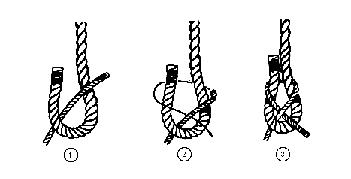
� The Sheetbend is commonly used to tie two ropes of unequal thickness together. The thicker rope of the two is used to form a bight, and the thinner rope is passed up through the bight, around the back of the bight, and then tucked under itself.
� The knot should be tied with both ends coming off the same side of the bend, as illustrated here. However it can easily be accidentally tied with the ends coming off opposite sides of the bend, when it is known as the Left Handed Sheet Bend. The Left Handed Sheet Bend is to be avoided as it is less secure.
* Tip. If the ropes are of very unequal thickness, or placed under a lot of tension, use a Double Sheetbend.
4.3 Double Sheetbend
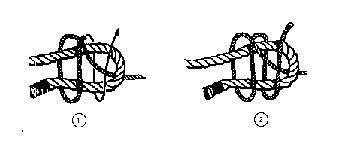
� The Double Sheetbend is a more secure form of the Sheetbend.
� The thicker rope of the two is used to form a bight, and the thinner rope is passed up through the bight, around the back of the bight, around again before tucking under itself.
� Tip. It is particularly useful when the thickness of the two ropes varies considerably, or when a more secure Sheetbend is required. � |