Anti-Apartheid Activist
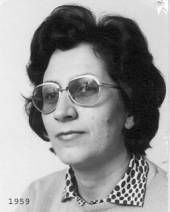
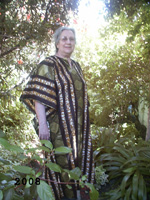
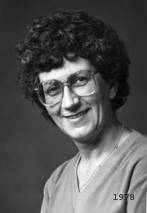
Jacqueline Daane Van Rensburg
�A summary of her
activities�
� 1956 Somerset-West: My first encounter with the police; became job- and homeless by adopting a �mute� black boy of six to give him a better future by sending him to the school for the deaf in Worcester.
� 1957 Claremont: Several encounters with the police protesting against their brutality.
� 1958 Swellendam: Filed a complaint against a police officer for the battering of an innocent coloured man. This made it impossible to stay and had to move again.
� 1959 Claremont: Warning from the police because I assisted an Indian person who was ran over by a car.
� 1960 Wetton: Warned at gunpoint for letting black people make use of my water tap during their march to Cape Town.
� 1960 Cape Town: Went into voluntary exile and settled in the Netherlands.
1966 The Hague: Was involved starting the first Anti-Apartheid movement with the assistance of Rev. Buskes and Margaret Klomp�.
� 1967 The Hague: Went to New Zealand and got involved with two Anti-Apartheid movements, namely C.A.R.E and H.A.R.T.
� 5 March 1973 Rotorua: Speech at the Rotorua Rotary Club for support to stop the 1970 Springbok Tour to New Zealand.
� 7 May 1973 Rotorua: Received letter from the then Prime Minister of New Zealand Mr. Norman Kirk acknowledging that he received our request to stop the 1970 Springbok Tour.
� 18 June 1976 Helmond, Netherlands: Received letter from the then Prime Minister of New Zealand Mr. Muldoon, who intended to reverse the sporting ties with South Africa.
� 3 July 1976 Helmond: �Kortzichtig� a newspaper article I wrote that was chosen as one of the best letters in �De Volkskrant,� a published Nationally daily paper.
� 18 November 1982 Helmond: Article in a national newspaper about my adoption scheme which I started already in New Zealand which grew to be a world-wide support for the people in the so-called �Homelands.�
� 29/30 March 1988 Helmond: Obituary in the local newspaper of the brutal death of my dear friend Dulcie September.
� 30 March 1988 Helmond: Newspaper article in reaction to my obituary in the local newspaper. To this I was called on the phone by an unknown person who told me that I am next on the death list.
� 5 May 1988 Helmond: Article in local newspaper about a local primary school taking action against Apartheid where I was the guest speaker.
� Juli/August 1990 Helmond: Article in the �LOTA� bulletin about my activities against Apartheid.
� 1 April 1988 Helmond: Letter from unknown person in support of my activities.
� 1 April 1988 Helmond: Letter from Marina Cleven in support of my activities.
� 1 April 1988 Helmond: Letter from the Dutch Communist Party, signed by ten members, in support of my activities.
� 21 May 2001 Helmond: Affidavit from Member of Parliament Mr. Reg. September.
� 28 June 2001 Helmond: Affidavit from Deputy High Commissioner in London Mr. George Johannes.
� 3 February 2004 Kenwyn, South Africa: Affidavit from Dr. James Marsh.
�
4 April 2004
Gordon�s Bay, South Africa: My arrival back home after 44 years.
As I am watching another
milestone in our young democratic history, the right to host the World Cup
Soccer Championships in 2010, I can�t help but think back to so many years
ago.
I
can remember being outside picking figs when the butcheries young delivery boy
returned from his �interview� at the police station, bloodied, clothes torn
and biting fiercely on his lip in an effort not to cry he stood there and I felt
equally bewildered. I called my husband and he took the boy home.
The �interview� was necessary since one of the white women where he had delivered meat had called the police and told them that he had stolen her diamond ring she left in the kitchen. Of course in those days, the late fifties, white policeman had their own version of what an interview was and mostly conducted such with a baton, a whip and much swearing.
I
can�t exactly say what made me do what I did, but I marched to the police
station and demanded to know the truth and nothing but the truth. It took a
while for the policemen present to realize that I was taking it up for the boy
but finally the one who did the �interview� came out from the backroom.
�
What do you want missies� he asked
�I
want to know why you had beaten up the butcher boy,� I answered
�We
thought he had stolen the ladies ring, but it turned out that she didn�t leave
it in the kitchen but in the bathroom, so everything is fine.�
�No
it�s not�, I replied, � you had accused the boy of theft, beaten him half
to death and now you pretend that everything is fine. I�m not satisfied with
that and I want to know what you are going to do about it�.
�Do
about it?� he asked in amazement. �I am not going to do anything about it.
The bloody �hotnot� got a beating and finish en �klaar�.�
He started to turn around to walk away when I said: � I�m going to press charges against you.�
The
icy silence that met my statement and the six pairs of eyes watching me told me
that I have finally crossed the line. I have committed myself and there was no
way back. A white woman just didn�t bother herself with such things.
It
was not my first confrontation with the police, but it would be my last. Of
course so much pressure were put on the boys parents that they begged me to drop
my charge and when I was told in no uncertain manner that I was heading for
prison and my husband, being foreign, for deportation, and after much discussion
we left South Africa and my life of anti-apartheids activist took off.
Europe
in the early sixties was just starting to wake up to what apartheid was all
about. The idea of racial segregation was alien to them and that made the task
of educating them even harder.
The
Rivonia trial and the South African Government made sure that all those opposing
apartheid were labeled either terrorist or communist and this was a very clever
thing to do because the whole of Europe was terrified of communism in
particular.
But
we continued and more and more people joined us in our efforts, politicians
steered clear from us, except left-wingers who were ready to listen.
There
was nothing heroic about what we did, continuously banging on doors that stayed
closed, but we kept banging and slowly they started to open.
Faith
brought me to New Zealand at the time of a major sporting war. Would there be a
Rugby tour or not. No one thought we could do it, but we stopped the tour.
I
can still remember being busy in the kitchen when the phone rang.
�Its
Norm Kirk here, is that you Jacqui�
�Yes
Prime Minister this is me�
�Jacqui,
we have just reached our decision and we want you to be the first person to know
what it is. Thanks to you and all those like you who have put up such a fight, I
am delighted to tell you there will be no tour.�
He
hung up and I stood there and cried, we have won a little victory, and that
later others would take all the credit didn�t bother me, by that
time I was used to that part of the human character.
We
returned to Holland and my �work� continued. Many South Africans were
receiving parcels and financial help much to the annoyance of the established
anti-apartheids groups who were certain that humanitarian help would prevent the
people from rising up against their oppressors. They were wrong of course, here
at home more and more people were standing up and were willing to face and
challenge the brutal racist regime that have kept them down trodden for so long.
Things
changed, now it was fashionable to be against apartheid. Soccer players would
dedicate their prizes to Nelson Mandela, but didn�t join the struggle.
Politicians unlocked their doors and actually invited us in.
Then
came the memorable day that together with so many others I watched Nelson
Mandela walk out of the prison gates. I watched without emotion, I gave my
pre-arranged radio interview, went to the town square to hold my speech, watched
as the black green and yellow balloons floated away in the late afternoon sun.
I
returned home and started to clear my desk. Forty years of my life was given to
the cause, there were the bomb scares, the persistent wariness for letter and
parcel bombs, there was the loss of a child, who didn�t want to live in a
South African dominated home any longer, and there was the realization that so
many dreams that were put on the backburner would never be realized I expected
no gratitude for that is not why I did what I did, besides who knows why people
make the choices they do. We are
what we are.
The
many foot soldiers like I, were responsible for breaking down the walls of
racism, we ploughed the land with our bare hands and we planted the seeds of
democracy. Now it is up to you to continue and make democracy thrive. Don�t
sell our land to the money hungry; remember this land is given to us for safe
keeping for our children�s children. It is not ours to do with it what we
please.
I
will sit on my �stoep� and watch the process and deep in my
heart I know that all is and all will be well, and you have my blessings.
I
am dedicating this to my dear friend the late Dulcie September, she never saw
democracy dawn on South African soil, she gave her live for your freedom,
don�t forget her.
I
am not the type to blow my own horn, so I will leave it as it is but that
doesn�t mean that I won�t be watching.
Gordon�s
Bay, 27 October 2004
Jacqueline Daane � van Rensburg
Webmaster:
RELDAART ©