[3]
A Brief History of Boys’ Journals.
SOME enthusiastic old readers of Boys’ Journals of nearly forty years ago have asked me to write a brief history of the rise and fall of Boys’ Papers during that period.
I can speak from experience, for I have been the proprietor of four Boys’ Journals, and have written many boys stories.
Over half a century ago I purchased the first number of Beeton’s Monthly Magazine when I was under twelve years of age. Little things sometimes leave a lasting impression on the mind.
I well remember how I sat on one of the old desks in the class-room of the old Academy, with my feet resting on a long form, devouring every line of the story entitled “The Nine Lives of a Cat,” and when the first instalment finished with the loss of the cat’s first life, I heaved a sigh and would willingly have sacrificed a week’s pocket money to have secured another chapter containing the cat’s second life, but unfortunately a whole month had to elapse before another number made its appearance.
[4]
There is no doubt that there are thousands of British boys who have experienced the same feeling. But things have changed since then, and weekly papers have quite superseded the old-fashioned Monthly Magazine.
Enthusiastic as I am about the merits of what are termed the old-fashioned Boys’ Papers I sometimes wish the task of writing the history of them had been placed in more capable hands.
Unfortunately, most of those who were connected with the old journals and knew the Authors, Publishers, and Artists, have gone to their long rest.
With the exception of three old friends, Roland Quiz, E. H. Burrage and John Holloway, they have all passed away, and I am left to tell the tale.
This may appear a somewhat melancholy introduction to what I hope will prove an interesting history of Boys’ Journals, but the subject has its sad as well as its bright side.
Fortunes have been made and fortunes lost in producing this class of literature, but I still believe there is an opening for a real live Boys’
5
Paper, equal if not superior in every respect to anything in the market at the present time, and which would show a profit of at least twelve per cent, and perhaps fifteen, on the capital invested—say £2,000.
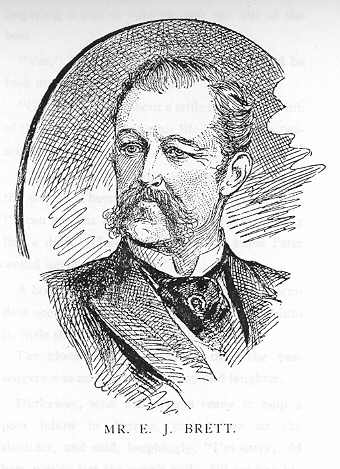
The day I started “The Boy’s World” some thirty-four years ago, I had the pleasure of meeting Mr. Edwin J. Brett, proprietor of “The Boys of England,” James Henderson of “Funny Folks” and George Emmett of the “Young Briton.”
The paper was a pronounced success, and over 70,000 copies of the first number were sold.
Mr. Brett was the first to compliment me on my effort, while George Emmett and James Henderson shook my hand heartily, and expressed their best wishes for its prosperity.
I merely mention this to show the good feeling which existed between City men in the same line of business.
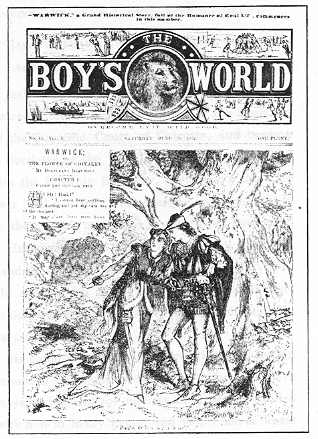
“The Boy’s World” contained three serial stories entitled, “Warwick,” by Benchley Beaumont, “Ralph Rollington's Schooldays” by myself, and “Ned Neville,” a Military Story by Captain L’Estrange.
6
The tales were illustrated by Friston, Robert Prowse, (who we always addressed as Bobby), and Chris Davis. It may be mentioned that “Chris,” is now the well-known artist and descriptive writer, who supplies the clever sketches and cartoons for “The People” of the present day.
This reminds me that a few weeks ago “Chris,” probably being short of a subject for his interesting column in “The People,” entitled “People I have met,” picked upon me as one of the old brigade of publishers and writers of Boys’ Stories, to fill in the gap.
His article will be found on another page, though I confess that I had some hesitation in reproducing it, fearing that it might be considered a trifle egotistical. However, my excuse is that he was one of the very first artists engaged on “The Boy’s World,” and was under fourteen years of age when he produced some of the early pictures for “Ralph Rollington’s Schooldays.”
It is not my intention, at this early stage of the history of Boys’ Journals, to give a full account of them, as they appeared according to dates. This will be reserved for my last chapters.
7
In the meantime I will briefly describe incidents in connection with some of the most celebrated authors with whom I have come in contact.
”JACK HARKAWAY,” (BRACRBRIDGE HEMYNG).
Author of ”Jack
Harkaway’s Schooldays,” etc., etc.
Jack Harkaway was one of my oldest and dearest friends. He was the son of the Registrar of the Supreme Court of Calcutta, and became a Barrister of the Middle Temple. I once called him the briefless Barrister, for I don’t think he ever held a brief. However, he laughed heartily at the remark and took it quite good naturedly.
Harkaway, when I first met him, was a tall, handsome man, and every inch a gentleman. He spoke with a slight American accent, and seldom raised his voice beyond an ordinary conversational tone.
He could tell a story to perfection, and keep a room-full of people amused for hours. I have stayed with him for months at a time, travelled with him in many parts, and yet, I never knew him once to lose his temper.
He had a peculiar habit, when he wished to impress on you some important point, of rubbing
8
his hands together, and then stretching out his arms to their full length, displaying his immaculately white cuffs. This he would do two or three times, “Guess that’s what the Americans call shifting your linen,” he would say, with a merry twinkle, as he removed his eye-glass.
It is considerably over forty years ago that I first met him in New York. I liked him the moment we had been introduced, and I am sure the feeling was reciprocated. I must here relate an amusing incident which shows how Harkaway enjoyed a bit of humour.
Slapping me suddenly on the shoulder, one sultry evening in July, he said “Say old boy, I’ve got a treat in store for you to-night; something novel.”
“Indeed. What is it?” I asked.
“Well, I’m going to hear old Balshazzar the coloured parson; you’ll be delighted, and thoroughly enjoy the humour of the thing. I want to write an article about him.”
“Very well, if you say its all right, Brace, I’ll come, but a religious service conducted by the coloured Balshazzar, when the thermometer
9
stands at 90 in the shade, fails to make a very strong appeal to my idea of enjoyment.”
However, we made our way to the church, and selected two back seats under the gallery and near the door.
A coloured musician was playing the harmonium, and chatting merrily to some of his companions, when the Rev. Ebenezer Balshazzar ascended the numerous steps leading to the lofty pulpit, in a spirit of deep reverence. Glancing around at the assembly of coloured men and women, with a look of disappointment depicted on his coal black face, he wiped the perspiration from his brow with a big red handkerchief, and plunged into his address.
“I suppose, my bredren, you are awar dars a crisis in dis yar church—a big crisis which am likely to overwhelm us if we do not circumvent de debil. To put de matter in a nutshell, de funds hab all been expended and de owner ob dis yar building insists on de mortgage being squar’d up.
“Dat’s de kernel ob de nut,” and the preacher emphasized this remark by heavily thumping the desk of the pulpit, which unfortunately collapsed, a portion of it falling with a crash on the heads
10
of some of those who were seated in the body of the chapel.
The preacher took little notice of this unfortunate incident beyond remarking “dat he hoped dat none ob de kernels ob dar black nuts had been cracked by de little mishap.” Glancing over the pulpit and noticing one coloured gentleman binding up another individual’s head which was bleeding profusely, he went on to argue that “it was a furder proof that we allers ought to be prepared for ebery contingency; for ‘in de midst ob life we are in death.’”
“But to return to de subject ob de troubles ob dis yar Church,” he continued, raising his voice to the occasion, “it makes me bubble up wid indignation, and I hab to use some strong language. De plain facts ob de case is dat you big, black, lazy niggars hab not gibben ob your substance according to de precepts ob de Gospel. Last Sabbath de total ob de two collections only amounted to one dollar fifteen cents, and I’m griebed to say dat I feels like collapsing, when I tell you darty mean niggars dat it included a bad ten cent piece, a foreign penny, a brass coin, and two buttons. Dis is de work of the debil
11
and your black hearts. Stop dat man groaning,” suddenly ejaculated the preacher, leaning over the pulpit, and pointing to the individual with the bandaged head.
“Before I was interrupted wid dat unseemly noise, I was saying dat your hearts must be blacker dan your darned black skins, to let dis Church—de Church ob your ancestors, and I may add, your posterity, sink into de slough ob despond into which it hab fallen. Just contemplate de annoyance and de anxiety ob your pastor and deacons.
“I feel at de top ob my indignation at your meaness,” flourishing his huge black fists over the congregation in a threatening manner, he hissed out, “I feel dat I could smite you, you black sons of Beelzebub. Take back your bad coins,” he said, flinging them indignantly in the midst of the congregation, “I will come round wid de plate myself,” he exclaimed, with a meaning emphasis, “and see dat you gib according to your means, or I’ll shake it out ob yer.” Before the Rev. Ebenezer Balshazzar had descended from his lofty eminence, it is needless to add, the larger portion of the congregation had left the sacred building.
12
Harkaway and I remained and we handed the preacher a dollar bill, for which he thanked us profusely.
“I can assure you,” said Harkaway, addressing him in a confidential manner, “You have well earned it, and I trust your collection will exceed your most sanguine expectations.”
“Dat’s not likely to happen, gentlemen, in dis yar Church. Dese coloured people are too mean. I must hab another collection next week, and take round de plate myself before I preach the sermon.”
When we had got some distance from the building, Brace stopped suddenly, carefully arranged his eye-glass, and gave me such a comical look that I burst into a fit of laughter.
Then he laughed, and made an effort to speak, but speech failed him.
There we stood near the City Hall roaring with laughter.
At last he managed to stammer out, “It’s the finest evening’s amusement I’ve had for months, I’d give a second dollar to old Balshazzar, if he’d give us another turn.”
I could write pages of amusing incidents about my old friend, but unfortunately, space will not permit.
13
Many years later, and towards the close of his career, when he had settled down, he invited my and two or three friends to dine with him.
He was then living in a modest flat at Fulham, as Dame Fortune had been the reverse of kind to him.
Since I had last seen him, he had lost an eye, the facial angles were more pronounced, and his hair was much thinner.
However, he was just as optimistic as ever, and gave us a most hearty welcome.
“Now, boys,” he said, rubbing his hands, and shifting his cuffs. “I’ve got some lovely young ducks for dinner—well, my poulterers tell me they are—but we shall see. I’ve also got some very old whisky, and plenty of it.”
It was a Bohemian meal, his housekeeper laying the table in less time than I can describe it.
“Now then Ralph,” he said, “I will take the chair, and you occupy the vice. Don’t waste time—sit down.”
The birds were then brought in, and placed before him to carve.
Harkaway flourished a large carving-knife and touched them gently with the back of it, which
14
produced a strange hollow sound. “That’s ominous,” he said, “I’ll sound the other,” which he did, but with no better result. “Well,” he continued, with perfect equanimity, “I’ll now proceed to carve them, gentlemen, and I’m willing to lay a wager of half-a-crown that I’ll carve the four birds, cutting off eight legs, and eight wings, in six minutes.”
The bet was accepted by one of the guests, amid loud laughter.
Out came several silver and metal watches, as the carver placed, or tried to place the carving fork into the breast of the first and fattest bird.
Unfortunately, the fork slipped, and the bird went on the wing, and flew or bounced over the head of the nearest guest, and fell on the floor with a thud.
In the excitement, the gravy was upset, and also a bottle of stout. The fallen bird was picked up, and replaced on the dish by another guest.
The second bird proved even more difficult to carve than the first, and the carver gave up the task as hopeless, though he wasn’t in the least disconcerted.
15
It was the last meal I had with poor old Brace, for he died a few weeks later.
Before closing this brief sketch of my dear old friend, I wish to relate a little incident which occurred some thirty years ago. It will interest those who care to know how the characters of “Jack Harkaway,” “Captain Jack,” and “Ralph Rollington,” were created.
Harkaway and I were standing outside the offices of “The Boys of England,” which was
published by Edwin J. Brett, when I asked him what caused him to create the character of “Jack Harkaway.” Was he a real or imaginary character?
“Well, old boy,” he replied, with a knowing wink and a pleasant smile, “I think you can put it down to a bit of both. Reminiscences of one of my dear old college chums, a dare-devil sort of a fellow, who was always up to some kind of mischief, had much to do with it. It was really he who gave me the first idea of the character. Then when I christened him—metaphorically speaking—I began to write him up—new ideas flashed across my mind so quickly that what was then a mere shadow, gradually blossomed into
16
a reality. Something after the style of “Pygmalion and Galatea.” Then suddenly changing his voice, he said, “But why do you ask me?”
“Oh! simply curiosity,” I replied.
“And now tell me what induced you to write ‘Ralph Rollington’s Schooldays’?”
“That question is easily answered, for the first few chapters of the book are incidents of my early life when at the old Academy. The characters of Tommy Cake, the fat boy, Solon Shenton, the Yankee, and many others, were taken from real life there.
“When I left school, being of a roving disposition and anxious to see the world, I shipped on board the ‘Constantine,’ with an old chum named Cole, who was the steward. Some time later I wrote my adventures and called the story ‘Dick Darlington, or a Land-lubber afloat.’ Nearly all the incidents mentioned in the early part of this work, including my shipping as a cook, the breaking of the wheel chain in the Baltic, the fight with the captain of the ship, in which I was nearly kicked to death, are perfectly true.”
Just at that moment we both received a friendly
17
tap on the shoulder, and on looking round were agreeably surprised to find that it was our mutual friend George Emmett.
“Now George,” said Harkaway, re-adjusting his eye-glass, and looking him full in the face, “We were just having a chat about the creation of characters.
“Can you enlighten us to why you penned ‘Captain Jack’?”
“I simply wrote it,” replied Emmett, “because I thought it would increase the sale of my paper, and that means money. Remember that every additional thousand copies, beyond a certain number, represents an extra sovereign profit per week. That’s a plain answer to a plain question, Harkaway, so now let us adjourn to the nearest Hostelry and partake of refreshments, for I’m parched.”
I need hardly add that in those days the authors of boys’ stories, and the artists, took a fair share, and occasionally more than their share of liquid refreshments.
Brace Hemyng was a most prolific writer. It was astonishing how he could turn out copy as he did. I fail to remember half the stories he wrote,
18
and am indebted to J. S. G., of Sheffield, for the following list which was published in a recent letter to T. P.’s Weekly. He wrote several serials for the “London Journal,” “Curate of Inveresk,” a clerical biography, 1860; “Gaspard Trenchard,” 3 vols., ‘64; “Curious Crimes,” “On the Road,” (commercial travellers’ tales); the articles on what we have recently elected to call the White Slave Traffic, for Henry Mayhew’s “London Labour and the London Poor,” “Commune in London,” “Called to the Bar,” “The Favourite Scratched,” “The Orange Girl,” “Season at Brighton “ “Secrets of the Turf” the “Skittles” and “Kate Hamilton” group, “The Stock Broker’s Wife,” “A Stock Exchange Romance,” “The Girl of the Period,” “The Man of the Period,” and a host of other 2/- yellow-backs, mostly published in the sixties. About 1870, he laid the foundations of Brett’s fortune, with the “Jack Harkaway” series; was induced by Frank Leslie (“Illustrated Paper,”) to go to America and write more “Harkaway” stories over there, and afterwards came back to England and wrote “Dick Lightheart,” (the “Scapegrace” series,) for Brett.
19
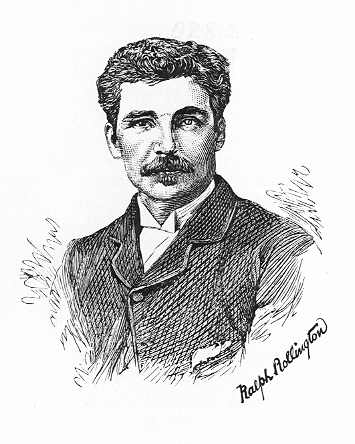
RALPH ROLLINGTON.
Author of Ralph Rollington’s Schooldays. Ralph Rollington in America and Australia. Dick Darlington. Peter Podger and Sam Slocum. The Two Ventriloquists, etc., etc., etc.
With regard to myself I can say very little, beyond the fact that for many years I have been connected with Boys’ Papers, Authors and Artists, in one way or another. As I have previously stated, I will now reproduce an article by my old friend Chris Davis, which appeared in “The People,” of Sunday, February 15th, 1913.
“A POPULAR BOYS’ AUTHOR.”
There has lately been a discussion going on in one of our leading literary papers as to whether boys’ stories of the present day are equal to those which were written some twenty or more years ago. Judging from the letters of the enthusiastic admirers of the old brigade, there seems to be no comparison as regards the qualities of construction, humour, and situations between the writers of boys’ stories of to-day and their more famous predecessors, who, according to their supporters, stand pre-eminent. It was
20
with an idea of getting the opinion of one of the shining lights of those days that I set forth to search out
“RALPH ROLLINGTON,”
himself a writer of a famous boy’s classic. I found him perched on a high stool, nursing the end of a cigar between his teeth, in the editorial sanctum of a weekly paper, which has little sympathy in common with any juvenile productions.
“Pleased to see you, my boy,” said Ralph, as he ran his fingers meditatively through his grey-grizzled, curly locks. “Ah, it doesn’t seem all those years ago since you drew me a picture on wood, at the age of 14, to illustrate my first chapters of ‘Ralph Rollington,’ which opened in ‘The Boy’s World.’ Aye, they were the days of real genuine boys’ literature. No cant or effeminate nonsense about those tales. Just think, too, of the famous artists we engaged to illustrate them. I had H. D. Friston, Bobby Prowse, G. Reading and Leitch, drawing for me on ‘The Boy’s World.’ Yes, that publication did have a chequered career towards the end of its days, and you can perhaps remember, we only saved the editorial carpet from the wreckage. Yet,
21
strange to say all the material and copyright of the paper was sold to another man a few years later, who re-published it as a half-penny, and made a small fortune out of it.” I see that several ‘old boy’ readers have been inquiring as to where they can purchase that real classic of boys’ literature. ‘Handsome Harry,’ written by Mr. E. H. Burrage, who is still happily with us, which embraces the first adventures of that most astute of Celestials, ‘Ching-Ching,’ and also the ensuing series. This was published, if I can recollect clearly, by Charley Fox, in Shoe-lane. But I fancy it would be very difficult to put your hands on an original copy of the paper, or even the volumes in which they appeared, and the same
may apply to the ‘Jack Harkaway,’ in which the much troubled Mr. Isaac Mole appeared.
“I well remember the crowd of excited news-agents, who used to fight in Fleet Street Offices for their copies of Edwin Brett publications. Yes! I do know that a powerful combination of publishers hold all Edwin Brett’s original productions and blocks. The same does not apply to the materials of George Emmett, who fell on hard times during his later days. He is most celebrated
22
now for his introduction of that prime favourite of the lads of the latter ‘seventies, and early ‘eighties, namely, that arch, old, but cheery imposter, with a troublesome wooden leg, called ‘Old Dabber.’ Brett’s publishing offices stood almost on the site of the residence of Richardson, the novelist, overlooking the churchyard of St. Bride’s, in which he is buried.
“Time grows short; space as you say, my dear boy, has to be studied, anecdotes of the celebrities of those days at any length, would make most fascinating reading.”
There is one slight error in the above interview which relates to “Dabber.” Mr. George Emmett, in his book, simply referred to the old man as “Dabber,” the gate keeper. On the suggestion of Laurence Emmett, E. Harcourt Burrage took the story over and created the character of “Dabber.” Bar a few chapters, he was the writer of “Tom Wildrake’s Schooldays.” When George Emmett fell on evil times, Edwin Brett sent for him to write a “Wildrake Schooldays” yarn.
On reading the first instalment, Mr. Brett, who was an excellent judge of stories, guessed there was something wrong, and asked him if he really
23
wrote the earlier yarn. Emmett, frankly confessed that he had not. Thereupon Brett sent for E. H. Burrage, and asked him to write for him, which he did, until “Ching-Ching’s Own “ started in 1888. Mr. Burrage, knowing nothing of copyright law, sold his interest in “Tom Wildrake,” to George Emmett for £5. I have no doubt it brought the purchaser some thousands of pounds profit.
It is a fact not generally known, that the Emmett family, all of whom were connected with literature, consisted of four brothers, and a sister, George Emmett, H. Charlton Emmett, William Laurence Emmett, Robert Emmett. and Miss Sophie Emmett.
* * * * *
24
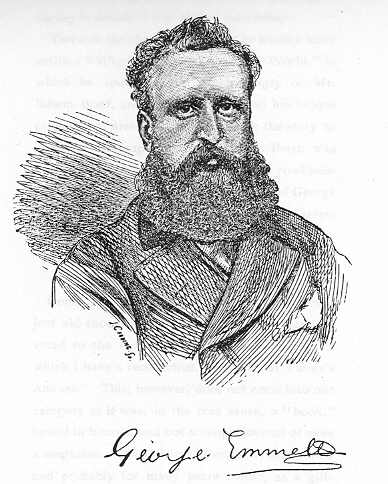
I will now endeavour to give a brief account of the author of “Captain Jack,” George Emmett. Author of “ Boys of Bircham School,” etc. etc.
It is just about thirty-five years ago when I first met George Emmett, in Fleet Street. He introduced me to his brother, William Laurence Emmett, who founded “The Young Englishman’s Journal,” which was a pronounced financial success. One of the leading stories was entitled “The Boys of Bircham School,” which was penned by George Emmett, and this was followed by “Captain Jack.”
In 1869, Mr. W. L. Emmett issued the “Young Briton” as a half-penny weekly, but a month later the price was advanced to a penny. The “Sons of Britannia” was started by Emmett early in 1870. George Emmett lived for many years in East Dulwich, close to Peckham Rye. We invariably went up to the City together, and sometimes Mr. James Henderson, proprietor of “The Weekly Budget,” joined us. George Emmett, in his younger days was an officer in the Cavalry, and fought at the battle of Balaclava, where he was wounded. He told
25
me the story several times, but though slightly varying in details it was always interesting.
Towards the close of his career he wrote a story entitled “Wiggles,” for “The Boys’ World,” in which he spoke rather disparagingly of Mr. Edwin Brett, and his publications and his unique collection of armour. I had to bring the story to a somewhat abrupt conclusion, as Mr. Brett was a friend of mine. The fact is, the two rival publishers of Boys’ Paper’s, Edwin Brett, and George Emmett, were far from being on the best of terms with each other.
BOYS’ PAPERS FIFTY YEARS AGO.
Going back over fifty years ago, when I was just old enough to read, the only periodical devoted to the recreation of the juvenile mind, of which I have a recollection, was “Peter Parley’s Annual.” This, however, does not come into our category as it was, in the true sense, a “book,” bound in boards, and not a simple journal or even a magazine. It was much in vogue at that period and probably for many years before, as a gift-book for birthdays, and other interesting events, in the career of happy youngsters. The particular
26
copy in which I was interested, found its way to my possession as a Christmas present, and you may be sure I was mighty proud of it. But, as I have said, the Annual could scarcely be regarded as a periodical, properly so called, and with the advent of the more frequently published claimants for youthful attention, it disappeared.
Somewhere in the early sixties, there arose in the literary firmament, a bright particular star, whose yellow rays shed a glorious effulgence upon the opening minds of the juvenile population. This was a monthly publication entitled, “The Boys’ Journal,” bearing on its cover, a broad border, wherein were depicted the beasts which form the strongest attraction in stories of adventure. Lions and tigers, elephants and snakes, were there set forth in wonderful entanglement, all calculated to arouse the curiosity and excitement, of what Mr. Chadband designated as “the human boy.” The magazine, price sixpence, was an instantaneous and marvellous success. Its projector and proprietor was my old and valued friend, Mr. Charles Perry Brown, happily still with us. Naturally, he was then a little more than a boy himself. In fact, when he
27
entered the world of business on his own account, he was only nineteen. The publisher of “The Boys’ Journal,” was Henry Vickers, who, until the Strand improvements swept them away, had his offices close by St. Mary’s Church. So great was the rush for the first issue of the “Journal,” that the premises could scarcely contain the numbers which were applied for, and the besieging force of collectors, had to be supplied through the windows.
Amongst the contributors to this extraordinary successful publication, were such famous boys’ writers as Captain Mayne Reid, Percy B. St. John, and Russell, the author of “Tales of the Coastguard,” which appeared in “Chambers’ Journal,” and many others, whose names I cannot now recollect. For years, this periodical held unrivalled sway, until at last it had to make way for the penny weekly productions of Edwin J. Brett, and his many competitors.
It was this same Mr. Charles Perry Brown, who, long afterwards, founded the well-known Aldine Publishing Company, a concern which he piloted safely through the rocks and shoals, which environ the start of almost every venture in the
28
publishing world, till he brought it to a secure and prosperous haven. He has now retired from the activities of a strenuous business life, but his sympathies are still with those who are struggling amid the worries and trials of literary effort, and his kindness of heart, and unostentatious generosity has done much to cheer the path of many an unfortunate toiler.
A NEW ERA OF BOYS’ PAPERS.
To Edwin J. Brett, must be given the credit of producing a new and original style of Boys’ Papers.
When “The Boys of England” first made its appearance in 1866, it went with such a rush, that it was difficult for newsagents to get their supplies. The boys were so eager to obtain it that other publishers seized the opportunity of producing journals got up on similar lines. A year later (1867), W. L. Emmett brought out “The Young Englishman’s Journal.”
Then Edwin Brett produced “Young Men of Great Britain,” (1868) and Emmett replied by issuing “The Young Gentlemen of Britain,” in the same year.
29
The rivalry between the two houses was exceptionally keen. I was personally acquainted with most of the writers connected with the above journals, which included such famous names as Percy B. St. John, (pronounced Sinjen,) his brother Vane St. John, James Greenwood, (“The Amateur Casual,”) E. Harcourt Burrage, and Bracebridge Hemyng; all these writers, a few years later contributed to my own journals. “The Boy’s World,” “Our Boys’ Paper,” “The New Boys’ Paper,” and “The Boy’s Pocket Library.”
The list of writers engaged on Brett’s papers also include Captain Mayne Reid, Charles Stevens, and Stephen Hayward, but unfortunately I did not have the pleasure of their acquaintance, though I appreciate the brilliant stories they penned.
TALES ABOUT AUTHORS OF BOYS’ STORIES.
The name of Vane St. John brings to my mind many amusing incidents in his somewhat chequered career. In writing about him I must necessarily introduce the names of many authors and artists, as he may fairly be termed one of the leading characters in the drama.
30
It was in the spring of the year 1880, when James Greenwood (The Amateur Casual), was writing a story for Volume II. of “The Boy’s World,” entitled “Homeless Jack, or Adrift in London,” W. H. G. Kingston was also penning a story entitled “Dick Cheveley,” and I was engaged on “Ralph Rollington at Sea,” when I made arrangements with Vane St. John to write an Irish Story.
After some discussion he gave me a rough out-line of the plot.
“That will do splendidly Vane,” I exclaimed. “Put plenty of humour into it, for the boys like fun. Let every line palpitate with excitement.”
“By the way,” I added, “What title are you giving it?”
“A splendid title,” he said, enthusiastically. “ ‘That Larry of Ours or The Brave Boys’ of Leitrim, a story of Irish Life,’ and if it don’t send up the sale of ‘The Boys’ World,’ by leaps and bounds, I’ll eat my hat.”
“Don’t trouble to do that Vane, for I haven’t any desire to bury you.”
Stepping a little closer to the desk at which I
31
was sitting, he whispered something mysteriously into my ear.
“What, already, my boy?” I exclaimed, with an assumed air of astonishment.
“I’m sure it will be for the good of the paper, and it will spur me on to big things,” he pleaded.
“I’ll commence it this very night—got a lot of trouble at home—three of the kiddies ill.”
“Three!” I repeated, dubiously.
“Yes, and that’s only a third of them.” However, he got what he wanted—something on
account. I’ve known Vane when he was earning twelve pounds weekly with his pen, and even then he was always in debt and worried by money lenders.
These money sharks would hang round the offices when he had to draw his money on pay-day and they never left him until they got their pound of flesh, notwithstanding his ingenious efforts to circumvent them.
It was in the summer of the year that I am writing about (1880), when he was staying at Margate, with his bosom chum Walter Viles, who under the nom-de-plume of “Brenchley [sic] Beaumont,”
32
penned “Warwick,” “Brave and Bold,” “Boadicea,” and many other stirring stories which were published in “The Boy’s World,” that I had occasion to write to the two merry authors concerning their ‘copy,’ which had not arrived.
A prompt reply came in the shape of a telegram, stating that the two authors were in great trouble and in bed. “Please wire five pounds.”
I had a shrewd suspicion that something was wrong, and started for Margate the following morning.
I wasted no time, and made direct for the modest lodging where they were staying, and enquired for Mr. St. John and Mr. Viles.
A buxom landlady with a weather-beaten but pleasant face slowly opened the door, and hesitatingly informed me that the two dear gentlemen occupying her ‘first-floor-front’ were in bed and could not be seen.
“Oh! they will see me if you will kindly give them this card,” I said.
“But they can’t, sir. They cannot possibly leave their room.”
“Why not? Are they ill?” I enquired.
“No, they are not exactly ill, sir, but they’ve
33
pawned all their clothes. First one thing went and then another, and yesterday I even had to take their trousers, and that’s the last thing they’ve got. Poor gentlemen, I quite pity them, and yet they are so happy. Do you know, sir, by their talk one would imagine them to be millionaires. They smoke big cigars, and drink iced claret and Guinness’s stout all day long, but they haven’t had any these last two days “
I went up stairs, and when I entered their ‘combined-room’ which reeked of stale tobacco smoke and beer, they were both sitting at a small table busily writing—pinned up in sheets.
They certainly presented a most comical appearance, and a scene I shall never forget. Their laughter was as loud and as long as my own.
Both poor fellows have since passed over to the majority, otherwise I should not have told the story, though if they were alive no one would have enjoyed listening to it more than themselves.
Vane and Viles took an optimistic view of life, looking only at the bright side of everything; never troubling about the future; they were generous and good hearted to a fault.
Money matters were now arranged, and an hour
34
or so later, my two friends Vane St. John and Walter Viles blossomed out in fashionably cut blue serge suits, white straw hats, and white boots.
When we returned to our lodgings and replenished the commissariat department, the landlady looked on for some time in mute astonishment, at last she exclaimed. “What a change!”
It was certainly a marvellous change from gloom and impecuniosity to peace and plenty.
“I told you, Mrs. Jones,” said Vane, addressing the landlady. “The sun always shines more brilliantly after the storm. Some people are pessimistic and go through the world as if they were looking for troubles. For my part I try to get all the happiness out of life that can be extracted from it.”
“I perfectly agree with the old boy,” chimed in Viles, enthusiastically. “I am certainly small of statute but have an enormous capacity for the good things of this life. If I’m not happy its not for want of trying to be.”
And then the little man, for he was a little man, passed a hand through his long black hair and burst into the following refrain:—
35
“Come let us be happy together,
For where there’s a will there’s a way,
Let the heart be as light as a feather,
And maxims like mine have their sway.
Be kind, its the way to meet kindness, if not,
What’s the use of regret;
Rail not at the world for its blindness,
But pity, forgive, and forget.”
As I watched him singing, the thought flashed across my mind what an incongruity it seemed that such a little man should be the Author of “Warwick” the great Kingmaker, and “Boadicea” the great Queen.
“Now, Mr. Rollington,” he said, addressing me, as the landlady placed a hot smoking salmon on the table, “both Mr. St. John and myself wish to express our sincere thanks for your welcome visit, which has produced such satisfactory financial results, and we trust that you will extend your stay until the end of the season. We shall be delighted if you will give us your decision on this point.”
“Gentlemen,” I replied, “the salmon is on the table and I will not detain you long under the circumstances, unfortunately, I am unable to avail myself of your kind offer. However, I wish to
36
state that I have wired to several literary friends, including Jack Harkaway, George Emmett, Ernest Brent, George Emmett’s brother, Charlton, Harry Emmett (author of “A True British Sailor Boy”), Frank Stainforth (author of “From Pole to Pole”), James Greenwood, Gerald Whiting (author of “The Golden Skull”), John Holloway (author of that popular military story, “Drummer Boy Dick”), Robert Prowse, our clever artist, and William Meesum, the wood engraver, to meet me here next Saturday. Dinner at six o’clock.
“Your landlady has informed me that she can accommodate twenty persons to dinner in her two large rooms which are connected with folding doors. I sincerely hope that you two gentlemen will be able to join us.”
“We will,” they both shouted.
“Then the matter is practically settled, so now let us get on with the banquet.”
I left my two friends the following morning and was soon back in London, busy with my editorial duties.
37
A BUSY DAY AT THE “BOY’S WORLD” OFFICE.
MR. HOLLOWAY BECOMES A PARTNER.
“If you please, sir,” said a lad entering the office, “there’s a gentleman outside who would like to speak to you—I think he said his name is Colonel McIver.”
“Show the gentleman in,” I replied.
The Colonel was an exceptionally tall man with a big moustache, and spoke as if he were giving orders on a battle-field. “I have called,” he said, “to see if I can write you a great Military Story for ‘The Boys’ World.’ I have fought under fourteen flags. Yes sir, under fourteen! that alone is sufficient evidence that the serial will contain plenty of exciting incidents. Plenty of fighting, etc., etc. I love the battle-field,” he continued, as if he were speaking about some favourite dish that had tickled his palate at a recent banquet.
“What a ‘fire-eater,’” I mentally exclaimed, and then asked the Colonel what title he intended giving his story.
38
“ ‘Under Fourteen Flags,’” he exclaimed, enthusiastically, rising from his chair to emphasize it.
“Very well, Colonel, if you like to send me the first two installments with a synopsis of the plot, and providing it is suitable, I will accept it.”
“Suitable!” he ejaculated, with a look of surprise, raising his voice which was accompanied by a movement as if he were about to raise his stick also. “Of course it will be suitable.”
“Well, I shall be very pleased, Colonel, if you will send me the copy as soon as possible,” and I wished him good-day.
The office lad again popped his head in the half-open door and announced Mr. Harkaway.
“Well, upon my word, Ralph” he said in his cheery manner. “You look as if you had been away for a month—got such a colour on you. By the way old boy, wasn’t that the fire-eating Colonel that left just before I came in?”
“I only know him as Colonel McIver,” I replied, “though he certainly does appear to be a bit of a fire-eater.”
“Why he’s fought no end of duels on the continent,” said Harkaway, “and I’m trying to arrange
39
one with him for a very particular friend of mine—he won’t listen to being put off.”
“But you can’t have duels in England,” I argued.
“Certainly not, but its a very easy matter to run over to the Continent.”
Our conversation was suddenly interrupted by the re-appearance of the office boy announcing another visitor, Mr. John Holloway.
“What the great pill and ointment doctor?” I exclaimed.
“Don’t know sir—says he wants to see you on very particular business.”
“Show him in.”
“Good morning gentlemen,” he said smiling pleasantly, and at the moment I was struck by the exact likeness of the late King Edward, as he appeared some thirty-five years ago, even to the shape and colour of his eyes, also his hair. If he differed in any way from his late Majesty, it was in height, for he was a trifle taller.
“Be seated Mr. Holloway.” I said.
“In a few words let me state,” said Mr. Holloway, “that I have heard that you would like a little more capital in your business. I am willing to invest one thousand pound in it.”
40
“I presume you are aware, Mr. Holloway, that there are certain risks in the publishing line. Occasionally, you may make a big hit with a few hundred pounds, and on another venture you may expend thousands, and the publication may turn out a complete ‘frost.’”
“Yes, I understand the risks,” he replied, with a pleasant smile, “but I’m willing to have a ‘splash.’ I like boys’ literature, and have written several stories, and hope to write more.”
“By the way,” I said, “allow me to introduce you to my old friend, Bracebridge Hemyng,
author of ‘Jack Harkaway.’”
“Jack Harkaway!” he exclaimed in astonishment. “Well, I never anticipated this pleasure, Mr. Harkaway,” at the same time shaking him heartily by the hand. “I have read several of your stories, and have greatly appreciated them.”
Harkaway, who was an exceptionally modest man, said, “Well, I’m glad you like them, but really they are not deserving of your praise—they just answer the purpose for which they were written. The boys appear to like them, and that is everything.”
41
“Now, Mr. Rollington,” said Holloway, turning to me, “if you will kindly make an appointment for to-morrow—say twelve o’clock—I will bring my solicitor, and he will hand you a cheque for one thousand pounds, when the deed of partnership can be signed, sealed, and stamped. Is that satisfactory?”
“Perfectly,” I replied, “the business could not have been transacted in less time. To-morrow, when the transaction is completed, we will have a little luncheon at Carr’s, in the Strand. Mr. Harkaway, I trust you will join us.”
“I shall be delighted, gentlemen; Carr’s is a favourite house of mine, Charles Dickens used to dine there, and in one of his works he says, ‘If you wish to enjoy the roast beef of Old England, and wash it down with the Burgundy of France, you cannot do better than dine at Carr’s.’”
“Well, I will not detain you any longer,” said Holloway, putting on his hat—“I shall be here about twelve o’clock to-morrow.”
“Rather nice fellow,” remarked Harkaway, in his dry quiet way, when he had gone. “Guess you two will get on well together. Hope you’ll make a fortune, old boy.”
42
“I ‘hae my doots’ about that,” I replied, “though one never knows what’s in store for one. A gipsy woman in telling me my fortune about a year ago, was good enough to inform me that I should never be worth much money, though I should have plenty of trouble. I was fool enough to cross the palm of her hand with the largest silver coin of the realm, for this special information. However, I think her prophecy will turn out pretty correct.”
“Well, look on the bright side of things,” said Harkaway, slapping me on the back. Then, as if a sudden thought had struck him, he added. “By the way, I received your wire about the little dinner party at Margate, next Saturday, for which accept my thanks. Rest assured I shall be there.”
“Then we can take the boat together on Saturday morning,” I added.
“Capital,” replied Harkaway. “Now I must I be off, old chap, as I’ve got a heap of copy to get in by Friday. No work means no dollars.”
The following day, Mr. Holloway, with his solicitor, turned up punctually at twelve o’clock.
43
My solicitor read the deed of partnership, to which we all affixed our signatures.
A cheque for one thousand pounds was handed to me, and the whole business was completed in less than twenty minutes.
The two lawyers took their leave, and Holloway and I were left to talk over matters.
As if by some sudden instinct, we both stood up and looked at each other, then extended our right hands. “I sincerely hope,” I said, tightening my grip, “we shall always be good friends, and I trust prosperity will smile upon us. I liked you from the moment I first saw you.”
“I can assure you, Mr. Rollington,” he replied, with his hand still in mine. “I thoroughly reciprocate your sentiments. I have spent so many years in India—served in the ranks throughout the defence of Lucknow, and witnessed such terrible sights during the Mutiny—my dear wife being murdered by the Sepoys, that it will be quite a relief to be able to sit down quietly and do a little literary work. I’ve never got over the shock.”
“Is that a fact?” I said, sympathetically. “How very terrible.”
44
“Indeed it is, and it makes my blood boil to think of what our poor fellows went through
during those tragic days.”
“Here’s an idea,” I exclaimed, suddenly. “Write it up, it would make a grand Boys’ story.”
“Yes, yes,” he replied, “it would make a thrilling tale. I went right through the Mutiny, and can speak from experience. I will commence it to-night—I’ve got a splendid title.”
“There’s a good deal in a title,” I replied meditatively. “What is it?”
“A Wall of Steel; or, He Would be a Soldier.”
Just at that moment the office boy announced Mr. Harkaway, and several gentlemen still
waiting.
“Good morning, gentlemen,” he said in his cheery manner, as he entered the office, “hope I’m not disturbing you.”
“Not at all—not at all!” I replied, “we were just talking over Mr. Holloway’s experiences in India. He thinks that the subject would make a splendid Boys’ story, and suggests calling it ‘A Wall of Steel.’”
45
“So do I,” replied Harkaway, “the very thing, and to be written by one who was there, and who served in the ranks, is just what is required. Romance is all very well, but reality is far better.”
“Excuse me for a few moments, gentlemen,” I interrupted, “while I dispose of some business outside, as there are several people waiting to see me. When I have finished, we will go on to Carr’s and have our little luncheon.”
I was not absent many minutes, and after writing a few cheques we walked down Fleet Street, through old Temple Bar, and then into Carr’s.
“What say you to roast beef and Burgundy, boys?” I enquired when we were comfortably seated.
“Excellent!” replied my two friends.
The joint was quickly wheeled up in front of us, and the familiar old carver, wearing his white jacket, white trousers, white apron, and white cap, soon gave us material to occupy our attention.
After three bottles of Beaune, the conversation which had occasionally flagged, became more
46
animated, when Harkaway commenced talking of the jolly old times he and I had spent in America, when he was writing for Frank Leslie.
“Do you remember,” he said, addressing me, “the night we went to Nordheimer’s Hall, in Third Avenue, New York, just after the Fenian raid into Canada. It was a great meeting of Fenians.”
“Take my word for it, Harkaway, I shall never forget it.”
“Well, Holloway,” he pleaded, in his persuasive way, “you must just hear this—it won’t take me a couple of minutes. But it is very funny. Ralph and I saw this meeting announced on a big poster, and we decided to attend, though we had some trouble in gaining admission without tickets, but I bluffed up the door-keeper that we were Press men. Well, we got in, just as some wild Irishman was making an urgent appeal for funds.
“ ‘Shure, gintlemen,’ he exclaimed in his rich Irish brogue, ‘all you have to do, is to put down your twenty-five cents or fifty cents, and all your brothers scattered over the wide world will be after doing the same, and we’ll buy a moighty
47
big ship and drive the British commerce from the says.’
“When the cheering which greeted this outburst of Hibernian patriotism had ceased, would you believe it, that Ralph was fool enough to shout, ‘Gentlemen, I’m sure Queen Victoria would tremble on her throne if she could have heard the remarks of our worthy brother.’
“For a moment there was a tense silence, and all heads were turned in our direction. The audience hardly knew whether to take the matter seriously or otherwise, but nobody appeared to know who was the ‘traitor,’ though the curses and threats which were uttered within our hearing boded ill for us reaching home in safety, if we were discovered. However, the meeting went on and the enthusiasm was unbounded. During the excitement we managed to slip out, as we thought, unperceived.
“ ‘Follow me over here,’ I whispered in Ralph’s ears, ‘I’m well known in this saloon, in case we are followed.’
“Just as we were partaking of a Bourbon whisky, a strange and villainous looking man faced us and said, ‘Guess you are the two darty
48
curs who insulted ‘the cause’ at the meeting opposite.’ In a moment he whipped out a revolver and placed it within a few inches of Ralph’s head. ‘Now for two pins I’d put a bullet—‘
“The man didn’t complete the sentence. There was a terrific yell, for the ‘boss,’ who was drinking from a heavy lager beer glass with a handle, and he brought the inverted glass down with all his force on the man’s wrist, the blood spurting out in all directions.
“During the excitement, Ralph and I got away through a side door, without a scratch, but we had a very narrow escape. I really think the fellow with the pistol was too drunk to know what he was doing. But there, ‘All’s well that ends well.’
“Now I must be off, gentlemen, as I’ve got a lot of work to get through—we’ll meet you on the Margate boat Saturday morning.”
“We shall be there, old boy, so don’t fail,” we both shouted.
As we wended our way back to the office, I offered my new partner a cigar, and was sur-
49
prised to learn that he did not smoke, though he was an inveterate snuff-taker.
“Let me see,” said Holloway, taking another pinch of snuff, “to-day is Thursday, to-morrow I shall be hard at work on my new story, and on Saturday I will meet you on the boat.”
“I shall be there, Mr. Holloway, rest assured, for I’m anxiously looking forward to a breath of sea air, to blow the London smoke out of my lungs.”
“Well, good-bye, until Saturday morning.”
I remember the day we started on our little trip, as if it were yesterday. It was an ideal day, a clear blue sky from which the sun was shining brilliantly. In my mind’s eye I can picture my friends as I saw them. There was Jack Harkaway, John Holloway, Harry Emmett, Frank Stainforth, Fairfax Phillips, George Emmett, Ernest Brent, Will Measum, and Bob Jackson, one of the proprietors of the “Boys of London.”
“Now,” said Harkaway, stretching out his arms to their full length and displaying his big white cuffs, “the boat is on the move, and I propose we now adjourn to the saloon. You know gentlemen what the Governor of North Carolina
50
said to the Governor of South Carolina: ‘It’s a long time between drinks,’ so let’s commence the day properly with a bottle of Bass or Guinness—or whatever you feel inclined for. By the way,” he continued, “I can offer you a very choice cigar from a box which Mr. Brett, the good old proprietor of ‘The Boys of England’ presented me with yesterday. He knew I was coming to Rollington’s party, so he very considerately told me to give them to my friends. I may add that the gift was accompanied with a sincere wish that we might all spend a very jolly week-end.”
We all spent a very pleasant time, but just as we were passing Southend, there was a cry of “Man overboard.”
The boat was immediately stopped, when there was a rush of passengers to the aft-end of the vessel.
All eyes were strained peering over the white foam, caused by the wash of the vessel to discover any sign of the missing man.
Passengers looked at one another anxiously, as the minutes flew by, when the cook, an extremely stout and comical looking man, came up and informed us that it was the pantry-man who had
51
fallen overboard, he had lost his balance while emptying a pail of rubbish over the side of the boat.
“Yes,” he remarked disconsolately, “and he took my new pail with him.”
“Oh, don’t worry about a trifle like that—think of the poor fellow losing his life,” retorted a passenger sympathetically.
“He won’t lose his life—he’s like a porpoise in the water. There he is,” he shouted, excitedly, “I can see his black head, and he’s swimming like a duck. Good luck to him. I knew Peter would never be drowned.”
A boat had been slung out as soon as the accident occurred, and the man was soon hauled into it, little the worse for his involuntary dip.
The gloom which had fallen over the passengers was now turned into joy and laughter.
Harkaway, who was always ready to help a poor fellow in distress, patted him on the shoulder, and said, laughingly, “I’m sorry, old boy, you’ve lost the cook’s pail. I’ll see you before we leave the boat,” and he at once took off his cap and collected amongst our party and the
52
passengers, over thirty shillings in silver and coppers.
“A very nice collection for the old chap,” he remarked as he tied it up in a neat little parcel, “though I wouldn’t do the same trick for double the amount.”
Nothing further happened worth recording during the trip, and we landed at Margate about two o’clock.
I had already sent a cheque to the landlady, who was to cater for us, with instructions as to how it was to be invested.
“Dinner will be ready, gentlemen, punctually at half past three,” said the landlady as we entered the house.
As usual, some of the “boys” were a trifle late. When we were all comfortably seated, I was appointed chairman and Harkaway “vice.”
A large salmon was placed on the table, when Vane St. John, looking round somewhat anxiously at the guests, said, “You will excuse me, Mr. Chairman, but we are thirteen. Thirteen is not exactly a lucky number. What do you suggest?”
53
“Well, gentlemen,” I replied, “I am not at all superstitious about the number, and the matter is entirely in your hands. For my part, I wish there were two tables with thirteen guests at each the more the merrier.”
“Then the other half,” chimed in Walter Viles, “would have to dine on the roof.”
Viles and St. John were like Juno’s swans—never to be seen apart—and they always agreed with one another.
Fairfax Phillips, the youngest man in the party (son of Watts Phillips, the dramatist) and himself a rising author, begged to be permitted to leave the table. “It is said,” he remarked, “that the one who leaves the table first, when thirteen are seated leaves the world first. I am quite willing to risk it. I will dine in another room.”
Whether it was thought superstition, or not, and it is said most authors of boys’ stories are superstitious, there were only three mild protests, and he dined at another table.
“Now, gentlemen,” I said, “having settled this little matter, let us commence business, and ‘may good digestion wait on appetite, and health on both.’”
54
The dinner passed off most pleasantly, and was pronounced a big success. It was well cooked, well served, and thoroughly enjoyed.
There were a few brief speeches, mostly relating to the publishers of boys’ papers and the writers of boys’ stories, some of which struck me as being very funny. Comic and sensational songs followed in quick succession.
Compliments were freely passed on the staffs connected with “The Boy’s World,” “The Boys of England,” and other journals.
Our pleasant brief holiday wound up with the usual loyal toasts, and a vote of thanks to the Chairman and Vice with musical honours.
It is to be hoped that I shall not be considered tedious in describing one or two of these little convivial meetings of the Authors of Boys’ fiction. When I undertook writing this little work, it was understood that it should contain particulars of the most popular authors of boys’ stories of that time—their mode of life and interesting incidents in connection with them.
It is rather a strange coincidence that about thirteen months later, my young friend Fairfax
55
Phillips, who left the festive table at which thirteen of us were sitting, passed over to the majority, deeply regretted by all who knew him. The same sad thing happened to a friend of mine many years ago who attended a dinner party at the “Junior Knickerbocker Club,” in New York.
When two cases like these happen in a man’s lifetime, one is almost tempted to think there is sufficient truth in the old superstition to prevent him sitting down at the unlucky “thirteen” table.
As I am now nearing the end of the first part of this little work, which I have devoted to reminiscences and incidents in the lives of the Authors of Boys’ literature, I feel it would be incomplete without mentioning the names of a few well known men who had much to do with the success of Boys’ papers.
There was Michael Maguire. We used to call him “Micky.” He was a short, comical looking man, but a clever artist, and an all-round jolly fellow. His work was greatly appreciated by the proprietors of Boys’ papers, including George Emmett, Edwin Brett, Charles Fox, myself, and others.
56
Then there was J. G. Bradley, a most versatile writer, who penned a number of clever stories for George Emmett, under the names of “Skip Borlase” and “Captain Leslie.”
I must not omit to mention Alfred Burrage, brother of E. H. Burrage, a most prolific author, who wrote under the names of “Cyril Hathway,” and “Philander Jackson.” He penned several stories for “The Boy’s World,” and “Our Boys’ Paper,” “The Boys of England,” and other papers.
Alf. Burrage was a splendid mimic, and used to cause roars of laughter when he told his funny stories about Ernest Emmett, “The Cheerful,” and mimicked his deep bass voice and his stately walk and actions. He was a born actor, and like the rest of the Fleet Street “boys” lived up to his income.
Captain L’Estrange was another of my old friends, and wrote “Ned Neville,” a stirring story of military life, which appeared in the first number of the “Boys’ World.” In 1884, he wrote “Turtle Island,” another excellent story for the same paper, which had a long and successful run. He also penned a number of serials
57
for Mr. Henderson, of the “Weekly Budget.” I had the pleasure of occasionally spending a brief holiday at his pretty home at Arkley Rise, on the outskirts of High Barnet. He was an officer and a gentleman. I could not pay him a greater compliment. I am sorry to say he passed away a few years ago, deeply mourned by a large circle of friends.
Another excellent writer, a bit of a cynic, but really a good-hearted fellow, was Frank Stainforth, who wrote “From Pole to Pole,” which appeared in volume five of the “Boy’s World” (1882), and “Full Fathoms Five,” for volume six (1884). He also wrote several dramas and pantomimes, which were produced at “The Standard” and other theatres. In addition to this he was a born poet, who revelled in all that was beautiful in Nature. One who looked from Nature up to Nature’s God. He frequently visited my house, and notwithstanding his cynicism I thoroughly enjoyed his society. In closing years he was a great sufferer from bronchitis, and eventually died of the complaint.
Leon Lewis was another popular author of Boys’ Stories in the early eighties. I met him
58
shortly after he came from America, and accepted a story from his pen, entitled “Stirring Adventures in Canada,” which appeared in 1883, and later on another most exciting tale, “The Young Torpedo Hunters.”
It was about this time, I arranged with Leon Lewis to write a story entitled “For Life and Fortune,” which appeared in “Our Boys’ Paper” at the same time as “Timothy Twister’s Schooldays,” by E. Harcourt Burrage. Both Mr. and Mrs. Lewis wrote sensational stories by the score, which were readily accepted by publishers. I once said to him when paying him a cheque for ten numbers, “Why, Lewis, old boy, you must be making a fortune.” “Not out of Boys’ Stories,” he replied, laconically, with a slight American accent. Lewis was a fine, handsome man of about fifty, with pleasant manners and a plausible tongue. Like most of the writers of boys’ literature that I have met he always looked on the bright side of life, and was certain that he would eventually make a big fortune in the newspaper world.
This little history of writers of Boys’ stories would not be complete if I omitted to mention
59
the name of Miss Alice Maud Meadows, who penned several interesting articles for “The Boy’s World,” and the “Boy’s World Pocket Library.” Strange to say that only this evening (Monday, May 15th, 1913), the news reached me of her tragic death this morning. It appears that she had taken out her dogs for exercise—for she was passionately fond of animals—and when walking by a stream near Redhill, Surrey, one of the dogs fell into it and got entangled in the weeds. Whilst trying to rescue it she missed her footing and was drowned. Some time later one of the animals was heard howling dismally, and a workman attracted to the spot found the faithful creature sitting on the bank gazing into the water. Search was made, and the body of the unfortunate lady was discovered.
Miss Meadows, who had written for a number of Boys’ journals, began to write at the early age of fourteen. Her first published work was a poem on which Lord Tennyson complimented her. She also wrote a number of serials, which appeared in the leading journals, and for some years she edited a couple of novelette papers. At one time Miss Meadows lived in Paris, and her travels in-
60
cluded an extensive tour and some big game hunting in Africa. She was a splendid horse-woman and fond of riding, driving, cycling, and boating, and with her sister she once saved three men from drowning. Among the most popular of her books were, “Three Lovers and a Lass,” “I Charge you Both.” “The Moth and the Flame,” “The Infatuation of Marcella,” and “An Innocent Sinner.” In addition to her novels
she also published a book of poetry, “Ethelwold.”
It is over thirty years ago that I first met Miss Meadows, and during our long acquaintanceship, which included many business transactions, I always found her a kind-hearted Christian gentlewoman, ever ready to help those poorer than herself.
It may be worth mentioning that in the year 1880, my old friend, B. L. Phillips, a well-known journalist, came from New York to London. The “New York Herald,” edited by James Gordon Bennett, at that time, was publishing a London edition, and in its pages I was anxiously looking for my friend’s arrival. Among the distinguished guests I noticed that Mr. Phillips was staying at
61
the Bedford Hotel, where Short’s wine house now stands, at the east end of St. Paul’s Cathedral. B. L. Phillips is the son of the late L. H. Phillips, Common Councilman of the City of London. The next announcement was that her Majesty Queen Victoria had left for Balmoral. These were the good old times of journalism, but it was somewhat of a surprise to see my friend’s name come in front of that of Queen Victoria. However, such little journalistic mistakes are not likely to occur now, so we will pass it over.
Having made a feeble attempt to describe some of the writers of Boys’ stories of the last generation, I will now proceed with a brief, and somewhat imperfect history of Boys’ papers of that period.
A BRIEF HISTORY OF BOYS’ PAPERS.
It may not be generally known that there is a law that the publisher of any book as soon as it is produced, shall send a copy of it to the British Museum Library, and several other libraries. Failing to do this he is liable to a money penalty. Most publishers have complied with the law; but, unfortunately, in the case of Boys’ journals,
62
many volumes, especially the early numbers, are missing.
“THE BOYS’ JOURNAL.”
In January, 1863, just fifty years ago, Charles Perry Brown produced the “Boys’ Journal,” price threepence, which was published by Henry Vickers, in the Strand. This was a formidable rival to Beeton’s “Boys’ Own Magazine,” which was first established in 1855, and “Every Boys’ Magazine,” which appeared in 1862, as a sixpenny monthly.
“The Boys’ Journal” was ably conducted by Charles Brown. The stories were written by Captain Mayne Reid, Percy B. St. John and Stephen Hayward.
In 1864, the “Boys’ Journal” was enlarged, furnished with separate plates on toned paper, by Huard Prowse, and the price increased to sixpence. It will interest my readers to learn that Mr. Brown is still with us, and may occasionally be seen strolling down Fleet Street.
These magazines were extremely popular for some years, but the result proved that monthly publications for boys are a mistake, and were the
63
experiment to be repeated at the present day it would probably end in utter failure.
“ROUTLEDGE’S MAGAZINE FOR BOYS.”
This magazine lasted some four years, but in 1869 it was re-christened the “Young Gentleman’s Magazine,” a name which held good for five years, until, in 1874, the original title of “Every Boys Magazine” was reverted to.
THE “BOYS’ OWN MAGAZINE.”
The above magazine, which after the failure in business of S. O. Beeton was published by Ward, Lock and Tyler, gradually declined in sale, until in 1874, with the seventh volume of the second “New Series,” it gave up the ghost, having been in existence altogether for twenty years. It is but fair to its original conductors to add, that had the level of excellence reached in the years 1863-66 been preserved, the magazine might still have been a flourishing and popular book for boys.
64
THE “BOYS’ PENNY MAGAZINE.”
When S. O. Beeton made the “Boys’ Own Magazine” sixpence, he issued at the same time a cheaper publication for those whose means were limited. This he called at first the “Boys’ Penny Magazine,” but in 1864 the price was increased to twopence, and its title changed to the “Boys’ Monthly Magazine.” It was conducted by John Tillotson, and ceased issue in 1866. The volumes were entitled the “Boys’ Yearly Book.”
THE “BOYS’ FRIEND.”
The “Boys’ Friend,” another illustrated monthly, published by Henry Lea, of Fleet Street, price threepence, appeared in June, 1864, but although it commenced well with stories by Percy St. John, and Stephen Hayward, after a fluctuating existence, it ceased publication with the eighth number of the fourth volume, in 1867. It had, after the tenth monthly number, been published by Houlston and Wright, and in 1865 increased to fourpence, and published by H. G. Clarke.
65
THE “BOYS’ COMPANION AND BRITISH TRAVELLER.”
On the 15th of May, 1865, the first number of the “Boys’ Companion and British Traveller” was issued at 147, Fleet Street, by the Newsagents’ Publishing Company. This somewhat feeble effort did not even last for one year, having ceased publication with the thirty-third number, on December 23rd, 1865. After which it was incorporated with the “Boys’ Own Reader,” illustrated weekly, one penny, which was commenced in January, 1866, under the editorship of the Rev. G. D’Arcy Irvine, and published by Gadsby, Crane Court, Fleet Street. This had still a shorter life than the preceding one, running only to sixteen numbers. With its thirteenth number was incorporated the “Boys’ Herald,” a similar journal which had started a week or two after the “Reader.”
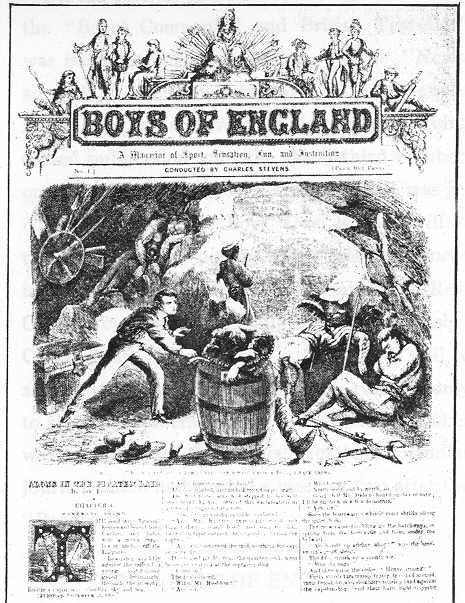
THE “BOYS OF ENGLAND.”
I have already stated, that to my friend, Edwin J. Brett, must be given the credit of revolutionising Boys’ papers. When the “Boys of
66
England” first made its appearance on November 24th, 1866, it was predicted by everybody connected with Boys’ literature that the journal had come to stay. It was just the sort of publication to suit the boys of that time. Charles Stevens, a well known author, conducted the first nine numbers, and he also wrote the leading story, entitled “Alone in the Pirates’ Lair.” Vane St. John penned a stirring story, entitled “Who shall be Leader?” and Cecil Stagg wrote “Chevy Chase.” Many other attractions were offered to subscribers, in the shape of gratis plates of characters and scenes for a miniature theatre of a “drama” founded on the leading story, a large engraving depicting the meeting of Percy and Douglas on the field of Chevy Chase, and a coupon for a prize distribution. After the first few numbers, Mr. Brett conducted the paper himself, and did so until he died on December 15th, 1895, leaving a large fortune.
About twenty-one years ago, January 29th, 1892, a descriptive and illustrated article appeared in the “Boys of England,” dealing with the silver jubilee of that periodical, and an account of a complimentary banquet, and presentation to Edwin J. Brett, at the Grand Hotel,
67
Charing Cross, presided over by George Augustus Sala, and attended by Sir Augustus
Harris, Edward Badoureau, Charles Bradley, F. Vincent Brooke, Gilbert Dalziel, Henry Spicer, H. Newson Smith, and other well-known gentlemen. In Sala’s journal for February 21st, 1894, there is an interesting article by G. A. Sala, describing his visit to Mr. E. J. Brett’s “Palatial Home” at St. Peter’s, Broadstairs. Mr. Brett subsequently started two other papers—“Our Boys’ Journal” and the “Boys’ Sunday Reader,”
the latter being, after a short period, re-christened the “Boys’ Weekly Reader.”
THE “YOUNG ENGLISHMAN’S JOURNAL.”
The pronounced success achieved by the “Boys of England” soon brought a rival into the field. This was the “Young Englishman’s Journal,” conducted by William Emmett Laurence, and imitating pretty closely its successful predecessor. This also became very popular with boys.
68
THE “YOUNG MEN OF GREAT BRITAIN.”
Towards the close of January, 1868, the proprietor of the “Boys of England” started a “companion journal” called the “Young Men of Great Britain,” conducted by Vane St. John, who wrote the leading story, “The Night Guard: Or the Secret of the Five Masks.”
THE “YOUNG GENTLEMEN OF BRITAIN.”
The competition between the two firms, Brett and Emmett, was now very keen, and Laurence Emmett, of the “Young Englishman,” straightway replied by issuing its “companion journal,” the “Young Gentlemen of Britain,” in which W. Stephen Hayward’s story, “The Mutiny of the Thunder,” first appeared. Thus there were four weekly journals for boys being simultaneously published, all being for the time successful.
THE “BOYS’ BOOK OF ROMANCE.”
About this time, Charles Stevens parted from Edwin J. Brett, and the “Boys of England,” and started the “Boys’ Book of Romance,” which,
69
so far, at any rate, as illustrations were concerned was superior to anything yet attempted, such famous artists as John Proctor, Matt Morgan, and E. Wagner, being engaged on its staff. But this was “too good to last,” and after some six or seven months’ existence, it was numbered with the past. Some time after this, there was a division in the camp concerned in the “Young Englishman” and “Young Gentleman of Britain.” The latter suddenly ceased to appear.
THE “SONS OF BRITANNIA” AND THE “YOUNG BRITON.”
The “Young Briton” at its commencement was issued at a halfpenny, the first attempt to produce a Boys’ paper at such a price. Both journals were highly successful. “The Idol’s Eye,” by Stephen Hayward, illustrated by Wagner, being the most attractive feature of the “Sons of Britannia.” The “Young Gentlemen of Britain,” the “Young Briton,” and the “Young Englishman’s Journal” were founded by William Laurence Emmett, under his trade name of W. E. Laurence. The “Young Briton” was published in Essex Street, in 1869. The three papers
70
were taken over a few years later by George Emmett, after William’s bankruptcy. Up to
that time George had written for them, but he had no hand in establishing them, nor had he any proprietary interest in them until then.
THE “GENTLEMAN’S JOURNAL.”
The “Gentleman’s Journal,” an excellent and high-toned illustrated weekly paper for boys and young men, made its first appearance on November 1st, 1869. It was published by Harrison, and conducted by George Frederick Pardon (“Captain Crawley”). The journal certainly deserved success, but it never attained it, notwithstanding the liberal gifts of gorgeously coloured plates, which were presented to the subscribers. It was almost too good for the period at which it was produced. At length, after six volumes had been published at a great sacrifice, on the part of the proprietors, the struggling journal was crushed out of existence in October, 1872.
THE “BOYS’ OWN PAPER.”
The “Boys’ Own Paper” and the “Boys’ World,” which appeared within a few days of
71
each other, certainly turned up at the psychological moment. The “Boys’ Own Paper,” produced under the auspices of the Religious Tract Society, made its appearance on the 18th of January, 1879, and was conducted by Dr. Macaulay.
Some of the best authors of the day contributed to its columns, while its pages were adorned by illustrations of the first order. A “split in the camp” of the “Boys’ Own Paper,” led, at the close of its first volume, to the establishment, by the late W. H. G. Kingston, of another Boys’ journal, entitled
THE “UNION JACK.”
After W. H. G. Kingston’s death the editorial duties were taken up by Mr. G. A. Henty, a favourite boys’ writer. The “Union Jack” attained a very large sale, and I believe it was a financial success.
THE “BOY’S WORLD.”
As already stated, I issued the first number of the “Boy’s World” on April 14th, 1879, and it may prove interesting to my readers, and collectors of the good old Boys’ books, to mention the
72
titles of stories, and the names of their authors, during a few years of its existence.
Volume I contained “Overboard,” by J. E. Arnold; “Ned Neville,” Captain L’Estrange; “Edward Bertram,” “Cast Away,” J. E. Arnold; “Warwick,” B. Beaumont; “Disinherited,” Vane St. John; “Prince Dick of Dahomey,” James Greenwood; “Born to Victory,” Vane St. John; “Ralph Rollington’s Schooldays,” Ralph Rollington; and “Alfred of England,” B. Beaumont.
“BOY’S WORLD,” VOLUME 2.
“Homeless Jack,” by James Greenwood; “That Larry of Ours,” Vane St. John; “The Wonder Seeker,” Stephen Hayward; “Ralph Rollington at Sea and in America,” Ralph Rollington; “Dick Chevely,” W. H. G. Kingston; “The Midshipman of the Medusa,” Philip B. Hemyng; “Boadicea,” B. Beaumont; “Cousin Dick’s School Days,” R. Rollington; “Valorous Joe,” J. Holloway; “Brave and Bold,” B. Beaumont; “Wiggles,” G. Emmett; “Ralph Rollington in Australia,” Ralph Rollington; “Fearless and Free,” Vane St. John.
73
“BOY’S WORLD,” VOLUME 3.
“The Three Orphans,” by Cyril Hathway; “Allan Fairfax,” Ernest Brent; “Tom Takeitall,” Ralph Rollington; “The King of the Sea,” Charlton; “See Saw: Or the Ups and Downs of a Boy’s Life,” Alfred Phillips; “The Young Rebel Officer,” Stephen Hayward; “My First Command,” H. A. Maitland; “Dark Blue,” C. Thornhill; “Peter Podger and Sam Slocum,” Ralph Rollington.
“BOY’S WORLD,” VOLUME 4.
“Magna Charta,” by B. Beaumont; “Midshipman Merry,” Charlton; “Charles Thornton,” J. Holloway; “The Doomed Ship,” S. Hayward; “The Boy Adventurers,” Leon Lewis; “The Dark Island,” P. B. St. John; “Boot and Saddle,” B. Beaumont; “The Cruise of the Spitfire,” Stephen Hayward.
“BOY’S WORLD,” VOLUME 5.
“The Boys of Marford,” by E. H. Burrage; “Mid of the Firefly,” Charlton; “Pyramid Pete,” Oswald Allen; “From Pole to Pole,” Frank Stainforth; “Stirring Adventures in
74
Canada,” L. Lewis; “Honour Before Gold,” B. Beaumont; “Young Tom Rollington,” Ralph Rollington; “Under Fourteen Flags,” Colonel MacIver; “The Young Torpedo Hunter,” Leon Lewis.
“BOY’S WORLD,” VOLUME 6.
“Full Fathoms Five,” by F. Stainforth; “In the name of the King,” Charlton; “Dick Darlington,” Ralph Rollington; “The Young Explorers,” L. Lewis; “Turtle Island,” W. L’Estrange; “A Young Bluejacket,” Charlton; and “Robert the Adventurer.”
“OUR BOYS’ PAPER.”
In the month of November, 1880, I issued the first number of “Our Boys’ Paper,” got up on similar lines to the “Boy’s World.” The first volume contained a capital sea story, entitled “A True British Sailor Boy,” by Charlton; “For Life and Fortune,” Leon Lewis; “Timothy Twister’s Schooldays,” E. H. Burrage; “The Three Cavaliers,” Ernest Brent; “Drummer Boy Dick,” J. Holloway; “The Sunken Treasure,” Stephen Hayward; “Only a Street Boy,”
75
(“Philip de Lisle”), Ernest Brent; and “Philip Devon,” (Charlton). The later volumes of “Our Boys’ Paper,” contained some excellent stories, including “The Young Yachtsman,” “The Red Horseman,” “Gordon Goodfellow,” “George Gordon,” and “Windford Wylde,” by Charlton.
Having already described the birth of the “Boy’s World” and “Our Boys’ Paper,” it may be interesting to my readers to learn how they died. The said journals lived a very healthy life for some years, but towards the end of the eighth year circumstances happened that caused a great drop in the sale of the first-mentioned paper.
My paper manufacturers, who had a great financial interest in the journals, suggested that we should have some instructive matter inserted in its pages in the shape of Algebraical problems and puzzles, etc., etc.
I did not like the idea, and told them so. However, they obtained the services of some old professor, and the copy was inserted accordingly.
“What do you think of it, Mr. Rollington?” the paper manufacturer enquired.
76
“Well, I think, sir, it is the beginning of the end. We shall drop a thousand a week.”
And unfortunately my prophecy proved correct. It was the beginning of the end. For what schoolboy will spend his leisure hours in working out algebraical and other difficult problems on the chance of obtaining a small prize.
Well, the result was absolute failure, as I anticipated, and a few weeks later the great paper firm sent for me to talk over matters.
“Now, Mr. Rollington,” said Mr. H., the head of the firm, laying particular emphasis on each word, “you are indebted to us to the extent of some sixteen thousand pounds eighteen shillings and –––”
“Don’t trouble about the odd pence, Mr. H,” I said, interrupting him.
“Very well, but that is the amount. What do you intend doing? What security can you offer us? Have you any property left?”
“Yes, I have my own house and some furniture, which you are at liberty to take, also a small share in my father’s estate. I have lost everything else.”
“Now, look here,” he replied, “I am going to
77
make a proposition which I think you will consider very fair.”
“I would not touch your house nor your furniture. You ought to know me better. Assign me the copyright of the paper and all the copyrights of your stories, and I will give you a full discharge for the whole amount; that is all I require.”
I was literally astounded at the proposition. I shook him by the hand and said, “God bless you. I wish things had turned out better.” My heart was too full to speak.
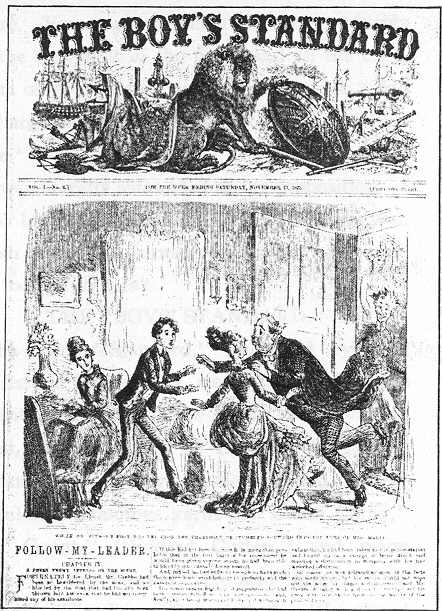
THE “BOYS’ STANDARD.”
The “Boys’ Standard,” published by Jack Brooke and Charles Fox, was issued in 1875, was a great favourite with the Boys. As previously stated, my old friend, E. Harcourt Burrage, a brilliant writer of Boys’ stories, penned the successful and humorous yarns of “Ching Ching,” “Bill Grunt,” “Eddard Cutten,” and many others, for this journal. He also wrote “Tom Tartar,” “The Island School,” the “Lambs of Littlecote,” and others too numerous to mention.
I remember a good many years back, Charles Fox, the publisher, meeting me in Fleet Street.
78
He was carrying a small parcel which appeared exceedingly heavy for its size. “What on earth have you got there, Charlie?” I queried laughingly. “Only some old comic electros,” he replied, “by ‘Phiz,’ and I want you to write them up into a comic school story.” I took them home, worked up a plot, and named it “Timothy Teazer’s Schooldays,” which duly appeared in the “Boys’ Half Holiday.” (This story must not be confused with “Timothy Twister’s Schooldays,” by E. H. Burrage). The journal has long since passed out of existence, but I am pleased to say the publisher, Charlie Fox, is still alive, or he was, a few months since, as we met in Fleet Street, where we used to do our business years ago.
THE “BOYS’ NEWSPAPER.”
I well remember the “Boys’ Newspaper,” which was produced Sept. 15, 1880, by Cassell, Petter, and Galpin. The contents consisted of current events of the day, including cricket, football, and all kinds of sport, also some short stories. But it was not a paper that appealed to boys. It was too much of a newspaper. After
79
the thirtieth number it was sold to the proprietors of the “Illustrated London News,” who converted the “newspaper” into an illustrated journal, and who had only a few weeks before the transfer of the “Boys’ Newspaper” commenced to publish the “Boys’ Illustrated News,” which was conducted by the ever-popular Captain Mayne Reid.
Before closing this brief, and somewhat imperfect history of Boys’ papers, I may mention, for the benefit of the curious, that the earliest attempt at supplying special literature for boys occurred nearly a hundred years ago. It was in the reign of George III., viz., 1817, that the “Youths’ Instructor” was started. No less than thirty-nine volumes were issued, the last appearing in 1855.
Next came the “Youths’ Miscellany or Monthly Visitor,” which, commencing in 1823, only ran as far as the third volume.
Then came the “Young Man’s Companion or Youths’ Instructor,” which was issued monthly.
In 1832 appeared the “Boys’ and Girls’ Penny Magazine,” the first boys’ book published at what is now the recognised price, but it only lived for a few months.
80
In 1853, the “Young Man’s Monthly Magazine” appeared, but only lasted twelve months.
The next was the “Boys’ Own Journal and Youths’ Miscellany,” which first came out in 1856, but after the appearance of the September number, in 1857, it was incorporated with Beeton’s “Boys’ Own Magazine.”
The “Boys’ and Girls’ Companion for Leisure Hours” was introduced in 1857, but, after two years’ issue, this cumbrous title was changed for the “Companion for Youth.” Yet even this alteration did not stay the hand of Fate, and after 1860 it ceased to appear.
In 1858, nine numbers appeared of the “Youths’ Instructor,” an attempt apparently to revive the departed glories of the pioneer magazine of that name.
The first boys’ newspaper ever published, was issued in 1859, under the title of the “Boys’ Own Times,” and “News of the World.” This attempt at supplying boys with a newspaper of their own was far from successful, as only twelve numbers were issued.
The “Lads of the Village,” edited by William Watkins, a book I well remember—my younger
81
brother having been an enthusiastic reader of its pages. This lasted just twelve months.
A NOVEL SUGGESTION TO INCREASE THE CIRCULATION.
A MONKEY AND A PARROT.
During my long experience with Boys’ Papers, I always found that the sales dropped at holiday times. Consequently, I generally announced some new and attractive features to counteract the loss of circulation.
I remember on one occasion, announcing a “Grand Prize Distribution” of some hundreds of “two shilling” postal orders, a splendid Bicycle, a Parrot, and above all things a Beautiful Tame Monkey, named “Jacko.” I was under the impression that by introducing a monkey I had done a very smart and profitable bit of business, and flattered myself that it was a very original idea.
An advertisement was accordingly inserted in the “Exchange and Mart,” and several other suitable papers for a tame performing monkey and a talking parrot.
Particulars of the Great Prize Distribution
82
were duly announced in the “Boys’ World” in large type.
Thousands of letters of an amusing character arrived from boys in all parts of the country, and when the coupons appeared, the sale went up by leaps and bounds.
One bright summer’s morning, as I was nearing my publishing office, I saw a great crowd of people outside, and any number of organ grinders carrying monkeys. Some were grinding away at their instruments, and others were gesticulating wildly.
“Well, Mr. Rollington,” remarked my publisher (Mr. Blogg) as I entered the office, “we’ve had a rare lot of excitement here this morning—any number of Italians carrying most ferocious looking animals. One man let a big monkey loose, in order to show us how tame it was. In a moment it bounded over the counter, seized an ink-stand, and, after examining it carefully, sent it flying at another monkey. Oh! there was a scene here. The office boy was scared out of his life when the animal jumped on to his head, tore off his cap and began chewing it up. The place has been a pandemonium all the morning.”
83
“Well, to save further trouble, Mr. Blogg, you send the men up to me—one at a time, and write out a large notice, ‘NO MORE MONKEYS REQUIRED.’ Paste it on the front window as soon as I tell you.”
I cannot describe all the wonderful things that those
Italians told me about their dear little “pets,” that they wouldn’t part with
for less than two, three, four, and even five and ten golden
pieces.
However, I secured a nice-looking monkey, guaranteed to be clever and tame—even affectionate—for the modest sum of thirty shillings.
The notice “No More Monkeys Required,” was immediately posted on the office window, much to the satisfaction of the publisher, the clerks, and the office boy.
My next task was to secure a good talking parrot. Five men had brought grey parrots, in cages, and I had them all up, the birds being placed on a table.
Each cage had a card attached to it, with the price of the bird marked in plain figures.
“Now, gentlemen,” I said, addressing the men, “I will buy the bird that first says three distinct words.”
84
We all listened anxiously for some minutes, when one old chap, who looked a sort of seafaring man pulled a piece of lump sugar from his pocket, and addressing his bird, said pathetically, “Poor old Polly; I’m so sorry to part with you.” He had no sooner uttered the words than the bird gave a sort of chuckle, and replied, “Poor old chap.”
“You’ve done it, Polly; you’re the last thing I’ve left in this world,” he said with a sort of lump in his throat. “I’ll take two pounds for him, sir.”
I paid cheerfully, with a bit extra, and when I promised I would keep the bird myself and get another for the distribution, he went away quite happy.
I sent the monkey and the parrot home that night by special messenger, but unfortunately my little daughter was so keenly interested in the monkey that she opened the door of the cage, and then trouble began.
“Jacko” was all over the kitchen in a few moments, and when the parrot got frightened and began to squeal, his strange companion, as if to pacify him mounted the dresser and hurled the
85
crockery about in all directions. The way he opened his eyes and knitted his brow at the sound of each plate as it crashed against the wall was really amusing. It was intensely funny.
This was the sentiment expressed by my little daughter, who thoroughly enjoyed the entertainment, but I must add that her mother was of a very different opinion. We were not long before we got rid of the tame monkey.
* * * * *
“The old order changeth, giving place to the new.”
The Boys’ papers for which I wrote a generation ago have long since passed away, but they have been succeeded by others of a somewhat different type.
To-day an enormous quantity of fiction, read chiefly by boys, is published in penny and half-penny papers. Some of it is good of its kind, and quite a number of men find it worth their while to do this kind of work.
I should say at the present time there are quite a score of men who are earning from £500 to £1,000 a year by writing boys’ stories.
It is, perhaps, only natural that I should be a
86
little prejudiced in favour of the old-style boys’ papers, but it certainly does seem to me that they were more spontaneous and more spirited than are their successors.
In the old days, writing for boys was something of an adventure; now it is very much a trade.
I must not end on a querulous note, however, and I give full credit to the modern writers for their skill, their ingenuity, and their workmanlike qualities.
One of them told me a story the other day which is worth giving as illustrating one of the difficulties which beset the author who writes for the modern boy.
This particular author had achieved considerable success as a writer of school stories. Now it is one of the faults of the modern system that a successful author is tempted to over-production. One hears of men who keep seven serial stories running simultaneously.
This gentleman was writing four or five, and all in the same vein. Not unnaturally, his style became somewhat stereotyped, with the result
87
that his stories were not quite so triumphantly successful as formerly.
The anxious editor felt that something was wrong, and after much cogitation, thought he had discovered what it was.
He summoned his valued contributor to an interview, and addressed him somewhat in this fashion.
“My dear Scribe, your stuff is wonderful, and I often read it for my own pleasure, but it is too clever. Our readers are ordinary, and they want ordinary stories. You must not be too original, or too fanciful, or too imaginative. Now these schoolboys of yours are too smart. They say things that no ordinary boy would ever say. Can’t you alter this? Can’t you make your dialogue more like the real thing? Listen to boys talking in the streets, and see if you cannot be a bit realistic.”
“I quite understand,” said the author, whose rule in life is to give editors what they think they want.
Two days later the editor received the first instalment of “our grand new school tale.”
The story opened with a quarrel between two
88
chums, and this is how Mr. Scribe endeavoured to satisfy the editor’s new-born craving for realistic dialogue.
“I’ll never speak to you again,” said Dick.
“You won’t?” retorted Joe.
“I won’t!”
“Then don’t!“
They glared at one another.
“Who are you, anyway?”
“As much as you.”
“Perhaps so.”
“So I am.”
“Who said you wasn’t?”
“You did.”
“I didn’t.”
“That’s a lie!”
“Don’t you call me a liar, or I’ll dob you one on the nose.”
“I’d like to see you try!”
”So I will.”
“Then try! Go on! Try!”
In this fashion the story went on to the end of the instalment.
The next morning the author, as he was breakfasting in bed in his suburban home at Clapham,
89
congratulating himself on having discovered a new and easy way of earning his living, received the following letter from his editor.
“Dear Mr. Scribe, on second thoughts I have decided that our readers do not want realism. I am returning the first instalment of your story, ‘The Chums of Billericay.’ Please return to your old style, and let me see a first number at an early date. I shall be glad if you will make the new story as much like your great success, ‘The Bully of Barchenter,’ as possible.”
So ended that experiment.
The truth is, of course, that the boy of to-day, even as the boy of yesterday, wants one thing, and one thing only, and that is romance.
Your writings may be slovenly, your facts may be all wrong, your invention may be poor—you may, in fact, possess every fault that the critics deplore—but if you have the spirit of romance within you, and if you can convey something of its glamour from the point of your pen, you need not despair of winning the support and the affection of the great boy-public.
90
APPENDIX.
In the following pages I have endeavoured to give a little further information concerning E. J. Brett’s and G. Emmett’s papers, and also some notices of journals which do not find mention in Mr. Rollington’s work.
I trust that my friends who have done so much in helping me with the issuing of this book, will look with a lenient eye on any defects of style or construction that they may detect; and, finally, in Mr. Rollington’s interesting “History,” they have found many facts worth learning with regard to the old journals.
91
E. J. BRETT’S BOYS’ JOURNALS.
“Jack Harkaway’s Schooldays”—the first of the well-known “Harkaway” series—
commenced in No. 249 of the “Boys of England,” July 23, 1871. This journal had a very long and successful life. It ran until June 23rd, 1899, when, having reached its 1,702nd number, it was incorporated with “Up-to-Date Boys,” the first number of which was dated June 30th, 1899.
It is interesting to note that the two concluding “Jack Harkaway” stories, entitled “Jack Harkaway in the Transvaal,” and “Jack Harkaway’s War Scouts,” ran through “Up-to-Date Boys,” which ceased after two years’ existence. The “Boys of the Empire,” which filled its place, was issued for the first thirty-seven numbers as a half-penny weekly. With the thirty-eighth number, the price was raised to a penny, and the size was increased from sixteen pages to thirty-two. A large and excellent pennyworth.
The serial tales were all reprints from earlier journals. One feature it possessed, which I believe had previously been a stranger to all Mr. Brett’s former publications. This was a readers’ “Sale and Exchange” page, and through the medium of this many collectors of these old journals were brought together. In No. 311, Sept. 22, 1906, the following notice was given prominence:—
92
“A momentous Announcement.—As the outcome of a generally-expressed wish on the part of readers of this Journal, it has been decided that in future the ‘Boys of the Empire’ shall be published under the grand old title, ‘Boys of England.’ Ask your fathers, boys, what they thought of the old ‘Boys of England,’ the first number of which came out as far back as 1866, and from their answer you will infer what a treat there is in store for you; for, excellent as the old was, the new ‘Boys of England’ will beat it hollow.”
No.1 duly appeared, but in spite of the above flattering notice it was a poor journal compared with the original, and lasted but a few weeks.
“The Young Men of Great Britain.”—This paper, on reaching No. 1,118, was incorporated with No. 73 of “The Boys of the Empire,” June 24th, 1889, the first fifty-one numbers of which constituted the earliest attempt to issue a boys’ journal in colours. It was published at the unusual price of three-halfpence a number, but though well-produced, it was not a success, and with the issue of No. 52, the price was reduced to a penny, and the many coloured illustrations were things of the past.
As “The Boys of the Empire, and Young Men of Great Britain,” it continued for several volumes.
“Boys’ Comic Journal.”—No. 1 appeared on
93
March 14th, 1883, and over thirty volumes were issued. This was one of Brett’s best papers, and, true to its title, many tales of a laughable character ran through its pages. In this publication several serials penned by authors new to Brett’s journals, made their appearance, such as “Dark Deeds of Old London,” by Robert Justin Lambe, and “Sons of Foes,” by H. Whyte.
“Boys of the World.”—No. 1 was published September 21st, 1869, and the paper was subsequently incorporated with “The Boys’ Favourite,” issued in 1870, having only lasted for about sixty numbers.
“Rovers of the Sea,” No.1, March, 11th, 1872.
“Our Boys’ Journal,” issued during July, 1876.
“The Boys’ Sunday Reader,” No.1, Jan. 8th, 1879.
“The Boys’ Library,” No.1, Feb. 28th, 1879.
“Boys of the British Empire.”
“Lads and Lasses,” March 6th, 1894, and
“The Halfpenny Surprise,” Nov. 2nd, 1894, were all published by Mr. Brett, and had varying periods of existence, but none attained the success gained by “The Boys of England.”
W. L. AND G. EMMETT’S JOURNALS.
“The Young Englishman’s Journal.”—No. 1, April 13th, 1867. In all, six volumes were issued. “Captain Jack,” the first story in G. Emmett’s
94
“Shot and Shell” series, commenced in No. 56, May 2nd, 1868.
“The Young Gentlemen of Britain” was published some time between October 15th-26th, 1868, and ran into three volumes, when it was incorporated with No. 32 of
“The Young Briton.”—No. 1, Sept. 18th, 1869. The opening serials in this journal were “The Master of the Lions,” by Charles Stevens, illustrated by Maguire; “Midshipman Tom,” by G. Emmett; and “Dick and Dick’s Brother,” by Ernest Brent, illustrated by “Phiz.”
In No.5 commenced “Harry Power,” the first serial contributed by Mr. E. Harcourt Burrage. This was followed by many others from his able pen, of which I might mention “Spangles and Gold,” “Boys Will be Boys,” “Move On,” “Rags and Riches,” and “Charley and Tim at Scarum School.”
In the writing of “Spangles and Gold,” Mr. Burrage created a new type of boys’ story, that others then writing were disposed to sneer at. But the proprietor, W. L. Emmett, must have seen that there was something in it, as he never from the day of its production hesitated about keeping Mr. Burrage’s pen busy, and there was no discussion about what should be written, beyond his saying, “Well, a school story, or a sea story next,” and so on. What was written, Laurence never looked at until it appeared in print.
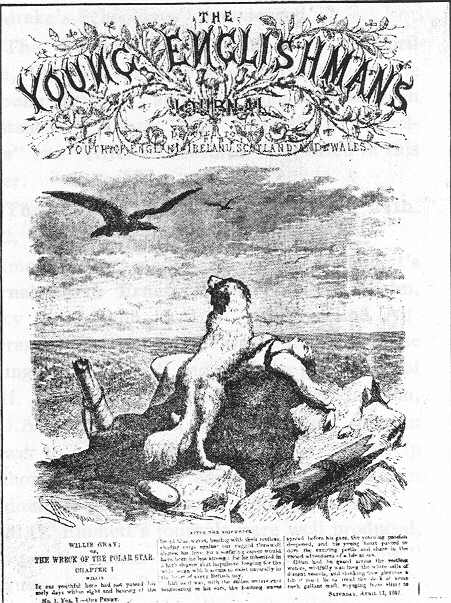
95
“The Young Briton” ceased issue about 1877.
“The Sons of Britannia.”—No. 1, March 16th, 1870. This journal had a run of nearly four hundred numbers. In an early number “Tom Wildrake’s Schooldays” commenced.
“The Young Englishman.”—No. 1, April 18th, 1873, enjoyed the same popularity as the “Young Briton,” and had almost as long an existence. “Young Tom Wildrake’s School- days” and “After Adventures,” appeared in this paper.
“The Rover’s Log.”—No. 1, March 11th, 1872, was completed in 59 numbers.
Among other authors engaged upon Emmett’s journals were Ernest Brent, Vane St. John, Percy B. St. John, J. J. G. Bradley, and Alf. Burrage. The last-named was editor of “The Young Englishman,” and used the pen names of “Alf. Sherrington” and “Philander Jackson, H.U.A.” The initials, H.U.A., I learn, from an answer to a correspondent, stood for “Hard Up Author.” Not a very enviable distinction, but no doubt it possessed some truth at times.
All G. Emmett’s journals were well produced, many of the stories being illustrated by “Phiz,” Maguire, and R. Prowse.
Between 1882 and 1886 appeared “The Young Englishman,” “Sons of Old England,” “Boys’ Own Journal,” and “British Boys,” published by G. Emmett, jun. These were attempts to re-
96
issue the original Emmett papers, but they had only short careers.
JAMES HENDERSON’S JOURNALS.
“Young Folks,” No.1 appeared during 1871. R. L. Stevenson’s now famous stories, “Treasure Island,” and “The Black Arrow,” ran through this paper. The last-named began in No. 656, June 30th, 1883, and bears as the author’s name, “Capt. George North.” The well-written tales of chivalry, “Desdichado,” “Thundersleigh,” etc., etc., were illustrated by W. Boucher, the “Judy” cartoonist, while “Puck” (John Proctor) illustrated the equally excellent “Tim Pippin” series. Harry Furness illustrated “Karion,” and W. G. R. Browne and “Phiz” also did a lot of work. About 1890, the title was changed to “Old and Young.” This paper ceased October 31st, 1896, and its place was filled by “The Folks at Home.” “Nuggets” and “The Garland” were later ventures by Mr. Henderson, and contained many serials which had previously appeared in “Young Folks.”
“The Boys Herald” was published by John Dicks, and the first number appeared January 6th, 1877. It was splendidly illustrated, and contained many serials by well-known writers. Some six volumes were issued.
97
CHARLES FOX’S JOURNALS.
“The Boys’ Standard” altogether had a prosperous career of well over twenty years. The first number of the first series appeared November 6th, 1875, and the opening serials were “Lionel Wilful’s Schooldays,” written by Charlton, and illustrated by “Phiz”; “Gentleman George,” by J. J. G. Bradley, illustrated by G. C. Tressider; and “On the Queen’s Service,” illustrated by Warwick Reynolds. In No. 20 commenced “Handsome Harry,” which was followed by the sequels, “Cheerful Ching-Ching” and “Daring Ching-Ching.”
The first series of this paper ran until No. 288, May 7th, 1881, the new series beginning May 14th, 1881. Many of the serials in this issue were reprints from G. Emmett’s journals.
“The Boys’ Leisure Hour”—No. 1, August 18th, 1884—was a re-issue of the first series of “The Boys’ Standard,” with the exception that in place of the serials, “Handsome Harry,” “Cheerful Ching-Ching” and “Daring Ching-Ching,” the further series was given, namely, “Wonderful Ching-Ching” and “Young Ching-Ching.” This journal lasted for nearly seven years.
“The Boys’ Half Holiday,” edited by Philander Jackson, H.U.A., appeared during the first week in May, 1887. Though it commenced with
98
four good serials, “Timothy Teaser,” by R. Rollington; “Ben Braveall,” by the editor; “The Doomed City,” by Bracebridge Hemyng; and “Our Lynn,” by Ernest Brent, it existed for only a few weeks, and was then incorporated with No. 153 of “The Boys’ Leisure Hour,” July 23rd, 1887.
“The Boys’ Champion Journal.”—No. 1, April 1st, 1889, contained tales that had all been previously published. It existed between two and three years.
“The Halfpenny Standard Journal.”—No. 1, March, 1896—was a last re-issue of “The Boys’ Standard,” but only 87 numbers were issued.
“The Champion Journal.”—No. 1, September 22nd, 1877. With this paper was given an eight-page supplement containing the continuation of the stories left unfinished in G. Emmett’s “Sons of Britannia.” “The Champion” was published by Ritchie and Co., and was edited by “Charlton” (H. C. Emmett), who also penned the leading story, “Dick Dare.” “Happy Hal,” a very humorous school tale also commenced in the first number; it was written by Alf. Sherrington (Burrage). Some six volumes were issued, and the paper was then incorporated with No. 68 of the “Boys’ World,” July 24th, 1880.
Of Mr. Rollington’s excellent journals I need say little, for he has already given us much interesting detail in the earlier pages of this work.
99
However, it may interest collectors of the old journals to know that “Our Boys’ Paper” ceased publication with No. 18 of the third volume, Jan. 31st, 1883, and the incomplete serials were continued in “The Boy’s World.”
Mr. Rollington severed his connection with “The Boy’s World” at about the end of the eighth volume, 1886, when it changed hands, lasting but a short time afterwards.
“The New Boys’ Paper.”—No. 1, October 2nd, 1886—up to No. 23, was published by The New Boys’ Paper Company, 17, Gough Square, Fleet Street, and was edited by R. Rollington. With the issue of No. 24, it was taken over, and published by The Aldine Publishing Company, of Red Lion Court. Many excellent serials by “Charlton,” E. H. Burrage, and others appeared in this paper, being reprints from earlier journals.
Seventy-four numbers were issued, and the title was then changed to “The British Boys’ Paper,” No. 1, February 27th, 1887, being really No. 75 of “The New Boys’ Paper.” “Monkey Mat and Roving Dick,” a new serial by E. H. Burrage, commenced in the first number. Nos. 1 to 24 were published by the Aldine Co., but with the issue of No. 25, it was taken over by Guy Rayner, and his very popular tale, “Mat Marchmont’s Schooldays,” began.
During 1889, “The British Boys’ Paper” was
100
incorporated with No. 18 of “Guy Rayner’s Boys’ Own Journal.”
“Comrades,” “Boys of the United Kingdom,” “The Boys’ Jubilee Journal,” “The Boys’ Popular Weekly,” “Boys of the Isles,” “The Bad Boys’ Paper,” “Boys and Girls,” “The Boys’ Graphic,” “Boyhood,” were all issued and edited by Guy Rayner between the years 1885 and 1891.
They contained many serials by Guy Rayner, and a few excellent ones by Edwin S. Hope, who sometimes illustrated his own tales. Other writers were J. Pentelow, M. Henry, and T. Podmore, while many illustrations were supplied by “Falcon.”
Guy Rayner’s real name was S. Dacre Clarke, and when quite a lad he wrote a story or two for G. Emmett’s journals.
“The Boys’ Mail” and “The Amazing Library ,” published as recently as 1906, were, I believe, two more of Guy Rayner’s publications, but they were both failures, neither lasting more than a few weeks.
ISSUED BY VARIOUS PUBLISHERS.
“The Boys of Albion,” “Every Boys’ Paper,” “The Bonnie Boys of Britain,” “Every Boys’ Journal,” “Young Britannia,” “Boys of Britain,” appeared between the years 1883 and 1890. Not one of these existed at the most much over twelve months.
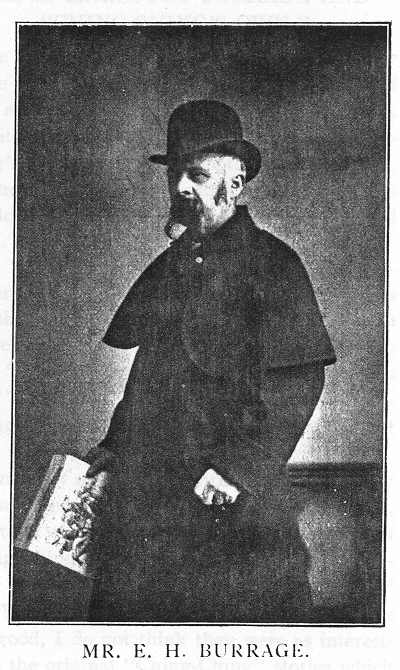
101
MR. E. HARCOURT BURRAGE AND “CHING-CHING’S OWN.”
The first number of this paper appeared early in the year 1888, and each volume consisted of three months’ numbers. Beginning with No. 92, the title became “The Best for Boys—Ching-Ching’s Own.” No. 118, September 20th, 1890, was the last number of the first series, which was completed in nine volumes, and was published by W. Lucas, 42 and 43, Essex Street, Strand.
No.1, Vol. 1, of the new series was issued September 27th, 1890. After No. 10, the paper was published by the “Best for Boys” Co., 17, Gough Square, and the title was again altered with No. 84, to “The Best for Merry Boys: Ching-Ching’s Own.” No. 143, June 17th, 1893, was the concluding number of the eleventh volume, the last of the second series.
It was only natural that with this issue the way was prepared for more “Ching-Ching” serials, and they duly appeared under the titles of “Ching-Ching and his Chums,” “The Ching-Ching Mystery,” “Ching-Ching on the Trail,” and “Young Ching at School.” Though these were good, I do not think they were as interesting as the original “Ching-Ching” stories which had previously appeared in Chas. Fox’s journals. The style had altered, but this is only what might be expected, taking into consideration the
102
number of years that has elapsed since the ending of the first series—years that had been filled up by Mr. Burrage in writing many other tales of entirely different kinds.
It hardly seems possible, yet it is a fact, that nearly all the other serials which appeared in this journal were written by Mr. E. H. Burrage. Some of them, such as “Tom Tartar,” “Dick Strongbow,” and “Jim Hardiboy” being of very great length.
As editor, Mr. Burrage proved himself to be a real friend to all his readers. His weekly “Confidential Chat” contained much helpful, honest, straightforward advice, and his answers to correspondents being always to the point, make very good reading.
Many amateur journals were at this time being brought out, and the editors of these in many cases were much helped by Mr. Burrage through the medium of “Ching-Ching’s Own.” Several of these old amateurs have since done well as professionals, and if it were politic to do so I would give their names. Some months ago I received a letter from one of these old amateur authors, and I trust I shall be pardoned for quoting a portion. The writer says:—
“July,1912.— . . . As you were interested in ‘Ching-Ching’s Own,’ you will also be interested to know that many of the friendships formed through the ‘Riddler’s Page,’ in that magazine
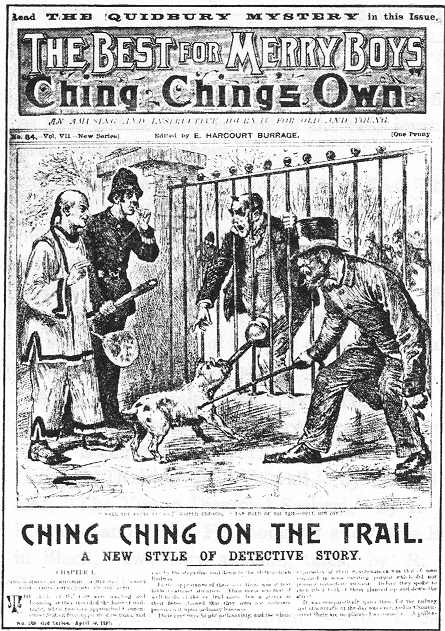
103
still continue, and many who first tried their hand at authorship in its pages have done very well. There is at least one playwright;—, the novelist, is another;—, the well-known article writer, another; —, the poet, another;—, the popular song-writer, another.”
“Ching-Ching’s Own” was excellent from first to last, and constituted one of the best journals ever published for boys.
“British Boys” ran from No. 1, Dec. 12th, 1896, to No. 104, December 3rd, 1898, and was published by Mr. G. Newnes. This was a very interesting journal published as a halfpenny weekly, and embodying both quantity and quality for the price. It contained tales written by some of the best of the old authors, and also some of the best of the new.
Among other tales were “Jack Harkaway in the Life Guards,” by Bracebridge Hemyng; “The Smuggler’s Terror,” by Robert Justin Lambe; “Dashing Dick Dareall,” by Skip Borlase; “The Young Diamond Seekers,” by E. H. Burrage; and “Fred Fearnought” and “The Boy in Black,” two very amusing tales, by R. S. Warren Bell.
“The Garfield Boys’ Journal.”—No. 1, September 26th, 1894. Forty-five numbers only were issued. This, too, was an excellent boys’ paper, containing serials by Harry Collingwood, Ernest Brent, E. H. Burrage, and others, and was
104
partly illustrated by R. Prowse. It was published by the Aldine Co., whose periodicals for boys have been many and varied, though mostly of the penny weekly complete order, such as the “Robin Hood,” “Buffalo Bill,” “Cheerful,” and “Dick Turpin” Libraries. They now issue the “Boys’ Own Threepenny Library” of complete stories, and quite recently they have reprinted in this series, in abridged form, those two fine tales by E. H. Burrage, “The Lambs of Littlecote,” and “The Island School,” which rival in popularity the famous “Ching-Ching” series.
Readers of these two tales will not soon forget the droll characters, P. Y. Bunn, and Fontenoy Snicker, in the “Lambs of Littlecote,” nor Napoleon Farrell and the three merry niggers in “The Island School.” The original “Lambs of Littlecote” and “The Island School” appeared about 1895, and were issued in penny numbers, each with a striking coloured illustration, by R. Prowse. Each tale consisted of thirty-nine of these numbers.
It may not be amiss if I here print a letter which appeared in No. 28 of “The Garfield Boys’ Journal,” for it is an interesting sidelight on Mr. E. H. Burrage’s good old stories. In a letter to a friend, Mr. Burrage writes:—
“I have often been asked, not only by friends, but by my readers, how it is that I have devoted
105
much of my time to writing school stories, and why they are so very different from ordinary work on the same subject. My answer is, that I have no knowledge of the class of school which has no more romance in it than is to be got out of an occasional fight, and the inevitable bullying and deceiving masters by using ‘cribs’ as an assistance to lesson learning. The school I went to was not an ordinary one, although nothing to brag about. Out of it sprang the love of romance which has found expression in the use of the pen, and from first to last I have written to please the young folks.
“The school I went to was in Norfolk. It was kept by a man who by the learned would be called ignorant. He taught us what he knew, with the aid of a very pliant cane, with which I was personally too well acquainted. The sting of it lingers with me still, like the aroma of once-loved and now withered flowers. The boys were a rough lot. They fought on small provocation, especially with boys of rival schools; sometimes they turned out in a body and met a similar force of temporarily hated rivals. As a rule it was a case of fisticuffs, but I have known sticks to be used.
“We could all swim, and row or sail an ordinary boat. As soon as the water was ‘off the winter chill’ we were in it like so many young ducks. When we had any money, we patronised
106
a small bath house on the river, and dried ourselves with luxurious towels. But when out of pelf—as too often happened—we bathed from the banks, and ran about the meadows minus everything until we were dry. We used even to bathe after dark, sometimes with a pan of paraffin or naphtha blazing on the shore, to give us an unholy, but very delightfully romantic, light. We had accidents when boating, and now and then somebody was drowned. Occasionally we rescued others from an untimely fate. I had two narrow escapes myself.
“The surrounding country was dotted about with old castles and towers, built by goodness knows whom. It is so still; it is a land of historical romance. Strange things happened there in my early days. Bathing one day, we came across a dead man lying at the bottom of the river, and his story turned out to be a romance of itself. On another occasion, a schoolfellow of mine walking along a lonely lane found a man tied to a gate by the throat, quite dead. Who tied him there, or who he was, we never knew. We had many adventures that might be called thrilling, of which I may some day give a record.
“Rough, strong, healthy, and vigorous, occasionally brutal, perhaps, were the boys I knew in my youth, but they had none of the vices, that I ever heard of, that are so rife in these days.
“The life was rugged, but with its surround-
107
ings it was a veritable nursery of romance, and hence come the school stories, and other tales of mine, which I may fairly say have been highly approved of by a considerable portion of the youth of the Empire.”
Another “Island School”—this time for girls—also penned by Mr. E. H. Burrage, ran serially through “The Girl’s Realm” during 1910. The title was chosen by the editor, simply because the old story in his eyes was good.
“Comrades,” issued 1893, again 1898.
“Pals,” 1895, edited by Vane St. John, and “The Boys’ Monster Weekly,” 1899, were
published by Charles Shurey. Nearly all the serials were reprints from R. Rollington’s “Boys’ World.” “The Boys’ Monster Weekly” also contained “Turnpike Dick,” “Paul Jones,” and “Spring Heeled Jack,” formerly published by Chas. Fox.
Mr. Shurey is still in the publishing field, and issues each week two excellent periodicals for adults, “Yes or No,” and “The Weekly Tale Teller.” Mr. Alf. Burrage, who is a nephew of E. H. Burrage, and son of “Philander Jackson” (Alf. Burrage, sen.), frequently contributes very pleasing sketches to both these papers.
“Chums,” published by Cassell and Co., is still being issued, and may be regarded as one of the best of the present boys’ papers.
“The Boys’ Own Paper” is also still being
108
issued, though it does not now possess the vitality it did when those grand authors, Talbot Baines Reid, Jules Verne, H. G. Kingston, and R. M. Ballantyne were writing for it.
Of the present boys’ journals, of which there are many being issued, I can say little.
“The Big Budget,” published about 1896, by Pearson’s, had a run of twelve years, and was one of the best of the newer boys’ journals.
The halfpenny series of “The Boys’ Friend” were also good. Other papers have appeared, but it is only possible to give the titles, viz., “Youth,” “Boys’ Leader” (Henderson’s “Boys’ Champion”), “Boys’ Peep Show,” “Boys’ Star,” “Boys’ Guide,” “Boys’ Pictorial,” “Young Britons’ Journal,” “Golden Hours,” “Bonnie Lads of England.” Several of these did not exist for more than a few weeks.
Some of the old American Boys’ papers, published between 1860-1900, contained tales reprinted from Emmett’s and Brett’s English journals, therefore the following list of Boys’ papers issued in America during that period may prove of interest.
Frank Leslie’s “Boys’ and Girls’ Weekly” contained the American “Harkaway” tales as well as the English series by the same author.
“New York Boys’ Weekly,” “Boys of New York,” “Young Men of America,” “Boys’ Leader,” “Our Boys,” “Golden Weekly,”
109
“Boys of the World,” Tousey’s “Boys’ Monthly,” “Boys of America” (which ran re- prints of Brett’s and Emmett’s yarns), “New York Boys,” “Young America,” “Pleasant Hours,” “Golden Argosy,” “Young Sports of America,” “Happy Days.” During 1897-8, B. Hemyng penned a series of “Jack Harkaway, Junior,” serials for the papers. “Good News,” “Harper’s Young People,” “Half Holiday,” “Army and Navy Weekly,” “Bright Days,” “Captain Tom Drake,” “Tom Wildrake’s Schooldays,” “Pat O’Connor’s Schooldays,” were among the re-issues.
Mr. Burrage’s “Handsome Harry” was reprinted four times in “The Boys of New York,”
“Happy Days,” “Golden Hours,” and in weekly numbers. It was well received by the American youth upon each appearance.
We admirers of these good old Boys’ journals should indeed feel grateful to the editor of “T. P.’s Weekly,” who gave prominence to the subject by printing in his paper during 1906, and again during the early part of this year (1913), several letters, the writers of which testified to the excellence of the old Boys’ books.
The general sentiment of the correspondence may be gathered from the following paragraphs quoted from one of the letters, viz.:—
“A few years ago, being anxious to secure several of Mr. E. Harcourt Burrage’s books, I
110
advertised for them. By slow degrees, I have acquired quite a number, and a second perusal has not been disappointing. There is a wealth of humour in them, and a great deal of really fine character writing.
“I am an omnivorous reader, and have read much of the best in literature, yet these old Boys’ books have not lost their charm for me. On the other hand, some of the favourites of boyhood I have tried to read again, and have found them exceedingly dull, and a consideration of the matter leads me to think that they now fail to please me because of the exceedingly poor dialogue in them.
“Thus, of all the old favourite writers in Henty’s ‘Union Jack’ and ‘The Boys’ Own Paper,’ only Ashmore Russan and the Rev. A. N. Malan now please me.
“I cannot think this is because my taste has deteriorated. No; your other correspondents are right; there is a charm about the books of G. Emmett and Harcourt Burrage.
“Can these old books be re-printed? They should appear in a worthy form, but with their quaint illustrations if possible.
“Speaking of old Boys’ books, there is no doubt that they are now being carefully collected, and in time great collections will be made. Only a short time ago I showed my collection to the Librarian of one of our great private libraries,
111
and he expressed himself as greatly interested.”
* * * * *
I full agree with the above, and further testimony may be found in the fact that these old tales will bear reading time after time. As to their influence, they have been the means of making many pleasant friendships.
H. S.
Leicester, July, 1913.