|
| Snail Mail | Air Mail | Fav Links |
| Credit - The foundation of America's economic world dominance. | |
| Table of contents | |
|
Credit is a loan. It is a loan made based on the idea that money generates value over time. This establishes the first requirement of a credit based economy, money. Money requires an economy understand the concept of trading goods (be it real objects or labor) for "tokens" of payment, rather than trading for other goods. The "tokens" can then be traded for real objects or labor at some later time. But use of money alone does not create a credit based economy.
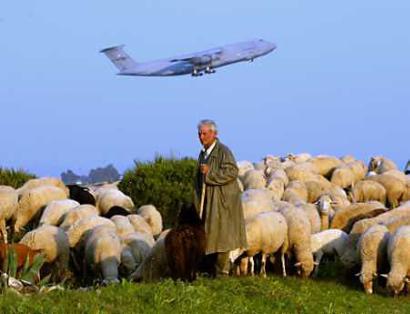
The idea that money generates value over time is the second requirement of a credit based economy. The idea that money generates value over time is called investment. Investment probably began early in the twelth century BC when the early Greeks, Phoenicians, Egyptians, Mesopotamians, and Africans began to actively trade goods with one another. The nobility would be the group to develop the idea of investment. The nobility would be the only group who has spare resources to commit to long term projects that would only generate actual money once the project was complete. Such projects might be Phonecian nobility providing money to buy building materials to build ships. Such ships could then be used to sail outside the Mediterranean Sea and down to the Ivory Coast to trade Mesopotamian pottery or Greek swords for African gold, wood, exotic animal skins, or even slaves. The success of the invetsment requires that project be completed, that is the ships return to their home port, and that the received goods be sold by the ship owners for more money than the cost of the original pottery or swords. The ships' owners likely work for the Phoenician nobility. That is all the extra money (value of African goods minus value of Mesopotamian/Greek goods) be given directly to the Phoenician nobility, who then use a portion of the money to pay the ship owners, who must then pay their sailors. So in this example, money was tied up in a long term project that, after a length of time required to be complete, generated more money than was originally owned. The next step to linking the investment example above to the idea of a credit based economy is that a person or groups of persons must have enough spare money or resources to commit to endless cycles of long term investment projects. When that can be achieved, and when the total money generated always exceeds the total money started with, the sum total of money owned by the people in this economy is always growing over time at some fixed rate. The rate of money growth over time is defined as an interest rate. A cedit based economy is one that offers goods or services for sale that can be purchaed on credit, rather than by trading money, real goods, or some other service. To sell on credit is to trade a real good or service for a money loan. The loan is a promis by the buyer that the original value of the good or service will be payed to the seller over time, plus an agreed interest payment, this is also known as "financing" the purchase. The agreed interest signifies two things. First, it signifies that the seller is only selling on credit because the buyer realizes that the money, if paid directly to the seller at the time of purchase, could have been invested in some other project to yield an interest equivalent to the interest agreed to in the loan. That is to say the seller has his money tied up for the length of time required to pay the loan. The second thing the agreed interest signifies is that the seller can not only recognize the sale price of the real good or service as income, the seller can also recognize the interest as income. That is to say the seller can immediately realize a higher income or profit by selling on credit than by selling for real money. This is a significant idea behind why America's credit based economy has proven so successful. Almost every major product sold in America is sold on credit. The vast majority of individuals in America buy their house, car, furniture, appliances, and usually electronics on credit. Companies buy new buildings and equipment on credit. Corporations finance their operations by selling stock, which is promis that the operations will generate more money over time. Even the United States Government pays for it's social or economic programs through the sale of Government Treasury t-bills. A t-bill is a promis to the buyer of the t-bill that it's value will be payed back over time because the government considers the program spending itself to be an investment. And last of all, the government buys it's military equipment, as illustrated in the picture below, on credit from the manufacturer. The ultimate significance of everyone in America buying and selling on credit is that everyone recognizes more profit for the credit sale of their good than for a true money sale. This profit can then be used as collateral for a loan to buy some other real good or service to invest in other projects. That is to say, in a nutshell, we all contribute to an endless cycle of "new" money generation that allows us to buy endless products, be it a house or a government army plane. So not only is America a strong economy, it also generates more and more money over time, and manufactures and accumulates more and more real goods over time that can be used to say, invade a foreign country and defeat it's rulers in less than a month.
So this concept of investment risk is the last real ingredient required in unerstanding the success of a credit based economy. If the sheepherders or farmers buyers are at high risk of being unable to pay back a loan, whether it's due to war, theft, natural disasters, a corrupt government, or religious beliefs, and the sheepherder of farmer cannot afford to sell their product at a loss, then the sheeperder or farmer has no choice but to sell only for money, real goods, or some service. Whereas if the sheepherder or farmer were able to put faith in credit based sales, they would be able to generate profit at a faster rate, interest rate, and quickly become the equivalent of the American middleclass. The American middleclass consumer or business person has faith that their credit based purchase or sale has low risk of not being payed back. | |
| Back to list of events | |
| This page last modified: |