 |
|
|
|
|
|
|
|
|
|
|
|
|
|
|
|
|
|
|
|
|
|
|
|
|
|
|
The Millennium Nature Reserve |
|
|
|
 |
|
|
|
Back |
|
|
|
Home |
|
|
|
|
|
|
|
|
|
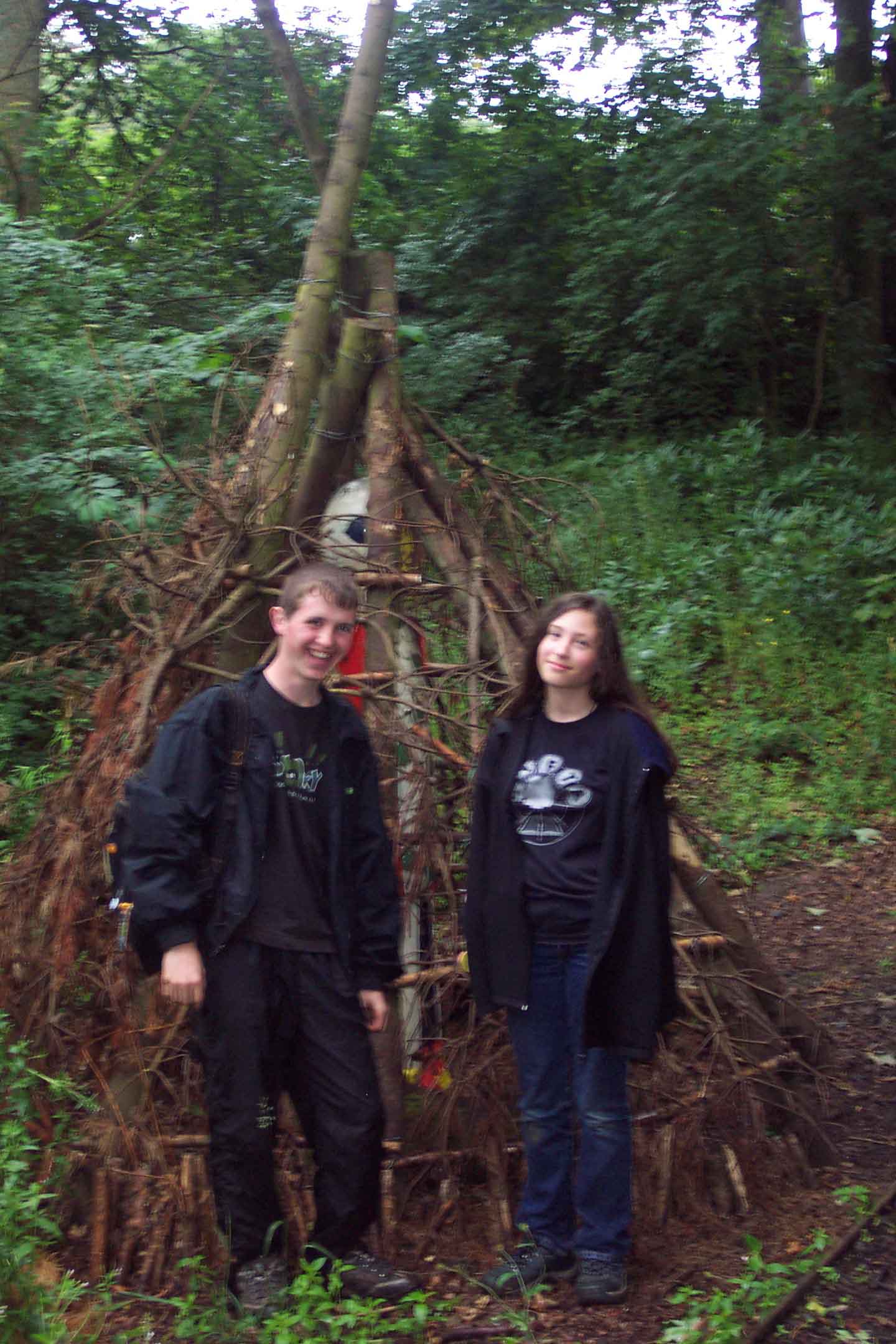
8. The teepee was built following a study by members of the Dipper Club of Native Americans. Carvings on the colourful totem pole show some of the wildlife in the wood such as Foxes and Sparrowhawks. In 2000 a Wren actually nested in the teepee and raised four young. |
|
|
|
|
|
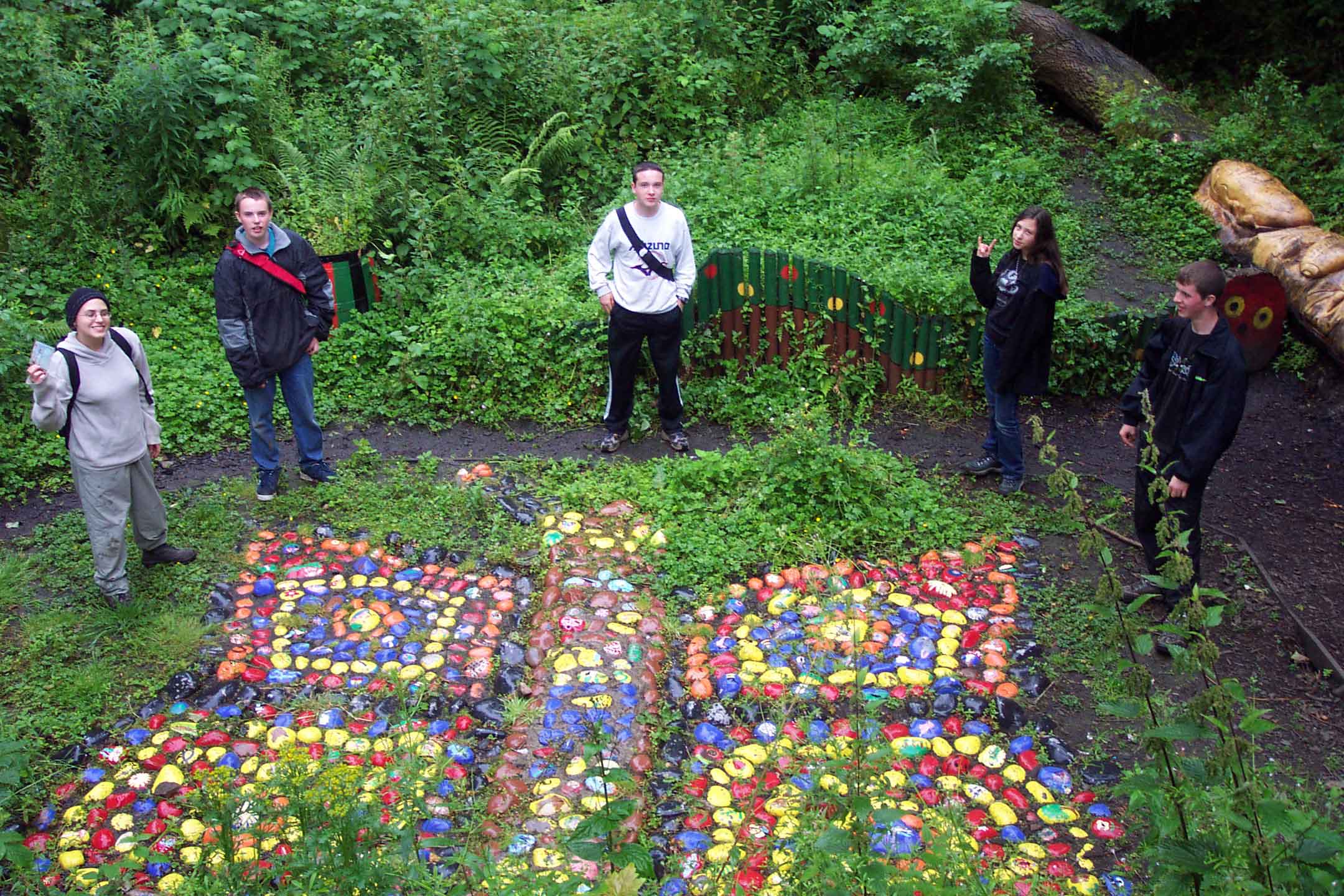
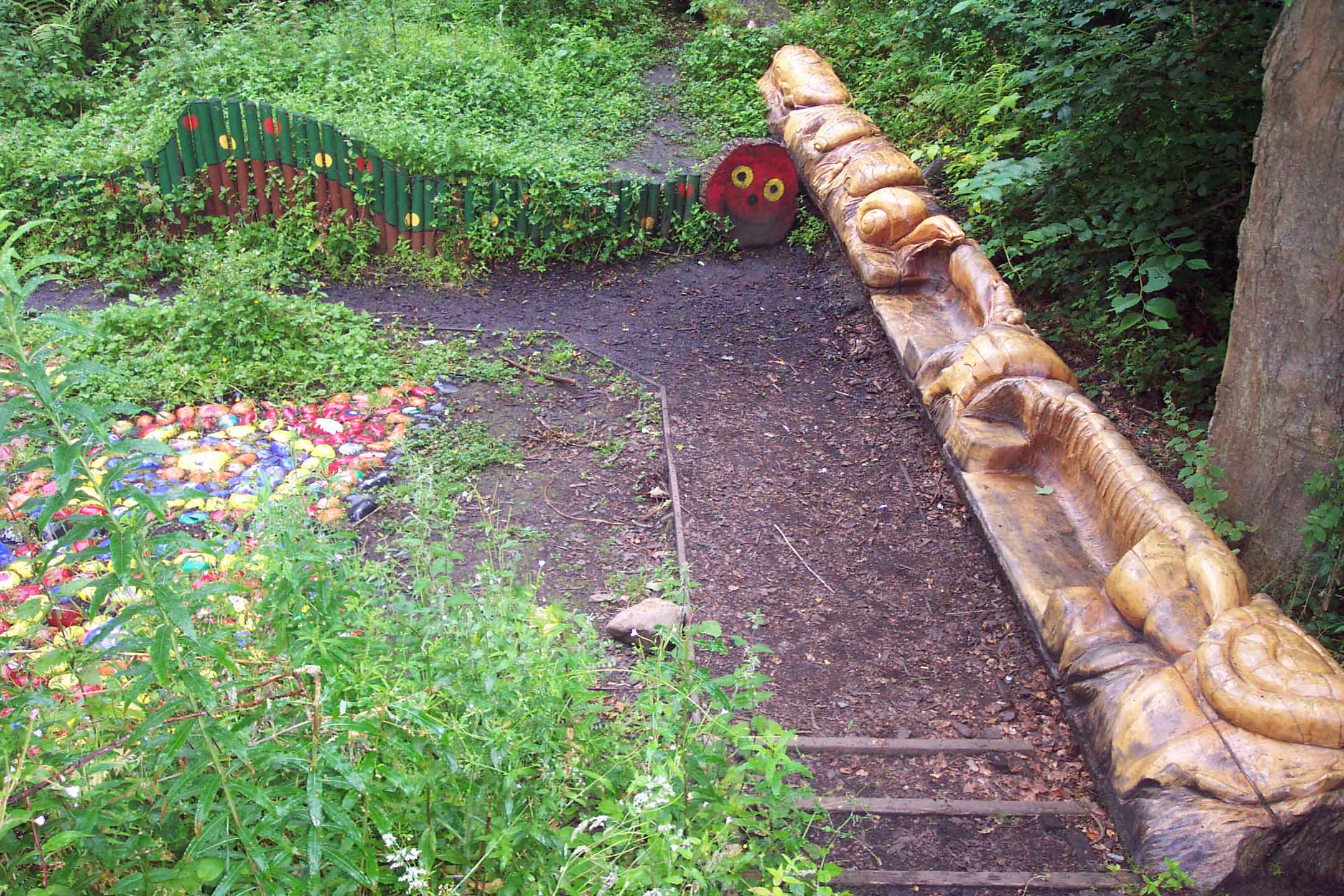
9. This former quarry site has been transformed into a seating area with a minibeast theme. Here you can follow the life-cycle of a butterfly, from adult to egg, caterpillar to pupa and back to adult. The log sculpture shows a variety of minibeasts including a Millipede, a Spider, a Woodlouse, a Centipede and in the middle a Stag Beetle. It is carved from an ash tree which was blown over in strong winds during the winter of 99 and it was sculpted by Robert Coia.
In spring the area is awash with wildflowers. Yellow Primroses carpet the bank behind the caterpillar. This bank is thought to be a spoil heap from the 18th centuary limestone quarry. primroses thrive on this lime-rich soil. In late spring the aromatic leaves and star-shaped white flowers of wild Garlic dominates the woodland floor. Early summer produces a fine show of of Bluebells in this area.
The butterfly mosaic was created by the Junior Rangers with pictures painted onto the stones by members of the public. The publics pictures range from wild plants to animals to minibeasts. The whiskey barrel 'eggs' have been planted with herbs attractive to butterflies such as Orange Tips and Small Tortoiseshells. |
|
|
|
 |
|
|
|
 |
|
|
|
|
|
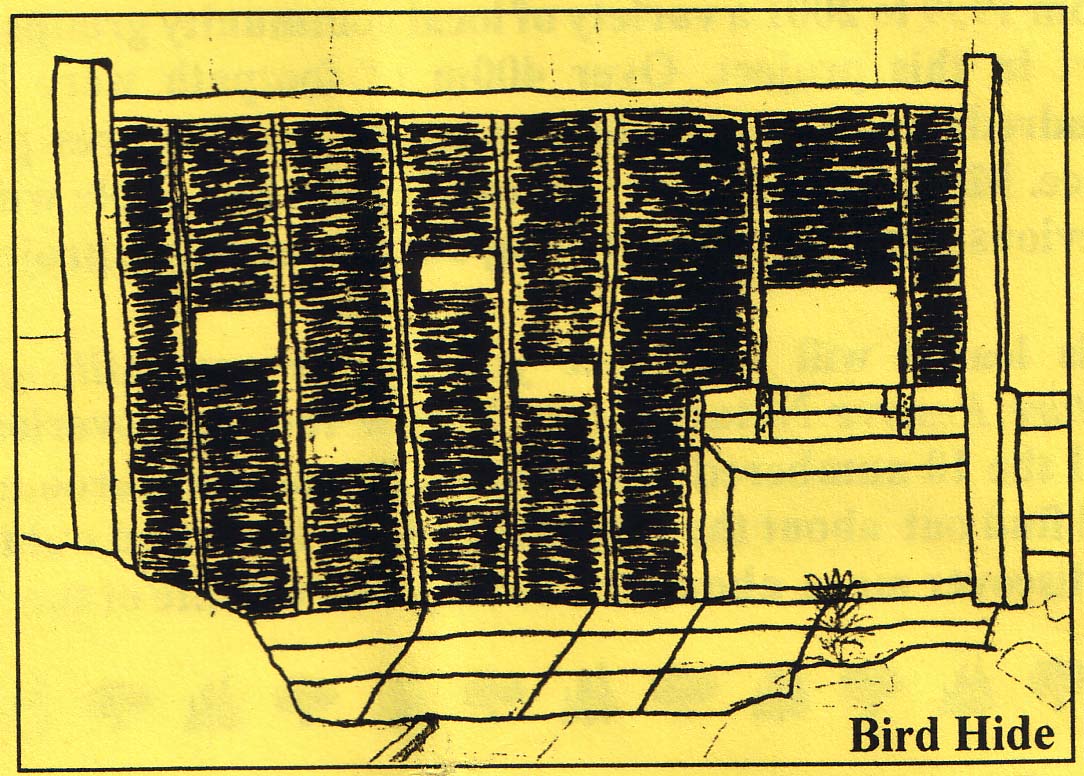
10. From behind the woven willow screen a variety of common woodland birds can be seen.Common sights include Blue,Great and Coal Tits, Chaffinches and Greenfinches. On a rare ocasion the Great Spotted Woodpecker may be seen coming down to feed on some peanuts.
Grey squirrels are very common on and around the bird tables and feeders. These cheeky mammals are clever raiders of the peanuts and seeds put out through out the year. They can leap incredible distances to make a perfect landing on the bird table and can easily be approached if you are quiet. |
|
|
|
 |
|
|
The sunny south facing bank beside the hide has also been planted with Buddleia bushes. Also known as the Butterfly Bush, Buddleias are fast-growing shrubs which are very attractive to butterflies as their long flowers contain large amounts of nectar. The bank has also been left to grow wild to encourage the growth of 'weed' species such as thistles. These will provide seeds in autumn for birds such as Goldfinches which breed nearby. |
|
|
|
|
|
|
WE WOULD LIKE TO THANK:
Prince's Trust Volunteers The Pagan Federation
Scottish Wildlife Trust The Scouts & Beavers
Ranger Trainees St Oswald's School
Glasgow University Dirty Weekenders Robert Coia
The Boy's Brigade Stuart Nisbet
post Office Challenge Award participants Cart River Vally Project
Big Issue Vendors Scottish natural Heritage |
|