Noni

This plant is known among the people of the tropics world-wide. In Malaysia, it is known as Mengkudu and is used for urinary disorders, painful cramps, and hemorrhages. In India, it is known as Och and is used for its ability to protect the skin from drying and cracking when exposed to the sun as well as many other uses. In the Caribbean, it is known as the Pain Killer Tree, and is used for a wide variety of disorders such as bruises, sprains, broken bones, fever and many more. In Southeast Asia, it is known as Nhau, and is used to overcome a sore throat and treat mouth and gum diseases. In the Philippines, it is known as Apatot, it is valued as an intestinal cleanser, particularly to rid the body of parasites. In the Cayman Islands it is known as the �hog apple�, in Australia it is called, �cheese fruit�.
In the islands of the South Pacific, the plant is known among all the peoples. It is known as �Nonu� in Samoa and Tonga, �Nono� in Raratonga and Tahiti, and �Noni� in the Marquesas Islands and Hawaii. Here it is most valued as a health giving plant, and has become an integral part of the Polynesian Culture.
An Important Source of Food
The Fruit of the Noni Tree has been used for centuries as a food source. Early Polynesians
recognized its pure value and consumed it in times of famine. During World War II, soldiers
based on tropical Polynesian islands were taught by the native Polynesian people to eat the Noni
fruit to sustain their strength. American General George S. Patton Jr. took his wife to Tahiti for a
pleasant break during the war and when the natives discovered that his wife had a lot of lower
back pain. She had had surgeries on it but was still experiencing a lot of pain. They gave her
Noni juice to drink and heated Noni leaves on hot rocks and placed them on her back. General
Patton claimed that this is the treatment that healed his wife's back problems. The fruit became a
staple food choice for the people of Raratonga, Samoa, and Fiji, who ate the fruit raw or cooked.
Australian aborigines were fond of the fruit. In Burma, unripe fruits were cooked in curries, while
the ripened fruits were consumed raw with salt. Seeds, leaves, bark, and root were also consumed
by people familiar with the qualities of this unusual plant.
Perhaps the most important medicinal plant in Polynesia
The people of Polynesia and their ancestors have used the fruit of the Noni for centuries for a
wide variety of ailments. Noni is taken by itself most commonly, but occasionally it is mixed
with other natural herbs for a specific result.
The Juice of the Noni has Been Used with the Following:
Benefits of Other Parts of the Noni Plant
The wonderful thing about the Noni plant is that every part is valued and used. The seeds of the
fruit are used as a purgative, a poultice is made of the leaves to treat various skin ailments and to
relieve pain and inflammation. The bark is a strong astringent, taken for malaria. A root extract is
given to relieve hypertension. Extracts from the flowers are used to treat sore eyes. And this is
just the beginning.
The traditional healers pick the fruit before it is fully ripe and place it in a jar in the direct
sunlight. When fully ripe, the fruit is mashed into a puree and the juice is extracted through a
cloth. The juice is now ready for use. Traditionally, as a tonic, the juice is taken during times of
rest when the body is under the least amount of stress.
The Noni has been prized in Polynesia for centuries, but has never found its way to the western
market, until now.
Now the health giving properties of the Noni are available to you. Noni Juice affects the glands
of the body, giving them what they need to promote health. It is an incredible immune system
builder and has strong anti-toxin properties. Because of this, Noni Juice can help reverse and or
prevent most of the degenerative diseases which are caused by aging and the toxins that we are
exposed to on a daily basis.
References:
J Morton, the Ocean-Going Noni, or Indian Mulberry (Morinda Citrifolia, Rubiaceae) and Some
of Its Colorful Relatives, Econ. Bot. 46(3) pp. 241-256, 1992
Medicinal Chest from the Malaysian Rainforest, 1996
Isabella Alona Abbott, La�au Hawai�i Traditional Hawaiian Uses of Plants.
Otto Degener, B.S., M.S., Illustrative of Plants and Customs of the South Seas
Mala La�att: A Garden of Hawaiian Healing Plants, 1996
Alexandra Dittmar, Morinda Citrifolia L. � Use in Indigenous Samoan Medicine, Journal of
Herbs and Medicinal Plants,
Vol. 1(3), 1993
The above list is simply meant to educate one on the traditional uses of the Noni and is not to
make any curative claims. We have much to learn from the traditional use of this amazing plant.
Digestive System
� Loose Stool
� Intestinal Parasites
� Indigestion
� Stomach Inflammation Chest Infections
� Cough
� Congestion
� Tight breathing
� Respiratory Afflictions
Eye Infections
� Eye Complaints Fevers
� Fever with vomiting
� Flu
Mouth and Throat Infections
� Inflamed, sore gums
� Sore throat with cough
� Thrush
� Toothache Skin Infections and Inflammations
� Abscess
� Boil, Carbuncle
� Abrasions
� Blemishes
� Wounds, Infections
Internal Disorders
� Blood Sugar
� High Blood Pressure
� Headache
� Kidney and Bladder Disorders
� Swellings
Gender Specific
� Childbirth and Pregnancy
� Cramps Bone and Joint Complaints
� Inflamed Joints
� Broken Bones
� Sprains
Effects of Aging
� Given as a healthful tonic for the general effects of aging 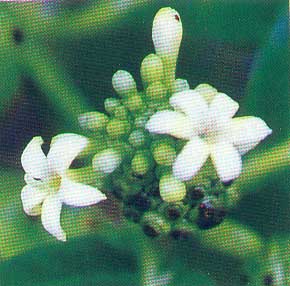 The Noni plant flourishes in the lush and unspoiled islands of French Polynesia (the best known
of these islands is Tahiti). It is considered to be one of the most beautiful plants in the islands. It
is a valued addition to a traditional Polynesian garden. The plant reaches heights of 15-30 feet
and yields fruit 360 days a year. All the stages of growth are going on all year long. When you
pick a fruit in three months there is another fruit in the same spot you picked it from. There are
some trees that produce up to 2,000 lbs. per month! If you plant a noni seed you can harvest fruit
in eight months. The blossoms of the tree are a creamy white color. The mature Noni fruit is
about the size of a potato and resembles a small breadfruit. When ripe the fruit turns yellow then
white. Each potato sized fruit produces approximately 4-6 ounces of juice.
The Noni plant flourishes in the lush and unspoiled islands of French Polynesia (the best known
of these islands is Tahiti). It is considered to be one of the most beautiful plants in the islands. It
is a valued addition to a traditional Polynesian garden. The plant reaches heights of 15-30 feet
and yields fruit 360 days a year. All the stages of growth are going on all year long. When you
pick a fruit in three months there is another fruit in the same spot you picked it from. There are
some trees that produce up to 2,000 lbs. per month! If you plant a noni seed you can harvest fruit
in eight months. The blossoms of the tree are a creamy white color. The mature Noni fruit is
about the size of a potato and resembles a small breadfruit. When ripe the fruit turns yellow then
white. Each potato sized fruit produces approximately 4-6 ounces of juice.

 �
Get your own Free Home Page
�
Get your own Free Home Page