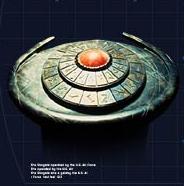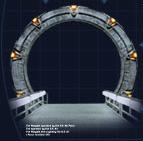
The Stargate operated by the U.S. Air Force's Stargate Command (SGC) at Cheyenne Mountain Operations Center near Colorado Springs, Colo., is one of a vast number of wormhole-generating "doors" that allow for near-instantaneous intergalactic travel.
Created millions of years ago by the Ancients, one of the earliest living beings in the universe, they are scattered throughout planets, with each 'Gate bearing a unique address similar to a telephone number.
Each is a monumental, roughly circular structure atop a base. The operating portion is composed of giant, moveable inner and outer dials, within which a wormhole entrance appears. Some Stargates have an iris that opens and closes over the wormhole entrance. This iris, when closed, rests less than 10 micrometers from the "event horizon" (the two-dimensional energy field forming the passageway to the generated wormhole). This leaves essentially no physical space through which an unwanted object or visitor can materialize.
How does a Stargate work? What's it made of?
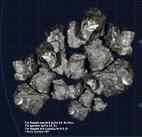
Stargates are made of the element Naquadah (sometimes transliterated from the original language as "Naquada"), a quartzite metal not found on Earth. A teleportational wormhole is generated when charged neutrinos are applied to Naquadah, the only known element that absorbs and energizes with neutrinos. This forms a stable, artificial wormhole that connects to another Stargate. The derivative Naquadria is a powerful yet unstable fuel source; prolonged exposure to its radiation can cause mental disorders.
How do you travel between Stargates?
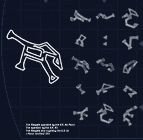
The monumental inner dial of each Stargate has 39 symbols, called glyphs (such as those at left), which correspond to different constellations. The outer dial has nine chevrons. When a combination of the inner dial's glyphs makes contact with seven of these chevrons, a wormhole is activated between 'Gates — just as dialing a seven-digit telephone number makes contact with another telephone. (The last symbol is always the point of origin.) When a "puddle" of energy forms from the neutrino-Naquadah interaction, a person can step through to another planet.
In the episode "The Fifth Race", an eighth chevron was activated and Carter noted, "The extra chevron must add a new distance calculation to the existing points, like a different area code." The purpose or function of the ninth chevron is still unknown.
How does the SG-1 team determine whether an unknown destination is safe?
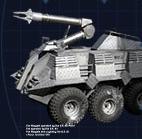
Before any SG team ventures through the Stargate to an unexplored offworld location, Stargate Command first sends through a Mobile Analytic Laboratory Probe (MALP). This probe analyzes conditions, and sends back radio-wave data to help SGC determine whether it is safe for human teams to proceed through.

What other SG teams are there?
Initially, there were only nine, including Colonel O'Neill's exploratory Alpha team, SG-1. By Season Two's "In the Line of Duty," SG-10, -11 and -12 had been added. An additional two were added by that season's "Show and Tell." In the Season Three opener, "Into the Fire," three more were added. By season 10, there are at least 25 SG teams including a Russian team. Not every team's specialty has been specifically given, and some specialties' designations have changed. The known teams currently include:
- SG-2: Research
Led by Major Hank Griff
- SG-3: Marine combat (Alpha)
Originally led by Colonel Robert Makepeace, later by Major Lawrence
- SG-4: Medical
Formerly Russian SG team. As Medical, originally led by Lieutenant Barber (killed in action)
- SG-5: Marine combat (Beta)
- SG-7: Scientific
- SG-8: [Formerly Medical]
Current specialty unknown
- SG-9: Diplomatic
Originally led by Captain Hansen (killed in action), later by Major Stan Kovacek, still later by Major Benton (killed in action)
- SG-11: Archaeological
Formerly Engineering, when originally led by Major Hawkins (killed in action), later by Captain Connor (killed in action)
- SG-16: Exploration (Beta)
Led by Colonel Reynolds
- SG-17: Exploration (Gamma)
Originally led by Major Mansfield (killed in action)