
Psych Care Needed for Refugees
by Jason Straziuso
"I think the situation is okay," Schell said. "We have no serious diseases, no malnutrition. All the things we have in Africa we don't have here."
The majority of the medical problems are treated at the Doctors Without Borders facitility, which see 300 patients daily, down from 700 daily a month ago, according to Jonathan Brock, head of DWB at Stankovac. Patients with more serious medical needs are sent to the 80-bed German Red Cross hospital.
Now that the situation has stabilized, attention is being turned to the changing seasons - both summer and winter.
"With temps increasing there's always a danger that disease could spread quite quickly, especially water-borne diseases," Schell said. And soon winter will be a problem.
"We have to think about staying here over the winter," Schell said. "The problem is we can not heat these tents.
"There is not a plan at the moment. I think everyone is hoping the situation will not continue to winter, but we'll soon have to start looking at (alternative solutions)."
But that may be difficult, according to Joanna Wedge of the International Catholic Migration Commission, as most disaster relief work has been in warmer climates.
"We will be forced to find experts in winterization because most people have experience in Africa or Asia, " Wedge said.
In Chegrane, a camp 30 miles west of Stankovac, the Norwegian Red Cross late last week (May 15) opened a $1.5 million tent hospital that is winter ready, according to Halvor Lauritzen of the NOrwegian Red Cross. Only heaters will need to be added.
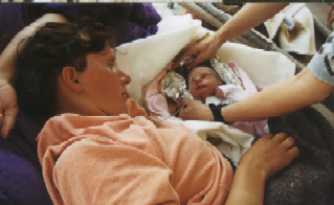
The German Red Cross at Stankovac, which has a surgery unit, an obstetrics tent and wards for men, women and children, has seen 20 births in the last 15 days. There has been only one war-related incident, when a boy was near a mine when it exploded. He is doing fine, Schell said.
There have been four deaths, including one baby who was born in the mountains and couldn't be nursed back to health, Schell said.
Another area that Stankovac has good resources for is psychological treatment. Ten percent to fifteen percent of the refugees suffer from post-traumatic stress syndrome, Brock said.
DWB provides primary psychological care and Medecins du Monde (Doctors of the World) provides more advanced psychiatric care.
"We're trying to help people to live with the trauma," said Anne Blanquier of MDM. "They won't forget anything, that's for sure, but they can look at it from a differnt way."
Two Albanian doctors lead group theray sessions and give individual treatment of up to an hour a day, Blanquier said.
"In Blace (the border refugee camp) the doctors told me they showed up with physcial problems but they really needed to talk," Blanquier said.
She is also worried that not all the children who need therapy will get it.
"The problem is...when children are aggressive, it's that they are just being children," Blanquier said. "The parents just try to calm them down. They don't realize they are psycho-traumatized."
Overall , the refugees of Stankovac have adequate medical care.
"I think the situation is good. The doctors from Germany are real good," said a nurse from nearby Skopje. "They do everything they can, no matter if it's day or night."
"Compared to Africa it's not traumatic," Schell said. "It's a severe situation but not so traumatic."