| HOME PAGE | WATERFALLS | GAME PARKS | CULTURE | BUSINESS | TRAVEL NEWS |
| LOCHINVAR |
| NORTH LUANGWA |
| KAFUE |
| KASANKA |
LOCHINVAR PARK AND THE KAFUE WETLANDS
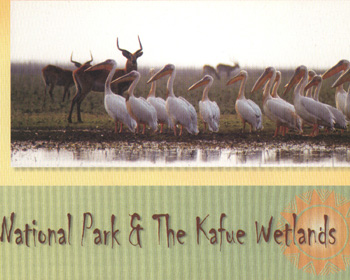 |
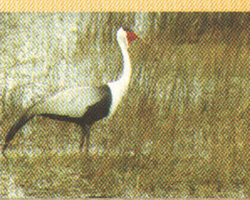
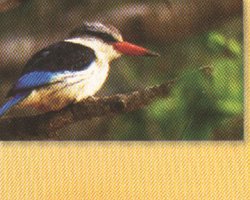
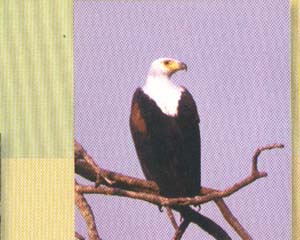
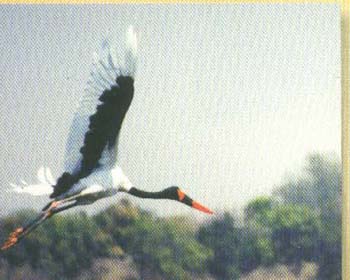
Although not abundant in the larger mammals, Lochinvar is a wetland paradise of exceptional beauty and outstanding birding opportunities with over 420 recorded species in its 428 square kilometres, particularly an amazing variety of waterbirds. As there are no dangerous animals in the park, apart from buffalo, |
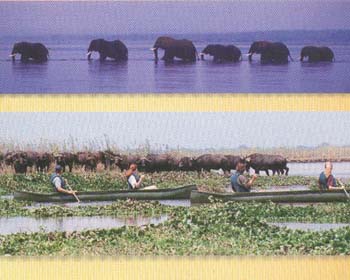
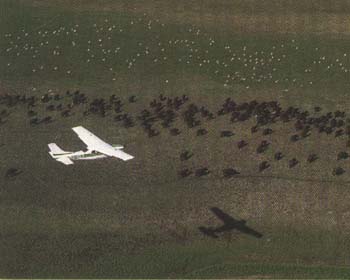
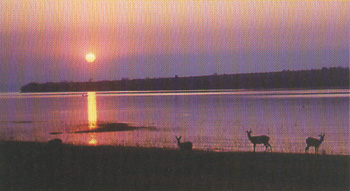
Also worth seeing are massive herds of Kafue Lechwe antelope. More than 30 000 of them make the Kafue Flats floodplain their home and move seasonally according to the flood level.The World Wildlife Fund has designated the kafue flats a wetland of international importance . The Mwanachingwala Conservation Area attempts to give local people an interest in conservation , through both redistribution of tourist revenue and controlled harvesting of resources. The fishermen you may come across here are very much a part of this unique ecosystem, and in many ways the humans and wildlife are interdependent. |
 |
 |
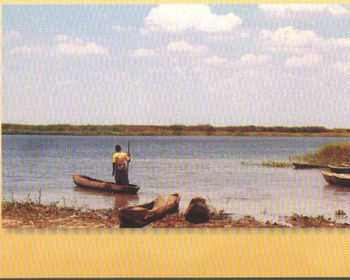
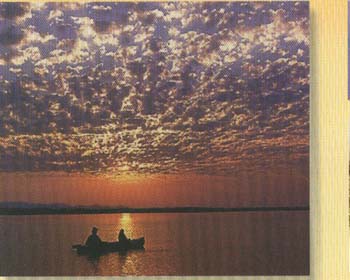
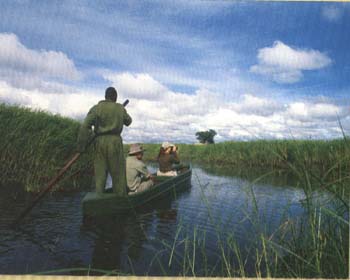
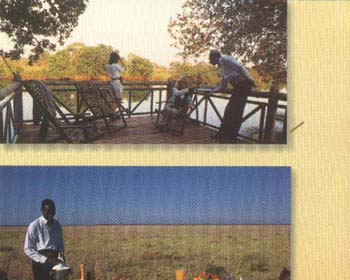
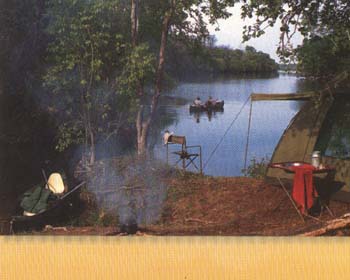
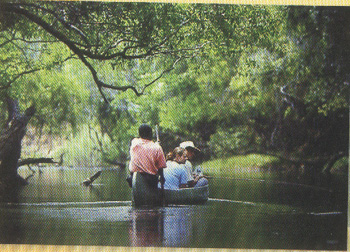
Because there are no predators in the area, you are free to walk,fish, hire a makoro(dugout canoe)and explore hidden lagoons,or just have a picnic on the banks of the river, while watching an incredibly rich variety of both resident and migratory birds.
|
 |
|
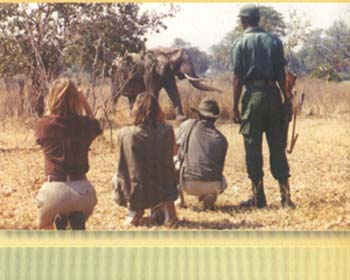 |
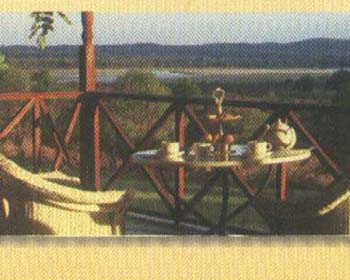
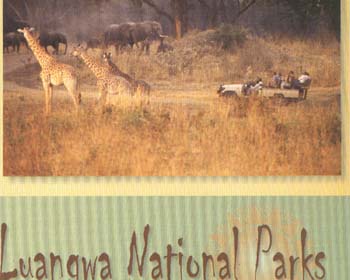
The now famous " Walking Safari " originated in south Luangwa National Park, The Walking Safari is still one of the finest ways to experince this pristine wilderness first hand. South Luangwa National Park offers a wide range of accommodations , from sheer luxury to camping , but regardless of where you stay ,your wilderness experience will be unequalled. |
| If you are staying at one of the valley's lodges, the guides will ensure you have every opportunity to see all that the valley has to offer of its wildlife ,birds and varying vegetation and habitats. If you are in your own vehicle , be sure to get a map of the park from the crocodile farm and follow the loop roads graded in the park ,past damboos bursting with hippos, grazing antelope. |
 |
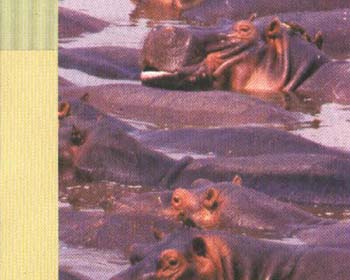 |
Hippopotamus is one animal you wont't miss. As you cross over the bridge into the park there are usually between 30 and 70 lounging in the river below and most of the damboos and lagoons will reveal. |
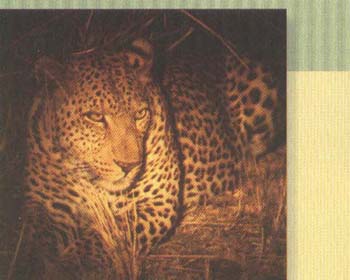
| South Luangwa has a good population of leopard but they are not that easy to spot and tend to retreat when they hear vehcicles . Many of the lodges game trackers are skilled in finding leopards on night drives however,and often visitors are rewarded with a full view of a kill. |
 |
 |
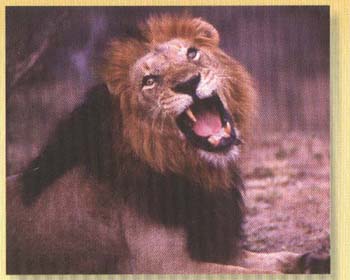
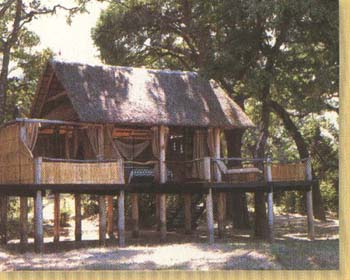
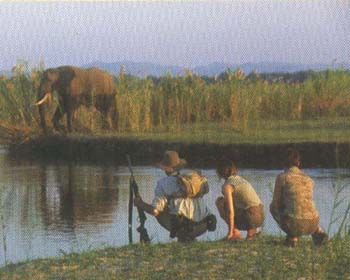
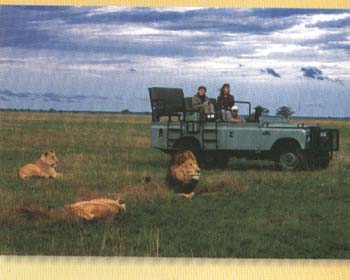
This remote tract of land in the north of the game rich Luangwa Valley offers one of the finest wilderness experiences in Zambia , if not Africa itself . It is not open to the public and there are no permanent lodges there .Access is with one of the few safari operators granted permission to conduct walking safaris . The beauty of visiting this park is the truly remarkable opportunity to experience Africa as it was .Wild and untouched , and you are simply an unobtrusive witness to its natural beauty and drama. |
| Although declared a wilderness area , the North Park ,was not open to anyone other than Game Department Rangers for more than thirty years. In 1984 , Major John Harvey and his wife Lorna sought permission to conduct walking safaris in the area and for many years were the only operators in this remote wilderness. |
 |
 |
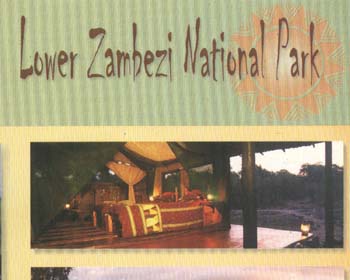
Then in 1989 , the authorities allowed entry to the park to a few more safari operators who bring limited numbers into the park for guided walking safaris and game drives. |
 |
Kafue is Zambia's oldest park ,and by far the largest . In fact ,it's the second largest national park in the world ,and about the size of Wales. This superb destination provides a raw and diverse slice of African wilderness with excellent game viewing , birdwatching ,and fishing opportunities. |
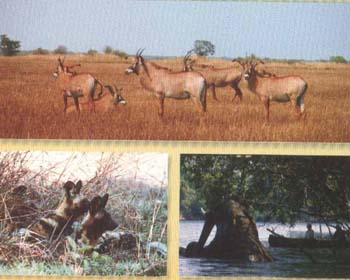
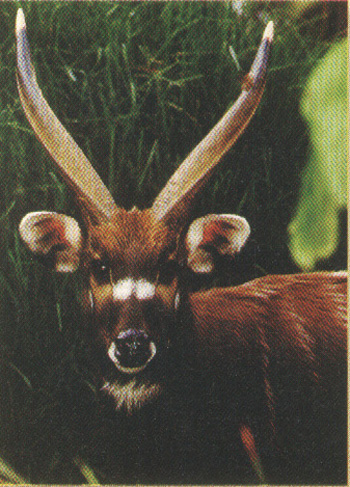
| . From the astounding Busanga Plains in the north to the tree-choked wilderness and the lush dambos of the south , Kafue is fed by the emerald green Lunga , Lufupa and KafueRivers .You will see thousands of red lechwe on the Plains , the ubiquitous puku ,the stately sable and roan in the woodland ,and the diminitive oribi and duiker .The Defassa waterbuck ,herds of tessebe ,hartebeest,zebra,and buffalo make for a full menu of antelope. |
 |
 |
Spread over such a vast area, the Kafue National Park encompasses a variety of landscapes. The Busanga Plains in the north is a huge flat expanse that stretches in all directions as far as the eye can see. It is one of Zambia's most significant wetland resources and one of the few areas untouched by development or human activity . The wealth of game on the plains is also a big attraction for predators, including solitary leopards, cheetahs, and prides of up to twenty lions are spotted regularly. |
| In the south, the Kafue River runs into Itezhi Tezhi Dam, which covers an area of 370 square kilometres. This vast inland sea is surounded in parts by grassy plains, often 'mowed' by hippos. Rocky bays and stretches of submerged trees provide perfect perches for the many waterbirds inhabiting the area. |
 |
 |
 |
 |
Lying on the southern shores of Lake Tanganika in the northern most tip of Zambia,Sumbu Park encompasses 100kms of some of the most pristine shores of this vast lake.The Park's beauty ranges from sandy beaches,vertical cliffs,rocky coves,and natural bays to the rugged hills and deep valleys of the interior.Roan,sable,eland,hartbeest,as well as buffalo and zebra and occassionallyelephant,lion and leopard,warthhog and puku frequent the beaches. |
|||
|
||||
| This side of the lake is teeming with crocodiles,some up to 6min length, so swimming is obviously not advisable.Hippos often emerge at night aroundthe lodges to 'mow'the green grass.Bird life in the Park is prolific and the flamingo is one of the more spectacular migrants. Sumbu is famous for its excellent angling off the shoreline and some of the better catches are large Nile perch,goliath tigerfish,vundu catfish, lake salmon and the tasty yellow belly. |
 |
|||
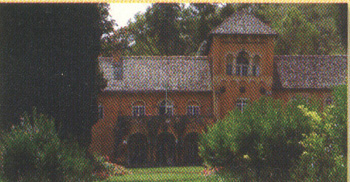 |
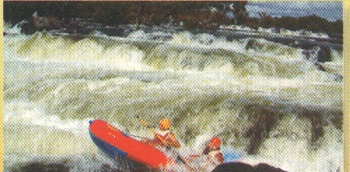
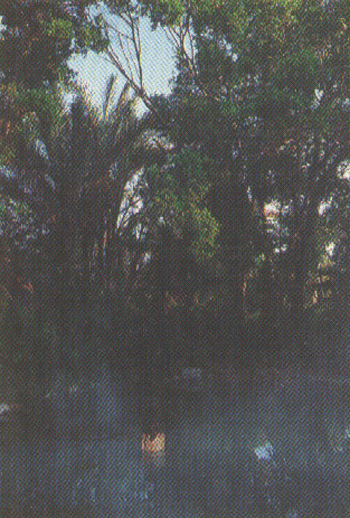
Shiwa N'gandu,the extraordinary English Manor House built in the early 1900s,and immortalised in the book Africa House,is well worth a visit.Also on the estate is Kapishya Hot Springs, an exquisite natural hot spring surrounded by lush tropical vegetation and tall raffia palms.There are some great rapids further down for rafting. |
|||

Created By: Name :JOSEPH S SIANYEUKA