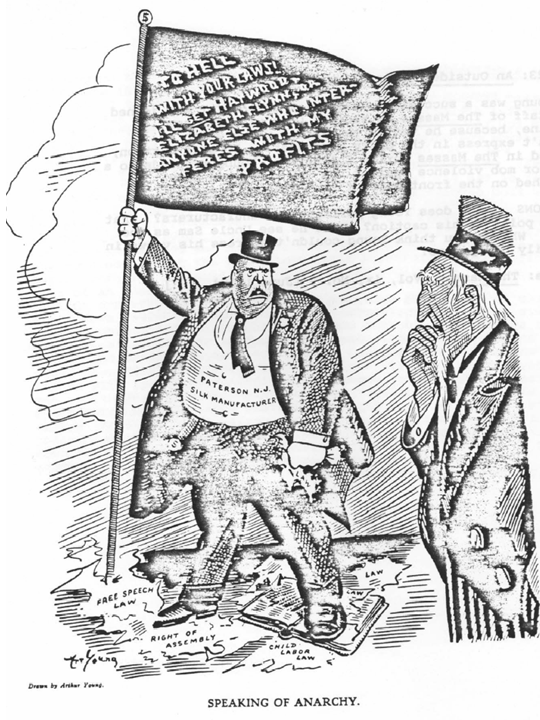
This strike began in January at the largest mill, Doherty and Company. With the introduction of new looms caused the workers so question if they would have their jobs. The workers, without the new looms, had had to tend only 1 or 2 looms at a time. Now they had to tend to about 3 or 4 at a time, which is why they feared for their jobs.
The Industrial Workers of the World, or IWW as you may prefer, organized a strike that included representatives from every mill. The IWW leaders had acted as advisers mostly. The press had blamed the strike on the IWW "agitators." These agitators spent at least some part of the strike behind bars, along with 1,850 others.
Their demands were that they wanted to have an 8-hour day, have a daily minimum wage, which was 12 dollars, and take away the 4-loom system. But, as with many strikes, no one would listen to them and the strike went on until late spring.
On June 7, more than 1,000 workers had performed a reenactment of the strike's most dramatic moments. This was a great success as theater but failed as a fund-raising event.
The employers took into action and caused the strike's unity to break. They announced that the only ones who could be able to return to work, were those who agreed to work under the pre-strike conditions. The strike ended on July 28, and there were no gains for those workers. The IWW was forced to abandon their attempt to organize the workers in the Northeast. |