 |
|
|
|
|
|
|
|
|
|
|
|
|
|
|
|
|
|
|
|
|
|
|
|
|
|
Mushroom Gallery |
|
|
|
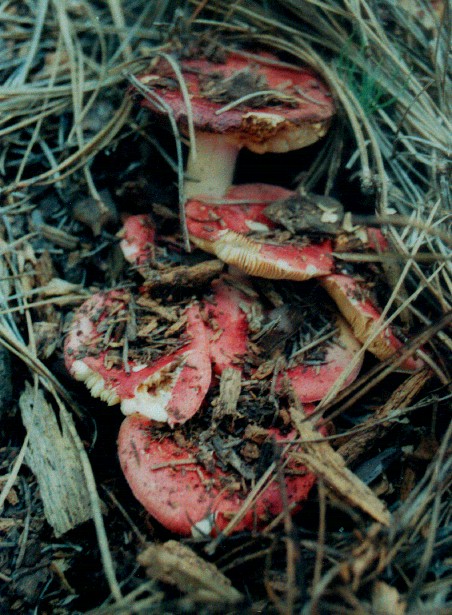
Just like flowers, fungi come in a suprising array of colors. These specimen enjoy a short life during the summer monsoon season on the Colorado Plateaus transitional forests. Their environment is the arid ponderosa/pinon forest regions of the Grand Canyon, Sitgreves National Forest, the Chuska Mountains in Arizona and Cibola and Carson National Forests of New Mexico. |
|
|
|
 |
|
|
|
The summer rains of 1999 brought forth such an abundance of fungi. I had initialy set out to collect and identify edible species. I saw such beauty that I had to take the camers along to record some 50 odd varieties inhabiting the Four Corners States highlands.
Any mushroom of signifigant size became a subject for my camera. |
|
|
|
|
|
 |
|
|
|
|
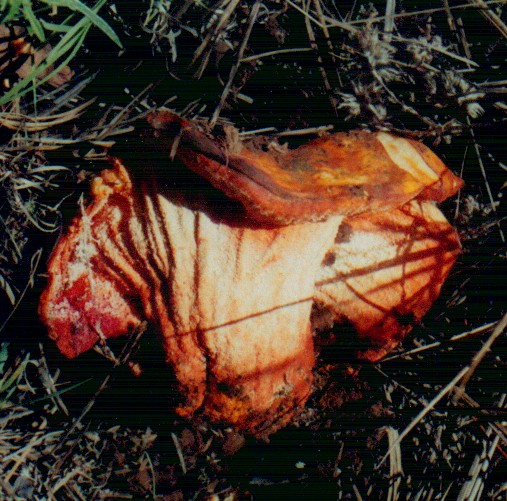
Orange is such and unusual color for fungi.
I suspect the mushroom on the right to be a
"false jack-o-lantern". Mistaken for an edible species most who carelessly eat it suffer it's strong emetic effect. |
|
|
|
|
|
 |
|
|
|
|
|
|
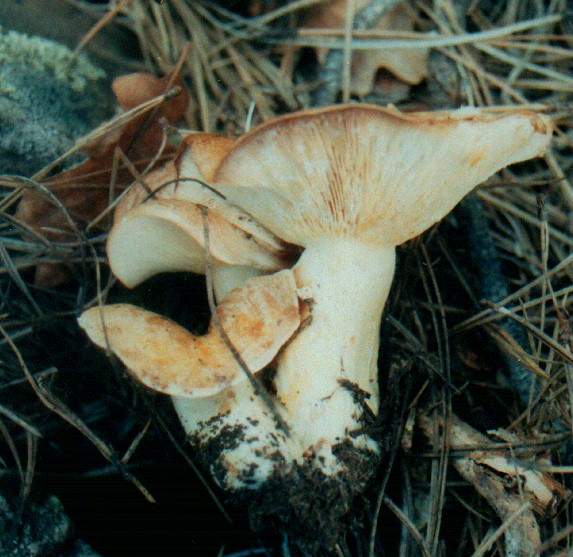
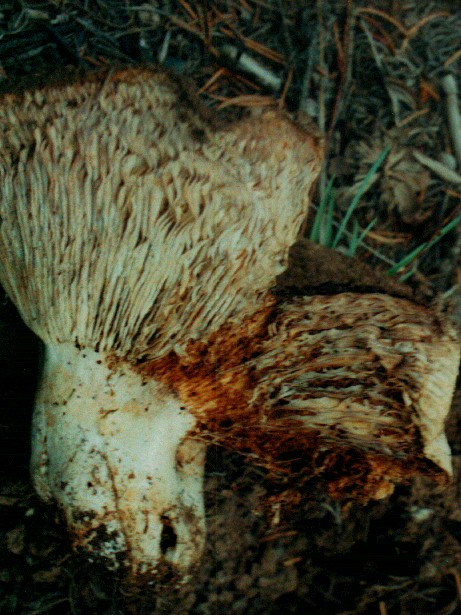
Left and below are some variety of chanterelle.
Though I haven't positive identification, many edibles are riddled with fly larve or have been nibbled by snails and wild life. With unidentified specimen we must first assume and many bugs or wildlife may eat things toxic to humans. |
|
|
|
|
|
 |
|
|
|
|
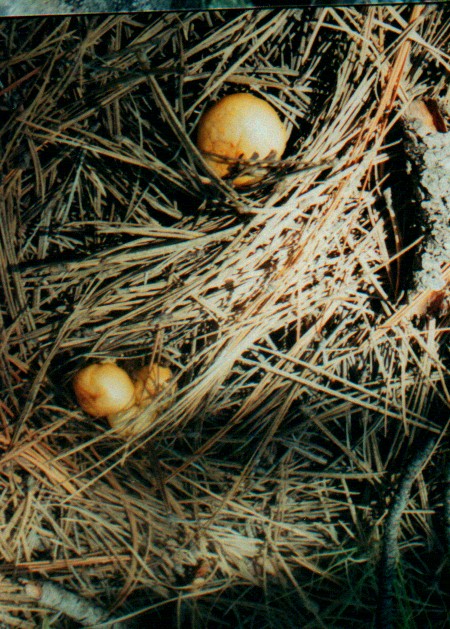
The fertile volcanic soils at the foot of the San Francisco Peaks near Flagstaff Arizona are kept moist by the thick carpet of ponderosa needles. As the needles degrade, they enrich the soil with organic matter improving moisture retention and providing a rich growing medium. |
|
|
|
|
|
 |
|
|
|
|
|
|
Home
Wild Edibles |
|
|
|