 |
| Awesome Hunting Accuracy |
| With today's equipment, even "Average" archers can shoot super groups Follow these 10 steps to shoot like a pro. |
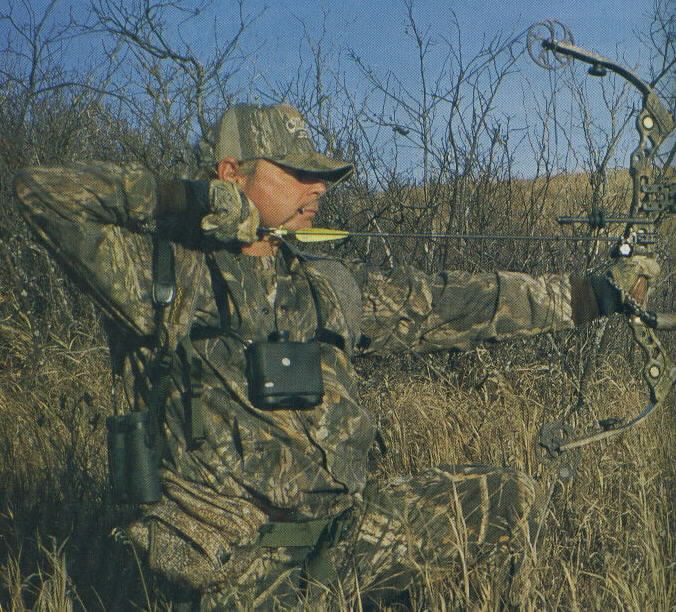
| I can remember when hitting a paper plate every time at 20 yards was considered acceptable shooting. Today, impressive arrow groups are not measured by dinner plates, but rather by golf balls and silver dollars. With today's top-end equipment, it's possible to group broadhead-tipped arrows the size of a bottle cap at 20 yards, three-inch groups at 30 yards, four-inch groups at 40 yards and even five-inch groups at 50 yards. Using top-notch equipment is the first step toward being a better bow shot, but it also takes some talent, dedication and smart practice. Unless you are already busting nocks with every shot at 30 yards, you have room for improving your shooting. Here's a look at an article from Petersen's Bowhunting magazine by Brandon Ray on 10 steps that have improved his shooting and should improve your shots as well. |
| #1 � Proper Draw Length The first step in becoming a better bow shot is making sure that your equipment is fitted properly. One common mistake that archers make is choosing a bow with a draw length that is too long. This is where a local archery pro shop becomes so important. If you order your new bow from a mail order catalog, the operator taking your order over the phone cannot measure and fit your draw length the way a pro at your neighborhood bow shop can. A simple method I�ve found for determining approximate draw length is to put your bow arm straight out in front of you as if you were drawing a bow, and make your hand into a fist. Put your knuckles flush against the wall. Now draw your other hand as if you were drawing a bow. Have a friend use a tape measure and measure the distance from the wall to your anchor point on the side of your face. Once you have determined your draw length, remember that if you change brands or models of bows or change your shooting style from fingers to a release, your draw length may change slightly. #2 � Lose Some Weight Another common mistake that many bowhunters make is pulling too much draw weight. Shooting excessive weight leads to early fatigue in practice sessions, which leads to quivering muscles, bad habits and even target panic. If you are pulling too much draw weight in a hunting situation, you will have to make extra movement to break the bow over to full draw, which no self respecting whitetail buck will tolerate, and you might not even be able to reach full draw on a cold morning when your muscles are as frozen as a block of ice. Most bowhunters would see a dramatic increase in accuracy if they would go on a draw weight diet and lose at least five pounds. Especially for archers hunting deer-sized game, the issue of poundage comes down to �how far do you have to send an arrow through a deer to kill it?� When all that extra poundage is just blasting an arrow through a deer�s ribcage and 20 yards beyond, it�s wasted energy. Of course the ideal bow poundage will vary from person to person depending on build and strength, but there are a few simple tests you can try to see if you are over-bowed. Start by holding your bow straight out in front of you a slowly drawing it back. If you have to raise your bow arm above your head to draw the bow, it�s too heavy. Also, try drawing the string from awkward positions such as sitting or kneeling. Try shooting outdoors in cold weather. The final test is to draw your bow and hold it at full draw for 30 seconds before taking the shot. If your muscles start to shake or, when you finally cut the shot you notice less than normal accuracy, crank the bow down. I�ve shot completely through whitetails with bows pulling between 55 and 60 pounds. #3 � Switch to Carbons Carbon arrows are gaining in popularity every year with lots of serious bowhunters making the switch. When compared to an aluminum shaft spined for the same draw weight, carbon arrows are lighter in weight, which translates to a flatter arrow trajectory and tighter pin gaps. When I made the switch last year from aluminum shafts to carbon for hunting, I gained about 25 feet per second in arrow speed. The added arrow speed gave me the confidence I needed to shoot tighter groups at longer distances, a definite plus when hunting in open country. Carbon arrows are also very tough. Unlike aluminum shafts that get dinged and bent, carbons are either straight or they are broken. #4 � Use a Large Diameter Peep A consistent anchor point is crucial to achieve awesome shooting accuracy. A string peep allows the shooter to position his face the same way shot after shot. Many archery shop pros compare the peep sight with the rear sight on a rifle. For hunting purposes, a peep sight with a big hole is the best choice. A peep with a hole diameter of 3/16 inch allows more light to reach your eye in low-light conditions. Center the sight pin for the distance that you are shooting at inside the peep�s hole for even more consistency. Some bowhunters will argue that peep sights can rob an archer of a shot in extreme low-light conditions. That is probably true, but at least in my own case, the peep sight is so dramatic at improving my accuracy that I�m willing to sacrifice a few minutes of shooting light. #5 � Stabilize the Shot Another add-on that some bowhunters fail to recognize as a tool to improve accuracy is a heavy stabilizer. Adding extra weight to the front of the bow makes it easier to hold the sight pin steady on the target. A couple of years ago I switched from the smaller, lightweight stabilizer that I was so comfortable with to a longer, heavier one. The tip came from an expert 3-D shooter who said I would really see an improvement in my shooting with the extra weight. That shooter was right. My 3-D scores jumped immediately. At first I thought the added length and weight would be impractical for hunting, but after several hunts using the larger stabilizers I have not found any problems. When hunting from tight ground blinds or tree stands, I just take an extra minute to trim brush and make sure that there is enough room to swing my bow from side to side. That little bit of extra effort is certainly worth the increased accuracy I gain from using the longer, heavier stabilizer. |
|
| Back to Home Page |