
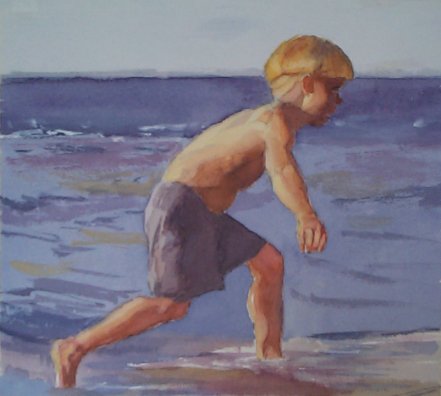
(1) The first stanza describes that the poem will tell the story of the lost magic of childhood. Thomas uses words such as "young" and "easy" to describe the innocent freedom of childhood. The narrator describes how he was in charge of his own domain, "prince of the apple towns," "lordly" ruling over his land. This stanza also mentions time and its seeming abundance during childhood, which foreshadows that this poem may be about a loss...of childhood, innocence, time.
(2) The second stanza begins to explore the idea of blissful ignorance that only exists during childhood. The narrator mentions being "green and carefree," "famous" and "golden" in his own world (ignorant of reality where he is only a child). The power of childhood is strong and time feels infinite. Sadness is unknown to the narrator, and the only limits to one's happiness are the depths of one's imagination.
(3) I notice a small change in emotion in the third stanza. The narrator gives more of a sense that the bliss of innocence may not last by saying, "All the sun long it was running, it was lovely." Although the entire poem has been in past tense, the feeling starts to differ in this stanza. The images are still happy childhood reflections, but the reader can begin to sense that the narrator is realizing the finite nature of childhood and thus, losing his own innocence.
(4) The fourth stanza starts out, "And then to awake...," which forces the reader to draw back to reality. This stanza also makes multiple references to the Genesis section of the Bible, specifically to the Creation story and the appearance of Adam and Eve. A reader with a basic knowledge of Genesis might understand this as a reference to the naive Garden of Eden children live in and loss of inevitable loss of innocence (Adam and Eve). The "simple light" reference explains the cyclical idea of night leading to day leading to night. The idea that darkness represents chaos and confusion and light, order and understanding. In a way, this reference is a metaphor for the cyclical aging process that Thomas's poem is referring to.
(5) The fifth stanza shows the narrator's awareness of his past childhood. He knows this is not reality (in contrast to the naive sense the beginning of the poem gives), but is still able to reflect on the blissful, happy feelings that envelop childhood. The narrator reflects on his carefree attitude and the way he always took things for granted.
(6) The sixth stanza presents the narrator's final reflection. Again, time is important. The narrator discusses how he did not pay attention to the fact that childhood and its innocence would end. This stanza represents a very familiar feeling to many readers--this feeling of loss of innocence that many of us spend adulthood yearning for. I think this stanza can be interpreted in multiple ways--is the narrator bitter? happily reminiscent? regretful?--it's hard to tell for sure. Perhaps he is having all of these feelings. Regardless, the poem closes here, most likely leaving the reader having similar muddled thoughts of their own childhood.
