Definition
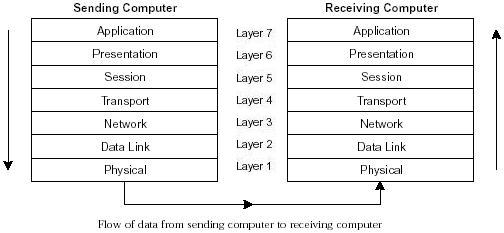
Short for Open Systems Interconnection Model, it was developed by the ISO in the early 1980's. It is a international set of rules and it allows computer systems of any kind to communicate with one another. The goal of OSI is to create an international open systems networking environment where all systems can interconnect. Most communications protocols these days are in one way or another linked to the OSI model. OSI has seven layers: 1. Physical, 2. Data Link, 3. Network, 4. Transport, 5. Session, 6. Presentation, 7. Application. Each layer is defined for its own functions and the layers interact with each other in the aspect of one layer interacting with another situated above or below it. A communication begins in the application layer on the originating computer e.g. a user opening an application and making a request to the other computer. The communication is passed through each of the seven layers down to the physical layer in which data is transmitted through some kind of media. On the receiving end, control passes back up the hierarchy. This process is depicted below.
The Seven Layers
Application (Layer 7)
The Application layer provides common services and utilities that support the software (what the user uses to perform work) to enable it to use network services. This layer transfers requests to the network. This is done by an Application Program Interface (API) which is a set of rules that allow programs to use the operating system. Some services include e-mail management, file transfer and file management.
Presentation (Layer 6)
In this layer data is formatted to the level where the network can understand it. This layer is the translator between the application an the network and manages data encryption and decryption e.g. the scrambling of system passwords.
Session (Layer 5)
This layer establishes, maintains and manages the computer to computer communication sessions. It also synchronizes the communication dialogs between two parties, provides error reporting for the Application and Presentation layers and ensures that only authorized users can access a particular session.
Transport (Layer 4)
The main purpose of this layers is making sure that the data is delivered error-free and in the correct sequence. Provides Flow Control which is sending data at an appropriate speed based on how fast the recipient can accept data. This layer is also responsible for sequencing which is breaking up large data packets into sizes the network can handle. The smaller chunks of data are numbered so that the recipient's transport layer can reassemble the packets into the correct order. When using a connection-oriented, reliable transport protocol, such as TCP, acknowledgments (ACK) are send back to the sender to confirm that the data has been received and NACK which is negative acknowledgment in which case this layer would retransmit data.
Network (Layer 3)
Enables internetworking, passing data from one network to another. Defines the logical network layout so routers can determine how to transmit data packets. Network layer protocols reside on this layer. Network protocols are also used to segment (which is decreasing size if necessary for the other network segment to accept) and reassemble (reconstruct the segmented data) data. This layer is responsible for address translation. The header added by the Network layer contains a network address so it can be routed trough an internetwork.
Data Link (Layer 2)
In general this layer connects the software to the hardware and controls the communication between the Network layer and the Physical layer. This layer is responsible for creating frames. The frames not only contain the data received from the Network layer by also sender and receiver addresses and error checking and control information. When the network knows where the frames are to be transmitted and have the insurance of the error checking and control information they are then transmitted by the Physical layer. Bridges and switches operate at this layer. These devices decode frames and use the frame info to transmit data to a recipient. The Data Link layer consists of two sublayers as depicted below.

The Logical Link Control (LLC) sublayer is the upper layer and provides a common interface, communicates with the higher-level layers and uses the MAC address (network address that is burnt onto the Network Interface Card by its manufacturer). It also provides reliability and flow control services. The Media Access Control (MAC) sublayer is mainly responsible for appending the MAC address onto frames. It also communicates with the lower layer, the Physical layer.
Physical (Layer 1)
This layer contains the physical aspects of networking e.g. cabling, connectors, repeaters. The transmission speed and data monitoring are done by this layer but it does not provide error checking. Physical layer specifications define characteristics such as voltage detection and generating voltage in other words it establishes and maintains point-to-point data links for transmitting or receiving data signals.