
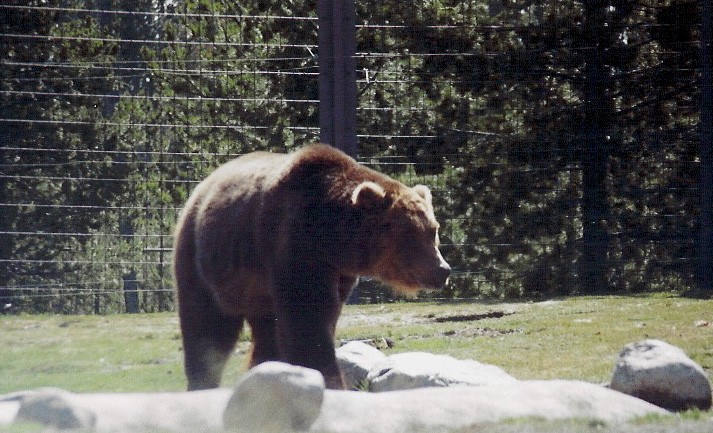
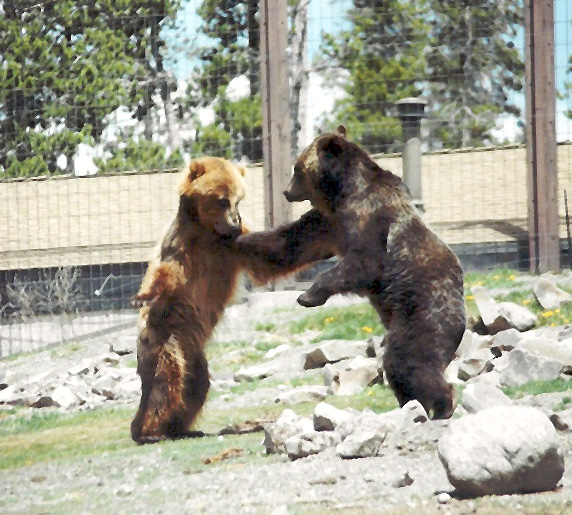
"The first white explorer to see grizzly bears and to record the event was Henry Kelsey." In his journal on August 29, 1691, Kelsy writes of seeing "a great sort of bear" near what is now The Pass, in west-central Manitoba, Canada. In 1805, Lewis and Clark also wrote in their journals of sightings of large grizzly bears.
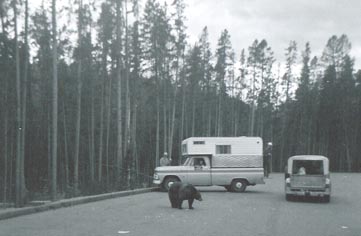
All bears will take advantage of food and garbage carelessly left in campsites or in communities that are located close to the bears natural habitat. It is important to keep yor campsite clean, and your food locked in your vehicle or stored away from your camp. Source: http://www.cws-sct.ec.gc.ca/hww-fap.cfm?ID_species=60&lang=e
In 1942 through 1946, Farragut Park was a large Navy Training Center, but since has been returned back to a forest and became the popular state park. My wife's family use to live in Bayview (located near the park) and we were in the area for an extended weekend. On July 23th, 2003 we were heading back to our cabin and we stopped to tour the Visitor's Center. I decided to do the walk that morning before we headed back to Boise, Idaho. I paid the walking fee and asked if they had any reportings of bears in the park. They said their were five spotted during the day! That evening, I decided not to go because of the information, but at 6 a.m. the following morning I was up and on the trail. I was walking by myself, without bear spray and before the park had officially opened for the day. It was also my first volkswalk in some time and I didn't know what shape I was in, plus the same time bears are commonly seen feeding!
I know it was not wise to walk alone in bear country, especially after reading books on bear attacks. I have much respect for these magnificent animals. I came prepared with only my trusty hunting knife, but did pick up a long walking stick off the forest floor. Every step or two, I would thump the stick on the ground as I winded my way through the 10KM (6.2 mile) course. It was a notice to the bears that I was coming. At least I had the knowledge not to walk silently through the forest, especially since that is how people are usually attack to come up and surprise a bear. I also had my small portable walking radio on my belt and tuned up a loud rock and roll station. I walked to the music of "Ina Gadda Da Vida" and other "rock" songs as they blasted (another notice) out into the early morning's wilderness. The bears knew that I was coming. In addition, I kept checking my back for any bears that may want to follow me.
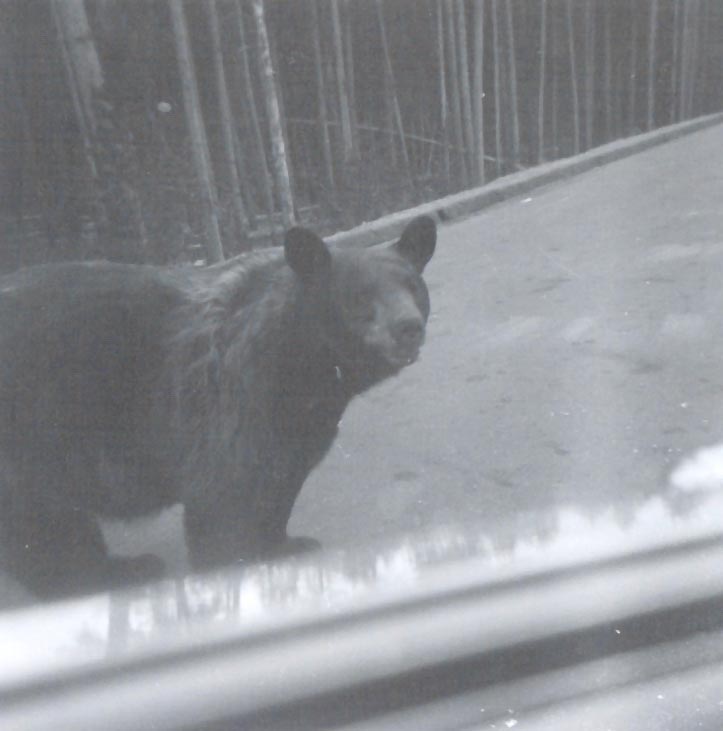
I had seen a trail and walkers heading around Buttonnock Bay while we were boating in the area the day before. When I was coming down the trail that morning, I stopped and looked at the area we were swimming. I noticed the trail I had seen the day before, but it was not the way I was heading. Something told me to turn around! When I did there was a BEAR! A good size black bear running across trail I would have taken if I had not stopped! The bear continued passed the boat ramp, over the wooden bridge and onto a small island.
The bear heard me coming, and was running towards Buttonook Island to get away. It was a great sight to see! However, I decided not to travel the course toward the bear, but instead double back and up the trail where yesterday walkers had passed. As I walked (and I walk a pretty good pace) I kept checking over my shoulder to ensure that Mr. Bear was not following me thinking, "Hey! That was lunch I just missed on the trail". One good thing, too, I was glad I was listening to "rock" instead of "country" music -- such as Shanna Twain's song, "Come On Over." For surely, that was a country bear and that bear might have "come on over" and had me for breakfast. It obvisously he/she did not like my choice of music. Yup, "rock & roll" may have saved my life. ;o)
Grizzly Bears * North American Bear Society * * UNDER CONSTRUCTION