 |
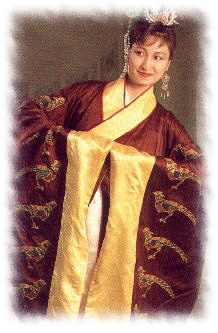
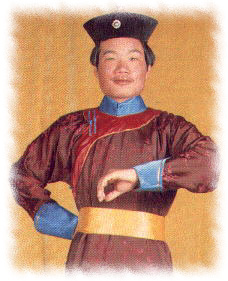
| Tradition Traditional Dress Joy Luck Club talked about traditional China a great deal as well as the clothing they wore. It mentions how Suyuan Woo "left China with one stiff leather trunk filled only with fancy silk dresses" and how "she wore the same brown-checked Chinese dress" until she was given some used clothing from a church. These dresses were obviously very special to her because after the journey from Kwellin to "Chungking [she] had lost everything except for three fancy silk dresses which [she] wore one on top of the other." The three main types of traditional Chinese clothing are the pien-fu, the ch'ang-p'ao, and the shen-i. The pien-fu is an ancient two-piece ceremonial costume of a tunic-like top extending to the knees and a skirt or trousers extending to the ankles. One had to wear a skirt on certain occasions in order to be properly dressed. A pien is a cylindrical ceremonial cap; pien-fu later came to refer to the whole suit of ceremonial clothes. The length and colors of Chinese clothing follow set rules. The ch'ang-p'ao is a one-piece garment extending from the shoulders all the way to the heels that was worn by both men and women. The shen-i is a cross between the pien-fu and the ch'ang-p'ao; it consists of a tunic and a skirt or trousers like the pien-fu, but the tunic and the skirt are sewed together and essentially one piece like the ch'ang-p'ao. Consequently, the shen-i was the most widely worn of the three types. Typical of these three types of clothing were wide and voluminous sleeves and a very loose fit. Tunic and trousers or tunic and skirt, utilized a very minimum number of stitches for the amount of cloth used. So because of their relatively plain design and structure, embroidered edgings, decorated bands, draped cloth or silks, patterns on the shoulders, and sashes were often added as ornamentation. These varied designs came to be one of the unique features of traditional Chinese dress. As a result of variations, other Chinese clothing came into play. Darker colors were favored over lighter ones in traditional Chinese clothing, so the main color of ceremonial clothing tended to be dark while bright, elaborate tapestry designs accented. Lighter colored clothing was worn more frequently by the common people for everyday and around the house use. The Chinese associate certain colors with specific seasons: green represents spring, red symbolizes summer, white represents autumn, and black symbolizes winter. The Chinese are said to have a fully developed system of matching, coordinating, and contrasting colors and shades of light and dark in apparel. |
| Wedding Traditions Many wedding ceremony customs were mentioned in the Joy Luck Club. These were mainly expressed in "The Red Candle" chapter of the book. Traditional wedding ceremonies are very interesting and there is a website that describes the ceremonies, tradtions and customs. The Chinese wedding consists of what Chinese refer to as "Three Letters and Six Ettiquette" which clearly describes the customary practices of a conventional Chinese wedding ceremony. To learn more, go to the site above or this site which describes much of the same. |
|
 |
 |
 |
| Chinese for "tradition". |
 |
 |
|
|
|