







|
|
JOVIVA CHIHUAHUAS- BRINGING HOME YOUR NEW CHIHUAHUA PUPPYIn some respects bringing your new Chihuahua puppy home is like bringing home a tiny newborn human baby. There are various things to watch for and some do’s and don’ts that are helpful. Most important! Chihuahuas, like many other toy breeds, may be susceptible to a form of low blood sugar called hypoglycemia. The good news is that this condition is easily arrested and puppies who do experience hypoglycemia will usually outgrow it by 4-5 months old. Your goal as a new owner, should be to keep the puppy’s stress level as low as possible during this period. Often the most dangerous period is between 6-10 weeks of age. During this time the puppy is weaned from the dam, wormed, vaccinated, bathed, and sometimes sold into a new home. Also the immunity that a puppy gets from the mothers first milk will drop off somewhere around the ninth week and that will increase his/her vulnerability to virus and bacteria. All these factors contribute to a very stressful time for the little dog. Most puppies breeze right through this time and others have problems. Hypoglycemia is seen most often in smaller specimens of Chihuahua puppies, but we caution all new owners to watch their puppy carefully until he/she is at least 18 weeks of age. Many breeders (ourselves included) will not even sell a puppy until he/she is 12 weeks of age - The breeder has to use their judgement as to when the puppy is strong enough to leave home. Once that call is made then the new owner has to take over and become the puppies guardian. You probably won’t experience low blood sugar with your particular puppy, but, in the event that you do, it is an emergency. A little bit of sugar, given to your dog in some form, may save his/her life. Glucodin in the puppies drinking water or a little honey directly into his/her mouth will help restore lost blood sugar. If you leave your puppy for any extended period of time ensure that he/she has food available to eat whilst you are away. Some Chihuahuas are nibblers who eat slowly and some are finnicky so make allowances for that and leave him/her with nutrition that is tempting enough make him/her eat. Vaccinations - Isolation is the best form of prrotection for a new puppy until it has had his/her 12 week vaccination and he/she can begin building its own immunity. Parvo and other problems can be brought into an environment on the bottom of shoes, on clothing (airborne virus) and by other animals, or by humans who have been exposed to infected animals. If your puppy is under 16 weeks of age it is a good idea to keep him/her away from other animals as much as possible, ask your friends to wash their hands before handling your new addition. Another dog may look normal and be perfectly healthy itself, but can be a passive carrier of a virus or bacteria that your puppy has no immunity to. An ounce of prevention is worth a pound of cure when it comes to exposing your new puppy to outside dogs. Watch your puppy carefully the first few days after you bring him/her home. You will quickly learn what is normal behaviour patterns for him/her. Monitor his/her eating habits, bowel movements, play patterns, and sleep times. Most puppies have two speeds; full speed ahead and “crash”. Any time you see variations in behaviour that trouble you, don’t hesitate to call us, if we can’t give you a satisfactory answer then call your vet. With Chihuahuas it is better to address a potential problem before the little animal is in serious trouble. Diarrhoea or vomitting may be caused by a chill, infection, stress, contaminated food or worms. If not severe try a teaspoon of acidophilus yogurt or a Kaolin mixture every 2 hours - constant diarrhoea/vomitting can kill your puppy very quickly - seek urgent help from your Vet. Warmth - all Chihuahuas dislike the cold make ssure your puppy does not chill especially if he has got himself wet. A warm bed out of draughts, a warm coat in winter will keep him well and happy. Anal Glands - ask your vet to show you how to check and empty if necessary (ideal time is bath time). Reverse breathing - most Chihuahuas at some time or another will make this snorting/snuffling/honking sound - do not panic, gently cover his nose with your hand thus making him breathe through his mouth and it will stop. No dog article would be complete without mentioning fleas. Never let your puppy get fleas, as they can become anaemic if they are being eaten by fleas. Fleas carry tapeworm larvae and dogs get tapeworms by ingesting fleas. Invest a flea prevention program from your vet or petshop. After about six months of age the Chihuahua is a very hearty little dog, they require very little grooming (weekly for a smoothcoat and every third day for a long coat will keep knots away) Bathing - use your discretion (too often dries the coat and too little and he/she will begin to smell doggy) Nails need to be cut at least monthly. Eyes - as Chihuahuas are very small and theirr eyes are very close to the ground they are apt to pick up little particles of dust and suffer from watery eyes. Wipe the eyes with a cool tea bag. Murine or Optrex eye drops will not harm him if used occasionally. If persistent mention it to your Vet. Chihuahuas live a long time. Feed the best foods available and your little dogs immune system will be sturdy well into its old age. He/she is what you feed him - so to speak. When we sell someone a puppy we always tell him/her to call us any time that they see something in the puppy that they do not like. If it is 3.00am and the puppy has a problem we want to be contacted so that we can help. We do not recommend that anyone buy a dog from a breeder who doesn[t have a similar attitude. Your breeder should be your mentor and a shoulder to lean on for as long as you need the assistance. We breeders help guide the creation of these little animals and we owe it to them to make sure that we are there for them as well as for the new owners. Read and follow the diet sheet we provide you. If you change, do so gradually otherwise the puppy will get an upset stomach. Worm regularly, vaccinate yearly. A little bit of information and some common sense can keep your Chihuahua with you for many years to come. Consult your breeder (the good ones don’t mind) or your veterinarian as needed. Good luck with your new addition to your family and our very best wishes!VIV
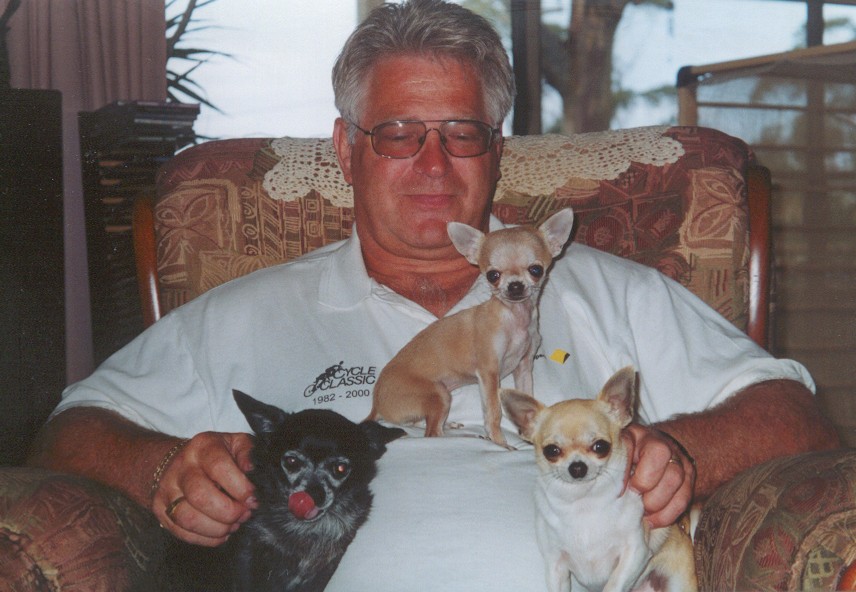
COTTON & JOHN BOWBRICK
| ||||||||
 |
 |
 |
 |
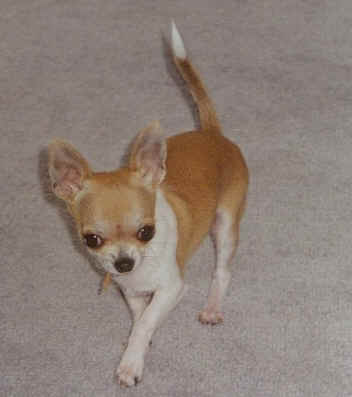
This is Ella Senora Melis |
|
 |
|



Last updated 11/05/04 . Copyright Joviva Chihuahuas 2001. |