
9 of 10
Cinematography by George Barnes
Laurence Olivier
Joan Fontaine
George Sanders
Judith Anderson
Nigel Bruce
"Last night I dreamt I went to Manderley again."
|
|
|
|
|
|
|
|
||||||
| Rebecca 9 of 10 |
||||||
| Directed by Alfred Hitchcock Cinematography by George Barnes Laurence Olivier Joan Fontaine George Sanders Judith Anderson Nigel Bruce |
||||||
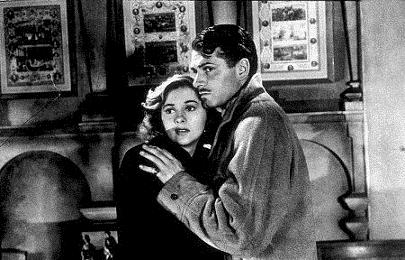
| Alfred Hitchcock made over 65 films. He was widely regarded as one of the most influential directors ever, and was famous throughout the world for his psychological thrillers. The media and film critics adored him. But, strangely enough, he never won an Academy Award for his directing, and only one of his films ever received the Oscar for Best Picture: this one. And I must say that the Academy got it right, for this is truly Hitchcock's greatest picture. (At the risk of public ridicule and possibly even death, I must say that I believe Hitchcock's effect on the art of cinema is overstated. His films, with the exception of Rebecca, have not aged well. Many of his dramatic and visual effects now appear stilted and clich�d, as lesser directors have used them far more powerfully than he. Orson Welles had a much greater effect on American movies, and he made only a handful of films.) But putting that aside, Rebecca is an absolute masterpiece; the directing is excellent, the cinematography is beautiful, and the story, based on a novel by Daphne Du Maurier, is fabulous. The film seems to be straightforward at the start: Joan Fontaine plays a young, shy girl who falls for a sorrowful, brooding widower (Olivier), who is himself able to love again after meeting her. After a brief, whirlwind courtship, they are married, and return to his family estate, Manderley, to begin life together. But soon their storybook honeymoon starts to spiral down out of control amid questions of whether or not she can ever fit into his extravagant lifestyle, of whether or not he really loves her, and the most serious questions of what exactly became of his first wife. Taut, emotional, and fast paced, the film rides on the strength of its characters, and that is the main reason for its success. Joan Fontaine is wonderfully fragile as the second Mrs. de Winter, Nigel Bruce is his usual blustery, loveable self, and Judith Anderson is amazing as the twisted housekeeper, Mrs. Danvers. But it is Laurence Olivier's Max de Winter which I found to be the most interesting of all. His movie-long struggle against the past is really gripping stuff, and Olivier achieves the perfect balance between anger and sorrow, leaving the audience desperately hoping for a happy ending. A great character-driven story and a truly great film. "Last night I dreamt I went to Manderley again." |
||||||