
9 of 10
Cinematography by Stuart Dryburgh
Chris Cooper
Elizabeth Pena
Kris Kristofferson
Matthew McConaughey
Joe Morton
Ron Canada
Frances McDormand
I was at a loss as to where to begin the discussion of this film, but I guess I�ll start with the same thing the Academy decided to single out: the absolutely brilliant script. Sayles fills the first half of the film with little bits and pieces that seem interesting enough, but irrelevant. But gradually, as the film works towards its climax, Sayles starts to incorporate all the �non-essential� bits into a single huge tapestry. And then, there is the ending; equal parts disturbing and heart-warming, but completely brilliant.
As my screenwriting professor loved to point out, even the greatest script can still be destroyed by poor directing and poor acting. Poor directing is certainly not an issue here, but I�ll address that later. And as for poor acting, nothing could be further from the truth. From the principle actors (Cooper, Kristofferson and Pena) all the way down to the smaller, more incidental characters (Morton, Canada and McDermond), we see performance after performance filled with subtlety and nuance, and always pitch-perfect for the material. (Morton and Canada, in particular, stood out for me in the small time they were given on screen.)
The technical aspects are brilliant: from the restrained yet vibrant cinematography, to the deliberate editing (done by Sayles himself), and finished off by a firm, sure-handed touch at the directorial controls. Of particular interest to me in the latter regard was Sayles� uncanny ability to bring powerful emotions out in the smallest of actions from his cast. Perfect examples of this are the hesitant motions of Pena and Cooper as they become re-acquainted. Or the incredibly sad section between Cooper and McDermond, who plays his divorced wife. Or the wonderful way that Sayles bring the past and present together in many shots, melding the two in the viewer's mind.
If someone had described the story to me in detail, I would probably have thought it was absurd, complicated, or absurdly complicated. But the way Sayles writes it, and the brilliance with which he directs it makes it all plausible. Which makes it all very satisfying, and convinces me that I really must see more of this Sayles fellow�
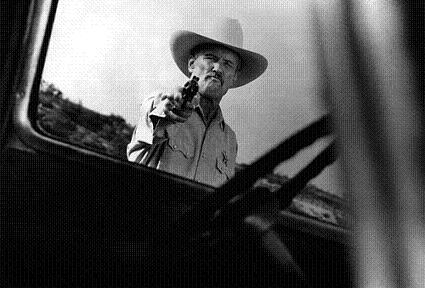
"Step across this line. You're not the sheriff of nothing anymore, just some tejano with a lot of questions I don't have to answer. A bird flying south, you think he sees this line? Rattlesnake? Javelina? Whatever you got. You think halfway across that line they start thinking different? Why should a man?"