 |
|
|
|
|
|
|
|
|
|
|
|
|
|
|
|
|
|
|
|
|
|
|
|
|
|
|
|
|
|
|
 |
|
European Notables of the Tudor Period |
|
|
|
|
|
 |
|
|
|
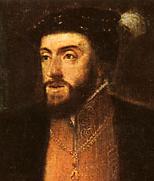
Holy Roman Emperor Charles V, King of Spain: Known as the most powerful man in Christendom, Charles V ruled over a vast empire stretching across the Americas, Spain, Italy, the Low Countries, Germany and Austria. His was the first empire upon which it was said that the sun never set. He supported his aunt, Catherine of Aragon, during her struggle with Henry VIII and he often applied political pressure to aid her daughter, Princess Mary, during the years of Protestant rule. Charles V was constantly at war with France to the south and west, Lutherans to the north and the Muslim Turks to the south and east. He arranged the marriage between Queen Mary and his son Philip hoping for a Tudor-Hapsburg alliance which never materialized. He abdicated in 1556 leaving his Spanish territories to his son Philip and his German territories to his brother Ferdinand who was elected Holy Roman Emperor after him. |
|
|
|
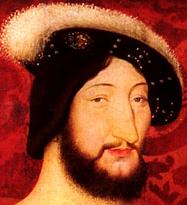
King Francis I of France: Known as the first Renaissance King of France and a man who made great cultural contributions to his country, Francis I was less successful as a political and military leader. He had tried and failed to win election as the Holy Roman Emperor. He did gain some victories, over the Swiss and over the Italians, but his forces were soundly defeated by Charles V at Pavia in 1525 where Francis was taken prisoner and sent to Madrid. He gave Charles V all he demanded but went back on his word as soon as he was released. French colonization in Canada started under his reign, having a mostly free hand while the Spanish focused on Central and South America. His opulence nearly bankrupted France and by the end of his reign the infiltration of Protestantism was causing severe divisions in his country. All in all his reign was not a glorious period and he died complaining about his misfortunes. |
|
 |
|
|
|
|
|
|
 |
|
|
|
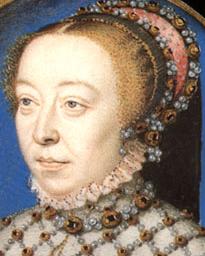
Queen Catherine de Medici, Regent of France: The daughter of Lorenzo II, and the cousin (treated as a niece) of Pope Clement VII, Catherine was married to the Duke of Orleans at the age of 14. Children were not forthcoming for a long time and her life in France was hard, especially since it was well known her husband Henri had a mistress. This changed when, not long after inheriting the throne as King Henri II, her husband was killed from wounds received in a jousting tournament. As regent to her son, Francis II, Catherine de Medici became the most powerful person in France. Obsessed with power, she tried to use the marriages of her children to secure a better position for France and flirted with both the Catholic and Protestant factions to see which would benefit her the most. The St Bartholomew's Day Massacre has made her one of the most hated figures in history among Protestants. |
|
|
|
|
 |
|
|
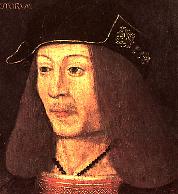
James IV, King of Scots: He came to the throne at age 15 when his father, James III, was killed by rebels and James IV spent his earliest days as King of Scots dealing with rebellion as well. After one invasion of England he made peace with Henry VII and even married his daughter, Margaret Tudor. He built up the Scottish navy and saw the start of the first printing press and gun foundry in Scotland. As an ally of France, when King Henry VIII attacked France, King James and his Scottish army invaded England. Queen Catherine of Aragon sent troops to meet them and the Scots were soundly defeated at Flodden Field where James IV was killed. He was not buried for some time as he had been excommunicated by the Church and was known to have had several mistresses and numerous illegitimate children. |
|
|
|
|
 |
|
|
|
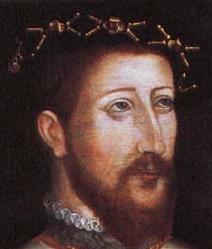
James V, King of Scots: Succeeded his father in 1513 when James IV was killed at Flodden. James V became King of Scots when he was only a year old and had his mother as regent until he was old enough to take power. Much of his reign was spent ridding Scotland of those who had oppressed him during his minority, putting down rebellions and suppressing heresy. His second wife was Marie d'Guise and the alliance with France was strengthened. After the death of his mother hostilities with England were reopened when Henry VIII called upon James to follow his example by breaking away from the Catholic Church. When James refused Henry invaded Scotland. James tried to retaliate but his commanders bickered and were defeated by the English. He had one heir, a daughter, by Marie d'Guise who succeeded him after his death in 1542 with his wife acting as regent. |
|
|
|
|
|
 |
|
|
|
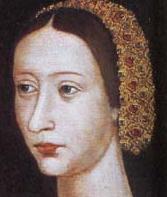
Queen Marie d'Guise, Regent of Scotland: Wife of James V and regent for her daughter Mary, Queen Marie d'Guise had been proposed to by Henry VIII but refused him. She sent her daughter to France to be educated and tried to reign in the factions vying for power in Scotland. For a time she was able to reconcile the Catholics and Protestants but the situation was upset when Queen Elizabeth I of England began backing the Protestants and encouraging rebellion. Marie was forced to call in French troops to maintain order and when Queen Elizabeth invaded Scotland her forces were defeated by Marie d'Guise. Her most trusted collaborators were her family, particularly the Cardinal of Lorraine and the Duke of Guise in France. She tried to reconcile the feuding Scots on her deathbed but the Protestants could see total victory was in their grasp and refused to make peace. |
|
|
|
|
|
 |
|
|
|
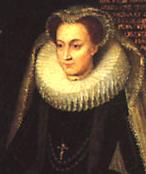
Mary, Queen of Scots: The last Catholic monarch of Scotland, Mary faced a divided country and English aggression as soon as she took the throne after returning from France. An attractive and pious woman, her primary fault was in her choice of men. There was an effort by Henry VIII to have her married to his son, the future King Edward VI, but Mary, her mother and the Scottish government opposed it. In France she was married to the Dauphin and was briefly Queen Consort of France when her husband became King Francis II, who died in 1560. Due to the illegitimate birth of Queen Elizabeth I of England, Catholics viewed her as the legitimate Queen of England as well as of the Scots. Her marriage to Lord Darnley was a disaster and her third marriage to the Earl of Bothwell was no better. Defeated by Protestant rebels at home she was forced to flee to England where Queen Elizabeth had her arrested and eventually executed on trumped up charges of plotting against her. |
|
|
|
|
|
 |
|
|
|
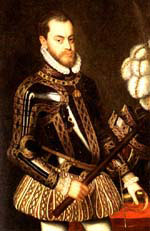
King Philip II of Spain: Son and heir of Emperor Charles V, Spain reached her peak of power during the reign of Philip. Before his succession he was married to Queen Mary I of England but the couple had no children and Philip often neglected his wife. He proposed to Elizabeth after the death of Mary but she refused him and became his chief antagonist. Despite his disagreements with the Pope, Philip II was the Catholic champion of Europe, fighting Protestant rebels in Holland, supporting the Catholics in France and sending ships to help turn back a Muslim invasion fleet at Lepanto. He famously sent the massive Spanish Armada to invade England in 1588 but bad weather and the English navy defeated it. The Spanish Empire did expand overseas and conquered Portugal but constant warfare, mismanagement and the piracy of the English Sea Dogs of Elizabeth I ruined the Spanish economy and Spain declined. |
|
|
|
 |
|
|
|
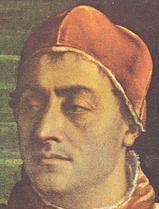
Pope Clement VII: The nephew of Lorenzo the Magnificent of the powerful Medici family, Clement VII became Supreme Pontiff in 1523 and though he was a moral man he failed to grasp the level of threat of the Protestant revolt. His alliance with France brought down the wrath of Emperor Charles V who was also upset at the lack of action taken by the Pope against the Lutherans in Germany. In 1527 Imperial troops sacked Rome in an orgy of destructive cruelty that shocked the civilized world. When the question of the validity of the marriage of Henry VIII and Catherine of Aragon came up, Clement, not surprisingly, sided with Queen Catherine and as a result Henry VIII broke away from Rome in order to have his way. Still looking to France for support against the Germans he eventually died after eating a poisoned mushroom in 1534. |
|
|
|
|
|
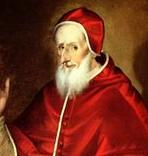
Pope Saint Pius V: Born Antonio Ghislieri, St Pius V entered the Dominican Order and eventually worked with the Inquisition, gaining a reputation for his piety, austerity, faithfulness to orthodoxy and vehement opposition to heresy in any form. In 1566 he was elected to the throne of St Peter, taking the name of Pius V. He was a driving force in the Catholic Reformation, overseeing the defense of doctrine, the reduction of clerical corruption and resistance to Protestantism. He formed a coalition to oppose the naval invasion of the Muslims and dreamed of liberating Constantinople which, though the Turkish attack was stopped, never happened. He is most known in Tudor history for excommunicating Queen Elizabeth I and declaring that as she was illegitimate and a heretic that her subjects were not bound to obey her. Persecution of Catholics followed this notice who were, like Pius, canonized. |
|
|
 |
|
|
|
|
|
|
 |
|
|
|
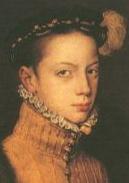
Alexander Farnese, Duke of Parma: The son of Margaret of Parma, Alexander went with her to Belgium when she was appointed Governor of the Netherlands. He lived in Spain after his marriage before being called upon to succeed his cousin, Don John of Austria, as commander in the Netherlands by King Philip II of Spain. In quick order Alexander proved himself to be the most brilliant general of his time as he defeated time and again the rebel Dutch Protestants. He used any means necessary to win but was magnanimous in victory. In time, he secured the allegiance of the Belgians and conquered all of the Netherlands save for Holland and Zeeland. He had hoped to invade England but the defeat of the Spanish Armada prevented this and English support and naval superiority meant he could not finish off the remaining Dutch provinces. He died in France where he was fighting for the Catholic League. |
|
|
|
|
|
 |
|
|
|
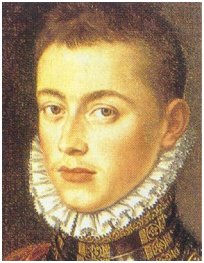
Don John of Austria: The illegitimate son of Emperor Charles V, Don John of Austria was one of the most romantic, adventurer-types of his time. His half-brother, King Philip II, hoped he would take Holy Orders, but Don John wanted military glory. His great chance came when King Philip appointed him to command the naval forces of the Holy League sent to oppose a Muslim invasion fleet. Don John met the Turks at the battle of Lepanto, one of the most significant Catholic victories in history. Fresh from this success, Don John was given command of the Spanish forces in the Netherlands. Don John agreed, provided that he could invade England, free Mary Queen of Scots, marry her and reign together as King and Queen of England. No dream was too fantastic for Don John. However, he did not have the same success against the Dutch as he had with the Turks and he died a short time later of typhus in Belgium. |
|
|
|