 |
|
|
|
|
|
|
|
|
|
|
|
|
|
|
|
|
|
|
 |
|
More of My Tudor Film Favorites |
|
|
|
|
|
|
|
 |
|
|
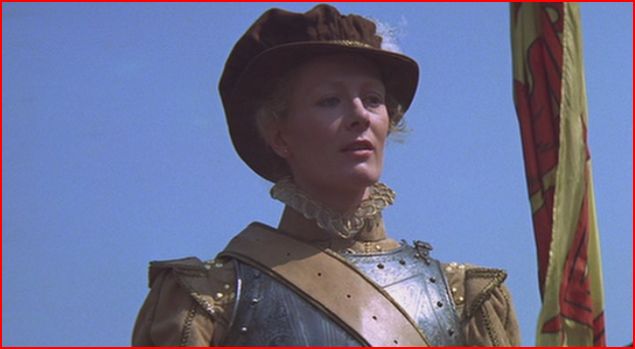
| Vanessa Redgrave as Mary Queen of Scots in the 1971 film Mary Queen of Scots. Vanessa Redgrave certainly has illustrious Tudor film credentials. Aside from Queen Mary she appeared as Anne Boleyn in the 1966 film A Man for All Seasons (which she did voluntarily without salary) and she was Alice More in the made for TV version of the same film alongside Charleton Heston. This film version of the story of the last Catholic Queen of Scots is not the most sympathetic and it forced her to share screen time and story importance with Queen Elizabeth I of England. However, Vanessa Redgrave gives an excellent performance of the Scottish queen as a well meaning woman, a woman of strength and one plagued by misfortune. It is the emphasis of the film though that Mary was more woman than Queen, however, she convincingly portrays Mary as a woman not naïve in politics, though certainly so in romance at least concerns Lord Henry Darnley. My favorite scene by far is her triumphal ride into recently conquered Dunbar, riding side saddle, breastplate fastened on, royal banner and crosses of St Andrew fluttering around her and bagpipes skirling. She enjoyed few such happy occasions in her life or in this film. |
|
|
|
 |
|
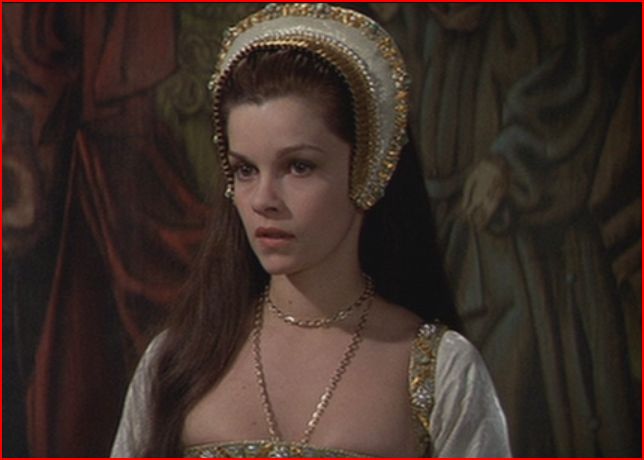
| Genevieve Bujold as Anne Boleyn in the 1969 film Anne of the Thousand Days. For someone coming from an admittedly Catholic point of view, and as someone who views Catherine of Aragon as one of the greatest ladies in all of history, it is hard for me to find a portrayal of Anne Boleyn which I admire. Genevieve Bujold, however, strongly delivers. She certainly has the physical beauty to convince the audience she could motivate a king to tear his country in half to have her, however, in this film Anne Boleyn is portrayed as not really seeking for this to happen. Although she is portrayed as a woman with, I shall politely say romantic experience, she nonetheless wants nothing to do with the King who broke up her engagement and had left her sister abandoned after being his mistress. Rather than stringing the king along to get all the earthly glory she can, in this film Bujold portrays Anne as a woman who resists the king at every turn and hopes that she can put up so many obstacles the king will have to stop pursuing her and allow her to go her own way. Henry VIII, played by Richard Burton, tears down every obstacle though and finally wins her over, though as soon as she submits to love him he has fallen out of love with her and wants her gone whom he had once so desired. |
|
|
 |
|
|
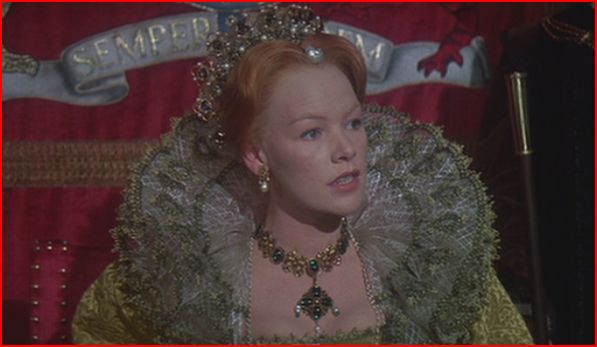
| Glenda Jackson as Queen Elizabeth I in the 1971 film Mary Queen of Scots. Back before she became a socialist politician and Labour MP, Glenda Jackson was the actress to play Queen Elizabeth I, portraying her twice on screen in two separate pieces in the same year. In this film she is able to play Elizabeth I as a capable and multifaceted woman who could certainly be devious and unscrupulous. She is openly romantic with the Earl of Leicester and is from the very start working to undermine the Queen of Scots. However, she also shows the more human side of Elizabeth I when she gives Leicester a sound beating for praising Queen Mary too highly, when she hopes that Mary hates her so that her own hatred will be justified and her frustrated despair upon the news of Mary giving birth to the future King James. She surprises her court though, particularly Cecil (played admirably by Trevor Howard) when she is repelled by the plot to kill the Queen of Scots and she is reluctant to have the Queen put to death at the end of the film. She gets over these qualms of course though because though the film is supposed to be about Mary Queen of Scots it is Elizabeth who is portrayed as the superior monarch specifically for being ruthless, suppressing her feelings and being first a monarch rather than a woman. Glenda Jackson is the first I think of when I imagine Elizabeth I on film. She is convincing when she is being playful, jealous, frustrated and devious with equal ability. |
|
|
|
 |
|
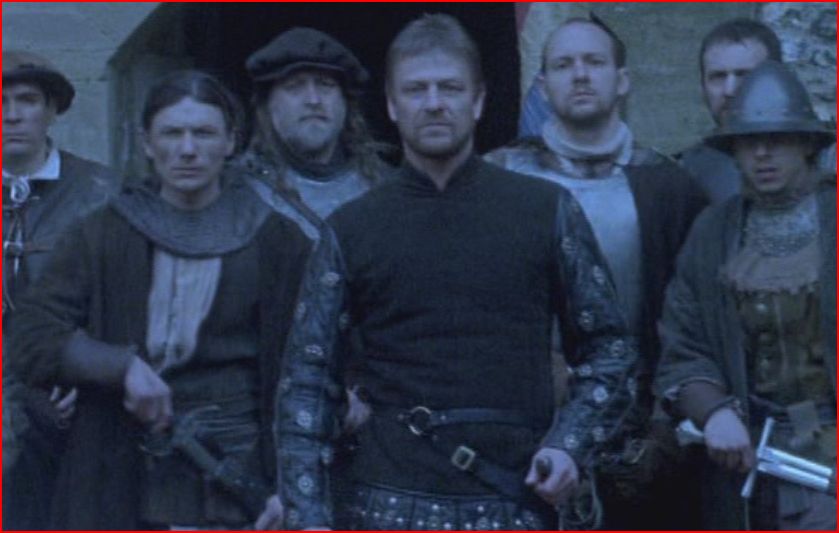
| Sean Bean as Robert Aske in the 2004 HBO special Henry VIII. It would be easy for Sean Bean to be my favorite actor to portray Robert Aske as he is the only actor I have ever seen play Robert Aske since the vast majority of works leave out the whole episode of the Pilgrimage of Grace even though it came within the width of a hair of derailing the Protestant ascendancy in England. However, I think I would admire his performance in any event since I can imagine most films writing the part a lot worse and other actors portraying Aske far worse. The same has been done for other Catholic heroes in England, but rather than some religious fanatic or scheming, ambitious man, Sean Bean portrays Aske as a true hero. He is moved by the suffering of the people and religious when Henry VIII dissolves the monasteries and he is a staunch Catholic specifically because he is, in his words, a proud Englishman. Sean Bean gives such a stirring performance that one could imagine him playing in a biopic about Aske as an English Catholic version of Braveheart. Aske is portrayed as caring, devout, brave and patriotic for he does see in Henry VIII a king to be proud of, sadly this was only an act for his benefit Henry was playing to lull him into his confidence in preparation for the final betrayal. The end of Aske is shown with truthful cruelty and all in all it is an excellent portrayal of an often overlooked but extremely important event in English history. |
|
|
|
 |
|
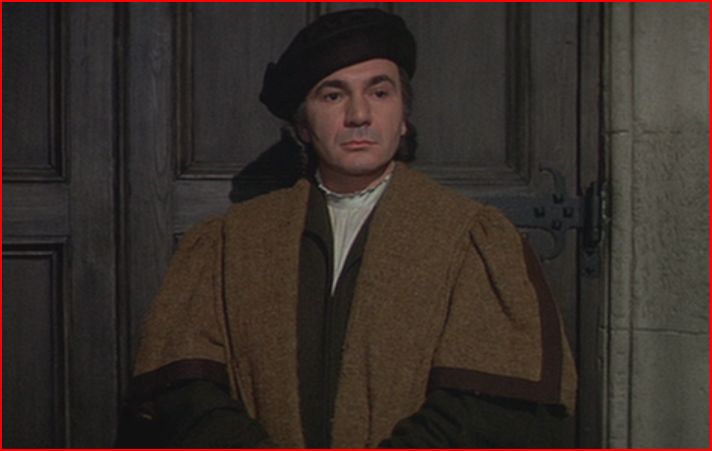
| John Colicos as Thomas Cromwell in the 1969 film Anne of the Thousand Days. Science fiction fans will remember the late Canadian actor John Colicos as the villainous Baltar on Battlestar Galactica and as the first klingon on Star Trek. Although famous for his over the top portrayals it is his subtle and quiet deviousness that makes him the best Thomas Cromwell in my book. The other portrayals of this great villain of English history have mostly been cowering sycophants or so crude that they make it impossible to believe someone like them could have ever been advanced so far in government. Colicos, however, portrays Cromwell as a quietly devious man, a slick character of genteel manners, smooth voice and deceitful smile. He manipulates and whispers temptation in the ears all while keeping away from being openly villainous and thus succeeds in playing a villain in a way Lucifer himself would recognize. |
|
|
|
 |
|
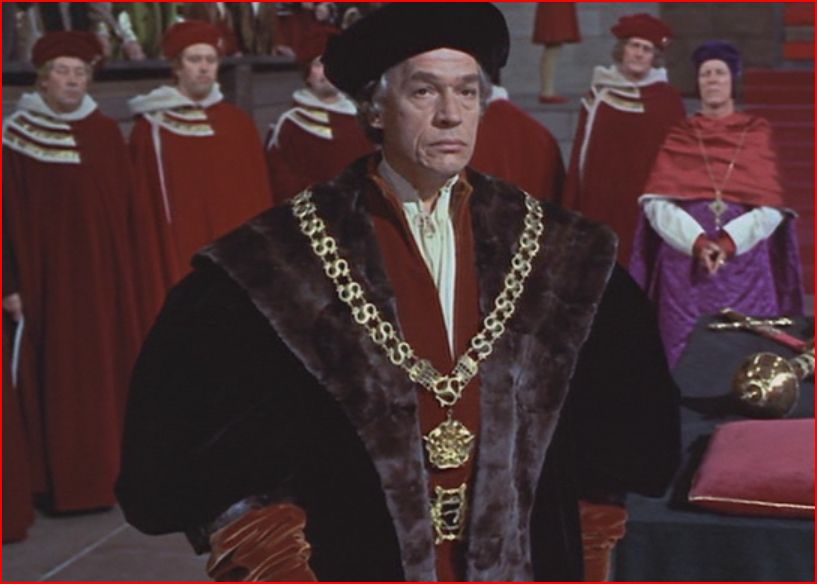
| Paul Scofield as St Thomas More in the 1966 film A Man for All Seasons. Whenever anyone thinks of St Thomas More they will doubtlessly think of Paul Scofield who portrayed the martyr on stage and on the big and small screens as well. In fact, this film and portrayal were honored with six Academy Awards in 1966 including Best Picture and Best Actor for Paul Scofield for his portrayal of More. Although not the most dramatic of portrayals, it comes across as very accurate, which is not something many can boast. Scofield portrays More as a reserved, quiet and humble man, but his understated style only makes it all the more powerful when he does raise his voice such as in response to threats by Cromwell and after his sentencing when he famously discharges his mind. Paul Scofield is able to really give the audience the impression that More was not someone seeking martyrdom or who considered himself a saint, but he makes More all the more remarkable for that since we see him as someone so seemingly ordinary. Aside from his character and honesty there would not be much to make him stand out. He had many friends, gets along with most everyone and does favor a reformation in the Catholic Church in the authentic sense, but the unrelenting drives of the King forces him into the role of martyr. He portrays well a truly innocent man, not a subversive, but as St Thomas More said it first and said it best, simply the king's faithful subject, but God's first. |
|