 |
|
|
|
|
|
|
|
|
|
|
|
|
|
|
|
|
 |
|
|
|
Chinese Monarchist Restoration |
|
|
 |
|
|
|
|
|
|
|
|
|
By Joseph A. Crisp, II |
|
|
|
|
|
|
|
|
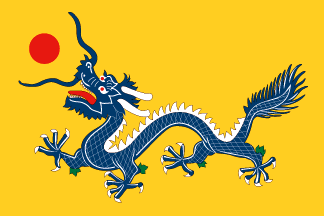
| One of the many things I am proud about, being from Texas, is the fact that at the Institute of Texan Cultures in San Antonio, to represent the Chinese community in Texas, there still flies the yellow dragon flag of the old Chinese monarchy. As far as I know, this is the only place where the flag of the "Great Qing Empire" still flies in an official capacity to represent a modern Chinese community. It is no wonder though that Chinese monarchists seem to be so few (although they do exist) since the greatest strength and source of the unmatched longevity of the Chinese monarchy, the Confucian concept of the "Mandate of Heaven" is also what makes monarchist restorations something almost unheard of in Chinese history. In fact, the only time anything close to a restoration occurred was when the last Chinese Emperor was restored to the throne of Manchuria. |
|
|
| The Heavenly Mandate, once acquired, meant that the Emperor was the highest authority on earth, the supreme and absolute monarch as well as the national pontiff in the Confucian ethical system. This belief meant that the Emperor of China was, technically, the ruler of the world, though there would certainly be non-Chinese "barbarians" who were too ignorant to realize this; and that he was also the "Son of Heaven", giving the Chinese throne a semi-divine role in national life. However, it also meant that once the Mandate of Heaven had been lost, it could never be regained. If the would-be emperor was worthy enough to acquire the mandate, Confucian scholars would argue, then he never would have lost it in the first place. Generally, by the time a Chinese dynasty had come to the point of being overthrown, they had reached such a state of unpopularity that there was no hope at all for a restoration. |
|
| As with many things though, the Manchu dynasty (the Qing or "Pure" dynasty) was unique among the others of Chinese history. The Qing were never actually overthrown in the traditional sense. They had been in the traditional stages of decline for a dynasty, a fact reiterated by the failure of the Boxer Rebellion and the use of foreign troops, such as the famous British general "Chinese" Gordon, in putting down the Taiping Rebellion. However, most ordinary Chinese had still not bought into the new idea of republicanism being preached by the American-educated Sun Yat-sen. Most still placed their hopes on a monarchist reformation as envisioned by men like Kang Youwei and Liang Qiqao. The Wuchan uprising definitely represented a large section of the Chinese population which was dissatisfied with Manchu rule, but that in itself would not have been enough to overthrow, not just the Qing Empire, by the entire traditional moral and social system which the Confucian monarchy represented. |
|
| It is peculiar that the fall of the Chinese monarchy came about due to the treason of a formerly loyalist officer, Yuan Shih-kai, who would later try to make himself emperor, and the republic was only founded when the Empress-Dowager, on behalf of the infant Emperor Hsuan-tung, decreed that the dynasty would retire and that a republican government should be formed in answer to "the mandate of Heaven as expressed through the will of the people". Therefore, combined with the "Articles of Favorable Treatment" which guaranteed the income, property rights and titles of the dynasty, the Republic of China had to deal with the widespread impression (later denied) that it was formed by imperial command and that the abdication of the Emperor was possibly only a temporary situation which could be reversed once the current crisis had passed. |
|
| Efforts to restore the monarchy in 1917 and in the 1930's in Manchuria could thus gather considerably more support because of the rather ambiguous nature of the dynasty's collapse. However, the restoration efforts were also hampered by the devastating fragmentation of Chinese society which accompanied the downfall of the empire and the binding standards of the Confucian system. Supporters tended to come and go and no one could be too sure about the sincerity of those who pledged their support to the former Emperor. Conditions in China developed into a situation where warlords ruled and tried to keep a foot in every camp: republican nationalist, republican communist, monarchist and even Japanese. |
|
| This problem was brought into sharp focus by the first restoration of the monarchy in 1917, wherein the loyalist warlord Chang Hsun occupied Peking and put the young emperor back on the throne. His troops were called the "pig-tailed army" because they retained their Manchu queue hairstyle as a display of loyalty to the emperor. The situation was very ambiguous because at the outset it seemed that the republican officials were mostly in favor of the restoration. However, after only a few days, the promised support from the republic failed to materialize. The President of China refused to resign and forces quickly converged on Peking, forcing Chang Hsun to escape to the foreign section and the Emperor to issue another hurried abdication edict. Although the restoration ultimately failed, the incident cemented in the minds of many at court that obtaining the loyalty of key warlords was the only way to effect a restoration. |
|
| Even after 1924 when the Emperor was expelled from the Forbidden City, the Chinese monarchists spent large sums of money trying to keep potential supporters funded who made grandiose promises of restoration when they were successful against their current enemies. Ultimately though, for all of the vast sums spent on these various Chinese, Manchu, Mongol and even Russian generals, none of them ever made any progress or even any real effort to make good on their promises of an imperial restoration. Ultimately, the court came to realize these warlords were primarily concerned with themselves and soon the only real hope for restoration came with the increasingly powerful Japanese presence in China. |
|
|
| However, the Chinese monarchists were also faced with a no-win situation with Japan. As it became clear how conditional the support of the warlords, particularly those whose loyalty had been purchased, was it became painfully clear that the only solid hope for a restoration of the monarchy in China depended on the support of Japan. However, the fact that the monarchists depended so much on a foreign power denied them the sort of nationalistic fervor which the Empress-Dowager Cixi was able to commandeer during the Boxer Rebellion. In some cases, it cost the last Emperor some of his most loyal supporters because the interests of Japan, although favorable to Chinese monarchism, still had to take precedence. One of his most devoted courtiers for example, Lo Chen-yu, abandoned the monarchist campaign when it was decided that Japan would create the State of Manchukuo rather than immediately restoring the "Great Qing Empire" in its entirety. |
|
| It was then, a sad matter of fact that the Empire of Manchukuo which was eventually established, was never able to be the stepping stone toward a Qing restoration that the last Emperor hoped it would be. In this, the Emperor was thwarted by the efforts of Japan to impose their culture on Manchuria as well as the support they gave to the pro-Japanese nationalists in the Republic of China. Although there was real support for Manchukuo (which is often ignored) it was not in the best interests of encouraging a Manchu identity when Manchurians were a minority in the country, when Japanese was being taught in Manchu schools, when Japanese officials had to have the final say in all official matters and where Shinto was imposed as the national religion. Likewise, the Japanese were unwilling to encourage extension into China on the part of the Emperor which would have jeopardized their alliance with the Chinese republican nationalists who had broken away from Chiang Kai-shek. |
|
|
| The formation of a separate state in Manchuria, as well as the insistence of the Japanese that Pu-Yi start out as "Chief Executive" before becoming Emperor in Manchuria also meant that in the eyes of Chinese traditionalists, this was a break with the past, something totally new and not in keeping with the established way of doing things in Imperial China. The last Emperor was aware of this, which is why he fought (unsuccessfully) against the temporary loss of his title as well as Japanese efforts to put him in a military uniform for his enthronement and to wear Shinto robes at religious observances, both of which the Emperor was able to work a compromise on. It simply came to a point where a traditional restoration was no longer an option. It is also true that without the Japanese there would have been no restoration at all. |
|
|
| What then, can we finally determine about the efforts toward a Chinese restoration? In many ways it seems that the Chinese Empire, once lost, could never be put back together. In addition to the limiting principles of the Heavenly Mandate, there was also the fact, while circumstances may have been favorable with the early republic, due to the large amount of lingering support for the dynasty, Chinese society was simply too fragmented for the monarchists to ever regain control by way of the support of warlords. This left Japan as the only option, yet the Japanese relationship was a case of having a force which supported the monarchists battle but starved their victory. If the Emperor had not been restored in Manchuria, he would have undoubtedly gone into exile in Europe, as he long planned to do, where his remoteness from the country and further identification with foreign elements would have made it almost impossible to effect a restoration. This may not sound like a good thing for monarchists, but with the hindsight of history, we can at least say that this would have prevented the Emperor for being tainted by treason due to his association with the Japanese and would have prevented the Communists from using him as a propaganda tool of their own. His chances in exile may not have been good by any means, but probably still better than nothing. |
|
|
| Today, Chinese monarchism is practically non-existent, which should come as no surprise. For one thing, the idea of the Mandate of Heaven would mean that restoration is impossible in the eyes of any lingering Confucian traditionalists. However, were that not the case, there is also no person to restore. The last Emperor, despite his numerous wives, died without producing any children. His brother and heir while in Manchukuo had only daughters, who would not be allowed to succeed according to Chinese traditions. The man Pu-Yi named his heir while in captivity in Russia, Prince Yu-Yan, is still alive and has had sons; however all of them, like the last Emperor himself was, are all members of the Communist Party. |
|
|
| In fact, the only visible Chinese monarchist presence of any kind (and it may well be a "one man show") is centered around the so-called "Chou Clan Association" or some other similar name, whose sole leader and spokesman is a Chinese-American resident of Hawaii named Lester Chow. He also seems to be the sole official, courtier and spokesman for "Emperor Yao Sui", who he claims to be the "true" Emperor of China living in exile. Most of his activities seem to focus on efforts to obtain money from individuals, the government and frivolous lawsuits. Whether this mysterious, secretive "Emperor" actually exists is anyone's guess, but it gives any serious Chinese monarchists an embarrassment to overcome, somewhat similar to that of self-proclaimed princes like Shwebomin of Burma and Buu Chanh of Vietnam. So, as it stands today, authentic Chinese monarchism seems an unobtainable goal. If it ever becomes possible, it will take considerable time and effort to undo the decades of Communist Party indoctrination the people have been subjected to, and in all likelihood a new dynasty which can start the traditional process over again with a clean slate. |
|
|
|
 |
|
|
|
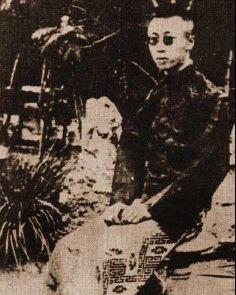
The last Emperor of China, Henry Puyi |
|