Granted, the United States doesn't like to talk much about the fact that Uncle Sam tried to conquer Canada in two different wars, but that's likely because the U.S. failed miserably both times. It sounds odd, but it is true, both times Billy Yank tried to invade Canada, even with all the odds in his favor, he was soundly defeated. The first effort was made in 1775 at the start of the American Revolution. The revolutionary forces hoped to rally the Canadians to their side, take the province and prevent British forces from using Canadian bases to reconquer the 13 colonies by taking the two key cities of Montreal and Quebec.
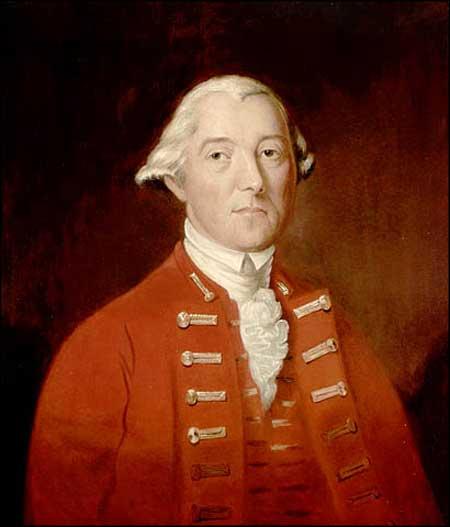
It was a 2-pronged assault led by Benedict Arnold, who moved up the Kennebec and Chaudiere rivers toward Quebec, and by Richard Montgomery who attacked Montreal. The British forces under Governor Sir Guy Carleton consisted of a much smaller number of regulars, Indians, Canadians and American loyalists. The colonial plan went wrong from the start. The attack was begun at the wrong time and the men suffered greatly, taking to sacking Canadian villages to support themselves. Naturally, this did nothing to win over the native population to the revolutionary side and ensured Canada remained loyal to Britain.
In November, Montgomery seized Montreal and moved down the St Lawrence. Carleton, who had been in Montreal, escaped in disguise and was taken by a British warship to Quebec, the only thing standing in the way of American control of Canada. Arnold and Montgomery both assaulted Quebec, but were badly repulsed with Montgomery being killed and Arnold wounded. This was the inglorious end to the first invasion of Canada.
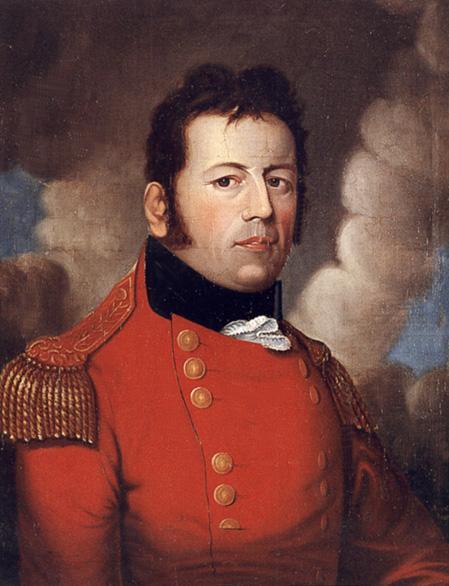
The next, and most significant, came during the War of 1812 in which the United States tried to take advantage of Britain's war with Napoleon to settle some old scores by taking Canada. A major invasion was launched into Upper Canada, which was defended only by a small number of British troops, Canadian militia and native Indians. However, the British commander, Sir Isaac Brock, proved himself far superior to his American counterparts and managed to repel the attack at the battle of Queenston Heights, despite the fact that he was outnumbered by an astounding ratio of 6 to 1! Sadly, General Brock was killed in the battle, depriving Britain of a great officer but giving Canada a marytred hero who died in defense of their country.
Britain managed to easily take Detroit early on, and hold it against a US counter-attack. In this area the Indian chief Tecumseh rose to great fame, but the key to the region was control of the Great Lakes. In 1813 US troops under Henry Dearborn attacked York (Toronto) from across Lake Ontario. The American troops sacked and burned the city, looting private homes and government building alike; an atrocity which later prompted the British to burn the government buildings in Washington DC later on.
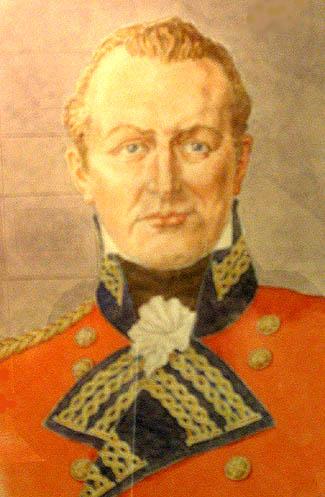
In 1814 US Generals Jacob Brown and Winfield Scott attacked Canada again up the Niagara peninsula, but were badly defeated at the battle of Lundy's Lane on July 25 by Lt General Sir Gordon Drummond. After this victory, and the arrival of more veteran troops from Europe, the Governor-General of Canada, Sir George Prevost, launched a counter-offensive into the United States, but the action was halted due to a defeat at Lake Champlain shortly before the war ended by treaty. Yet, minor troubles were to continue, not helped by the fact that Canadian militia had performed so brilliantly during the War of 1812 that many political leaders began to feel as though Canada did not need a strong defense.
In 1837-1839 some Irish-American immigrants attacked Canada in a rather hair-brained scheme which the garrison of Windsor easily repulsed. The final invasion of Canada came in 1866 when the Fenians, Irish nationalists formerly of the Union army in the US Civil War, tried to take Canada and hold it hostage to force British concessions in Ireland. They were no match for the British regulars in the region and their one victory over Canadian militia at Ridgeway was not exploited. Once again, the final invasion of Canada had been a complete failure. |