|
|
||||||
|
|
|
|
|
|
|
|




Following are answers to some of the most commonly asked questions about cremation. Keep in mind that laws and procedures vary from state to state and from provider to provider.
What Is Cremation?
|
|
To begin with, it is probably easier to describe what cremation
isn't. Cremation is not final disposition of the remains, nor is it a type of
funeral service. Rather, it is a process of reducing the human body to bone
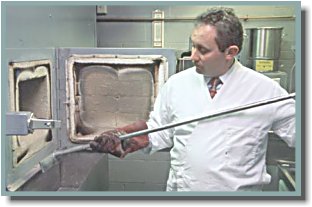
fragments using high heat and flame. |
|
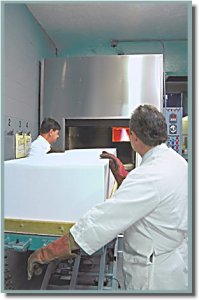
Is A Casket Needed For Cremation? Is Embalming Required Prior To Cremation? Can The Family Witness The Cremation? |
|
|
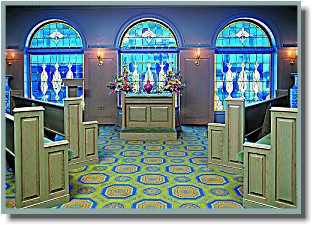
Is Cremation Accepted By All Religions? Can An Urn Be Brought Into Church? What Can Be Done With The Cremated Remains? |
|
Do People Choose Cremation Only To Save
Money?
While some people select cremation for economy, many choose this option for other
reasons. The simplicity and dignity of cremation, environmental concerns, and
the flexibility cremation affords in ceremony planning and final disposition
all add to its increasing popularity.
Don't Most Funeral Homes Have A Crematory?
Most funeral homes subcontract this delicate procedure out to a third party
provider in another town where the funeral home has little or no control over
the crematory's operating procedures. Often, the family incurs additional
transportation expenses and needless delay. By contrast, many cremation
societies operate their own cremation facility.
How Can I Be Sure I Receive The Correct
Remains?
|
|
All reputable cremation providers have developed rigorous sets of operating policies and procedures in order to maximize the level of service and minimize the potential for human error. If you have questions, ask the cremation providers what procedures they use. |
How Long Does The Actual Cremation Take?
It depends on the weight of the individual. For an average size adult,
cremation takes from two to three hours at normal operating temperature between
1,500 degrees F to 2,000 degrees F.
What Happens After The Cremation is Complete?
All organic bone fragments, which are very brittle, as well as non-consumed
metal items are "swept" into the back of the the cremation chamber
and into a stainless steel cooling pan. All non-consumed items, like metal from
clothing, hip joints, and bridge work, are separated from the cremated remains.
This separation is accomplished through visual inspection as well as using a
strong magnet for smaller and minute metallic objects. Items such as dental
gold and silver are non-recoverable and are commingled in with the cremated
remains. Remaining bone fragments are then processed in a machine to a consistent
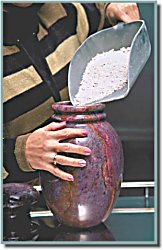
size and placed into a temporary or permanent urn, selected by the family.
Can Two Cremations Be Performed At Once?
Never. Not only is it illegal to do so, most modern cremation chambers are not
of sufficient size to accommodate more than one adult. Thus it would be a
practical impossibility to conduct multiple cremations simultaneously.
What Do The Cremated Remains Look Like?
Cremated remains resemble coarse sand and are whitish to light grey in color.
The remains of an average size adult usually weigh between four to six pounds.
Are All The Cremated Remains Returned?
With the exception of minute and microscopic particles, which are impossible to
remove from the cremation chamber and processing machine, all of the cremated
remains are given back to the family.
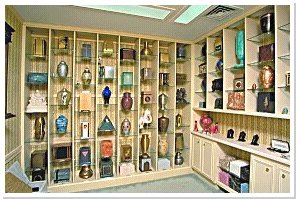
Do I Need An Urn?
|
|
An urn is not required by law. However, an urn may be desired if there is to be a memorial service or the remains are to be interred in a cemetery. If an urn is not purchased through us, or provided by the family, the cremated remains will be returned in a temporary plastic container. |
Do you have additional questions?
Because laws and procedure vary greatly, please address specific questions to
the cremation service providers we have listed for your area.
Please send technical comments to [email protected]
[ Main Page | Cremation Societies | Urn Mall ]
[ Scattering Services | Obituary Sites | Caskets Online ]
[ Cremation bookstore | Attention Vendors | Cremation Information ]
|
Web Hosting by
FuneralNet |