
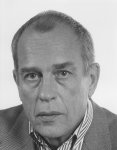
J�rn Johan Donner is the Finland-Swedish enfant terrible who surfaced on the Finnish cultural scene in the 1950s. Born on February 5 1933, he came from a Swedish-speaking family of upper-class and didn't have a worry in the world until he became a leftist radical during his university years. He edited the magazine Arena and participated in cultural and social debates on the pages of such newspapers as Hufvudstadsbladet and Ny Tid. He wrote his first novel at the age of 18. Donner still considers himself a writer above anything else.
But Donner was already then a restless soul and found his interests on many scenes. Before graduating from the University of Helsinki in 1959, he worked as a literary, theatre and film critic for different newspapers. In 1957 he co-founded the Finnish Film Archive. He travelled a lot and his Report from Berlin was published to much critical acclaim in 1958. In 1960 he moved to Sweden to write for the daily newspaper Dagens Nyheter. This was the first of many moves to the neighbouring country. Donner never felt at home in Sweden and always moved back to Finland, the land that provided his inspiration.
During his first period in Sweden, Donner came into contact with many legends of the Swedish film community, among them Ingmar Bergman. It was the beginning of a long friendship. Donner wrote, directed and produced some now forgotten films in Sweden, but didn't quite find his place in the film business. In 1966 he founded his own production company - J�rn Donner Productions. He started to produce films and became very successful in that chair. As of 2004, Donner is the only Finn ever to win an Academy Award. He picked up an Oscar for Ingmar Bergman's Fanny and Alexander (1982), which he produced.
In the late 60s Donner moved back home to Helsinki and Finland. He became quite active in the radical communist movement of that time. Donner represented the communist SKDL party in the Helsinki City Council 1967-72. He continued writing for various newspapers and also wrote novels. The restless Donner however couldn't stand still and moved back to Sweden in the early 70s. He also had some financial problems with a failed hotel project in 1972 and the steady job in Sweden was a good enough solution. He always had his flat in Helsinki to return to, so the moves never became permanent. He did a lot of travelling, which meant that he seldom had to face the boring reality of a steady job or family life. In Sweden he finally found his place at the Swedish Film Institute and ended up heading the place. He left that job in 1982 and once more returned to Finland.
Back in Finland he continued his literary career that has never known any breaks. His columns in Hufvudstadsbladet between 1980-92 and 1997-99 were well received by readers, who now had found a special place in their hearts for the old radical. He headed the Foundation of Finnish Film between 1981-83, returning in 1986-89 and 1992-95. As a true citizen of Helsinki, he couldn't resist returning to the City Council and held a seat on it between 1985 and 1992. He returned after the 2004 election, now as the oldest member of the Council.
In 1987 Donner was elected to the Finnish parliament and stayed there for eight years. He was re-elected once in 1991. By supporting Social Democrat Ahtisaari instead of Elisabeth Rehn of the Swedish People's Party in the 1994 presidential election, Donner received a post as consul general to Los Angeles as a sign of gratitude by elected president Ahtisaari. But Donner found L.A. boring and moved back to Finland after only one year in California. He was elected to the European Parliament upon his return to Finland in 1996. He stayed in Brussels and Strasbourg as a MEP for four years, but was displeased with living in luxury hotels. He didn't even consider to run for re-election.
He did move back to Finland after his years in Europe, but to the small southern town of Eken�s this time. Donner liked the small-town mentality with its Swedish-speaking majority and picturesque archipelago for a few years, but moved back to Helsinki in 2003 to run for the national parliament once again. This time as an independent candidate for the liberal Swedish People's Party. This time he failed to get elected. The agricultural Centre party won the election and Donner joined the Social Democrats in protest. It was the second time he joined the SDP. He had left the Swedish People's Party in the mid 90s after being their MP for two terms.
One shouldn't forget Donner's literary production. He writes mostly in his mother tongue Swedish and is known as the Balzac of Finland due to his somewhat episodic, but revolting and romantic style of writing. He has written some forty books and was awarded the Finlandia Prize for literature in 1984 for his novel Father and Son. His Anders family saga, consisting of ten novels, has been produced for televsion by none other than Donner himself. Many of his works are autobiographical, among them his latest effort Livsbilder (Pictures of Life), published in 2004.
Donner has been married three times and has fathered six children. He now lives in Helsinki where he writes his Daily Donner column (P�iv�n Donner) in the tabloid Ilta-Sanomat. Donner, once again a member of the Helsinki City Council, also heads the Cultural and Library Committee of Helsinki.
<<<Back