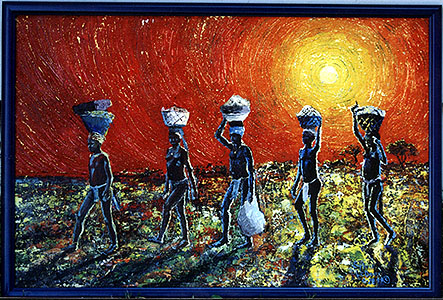
A Literary Convention that Bessie uses to transmit the meanings in the "Looking for a Rain God" is the tone. In the story the tone describes a desperate atmosphere. In the opening lines of the story the author introduces the feeling of loneliness and vastness of the region where the story takes place. This is evident as it says, "It is lonely at the lands where the people go to plough. These lands are vast clearings in the bush, and the wild bush is lonely too" (1231). Immediately after this, the tone begins to change as a seven year drought is introduced in the story. This is evident as in subsequent lines where it says, "even the watering places began to look as dismal as the dry open thorn bush country, the leaves of the trees curled up and withered; the moss became dry and hard and, under the shade of the tangled trees, the ground turned a powdery black and white, because there was no rain" (1231). Elements such as the dryness, the obscure colors of the ground (powdery black and the description of the shrunken leaves of the trees establish an aura of sadness and anxiousness. Other examples that state this attitude toward the story are the lines where it says, "No one knew what to do to escape the heat, and tragedy was in the air" (1232), "At the beginning of that summer, a number of men just went out of their homes and hung themselves to death from trees" (1232), "The family sat down in despair, waiting and waiting" (1232). Elements such as the smell of tragedy, the heat, the heat, deaths (the hanged men) and the perdurable wait (of the family) establishes the despair oriented tone of the story. This desperate feeling that Bessietransmit to the reader is what eventually leads the characters to take the resolution that is present in the plot, the sacrifice of Neo and Boseyong.
In the plot, another literary convention, bessie presents how the people in the village in consequence of the drought resorted to false faiths. The story begins with the introduction of a community of villagers who make their living by farming. In the year 1958, the land is revage by a terrible drought. As it says in the story, "Only the charlatans, incanters, and witch doctors made a pile of money during this time (the drought) because people were always turning to them in desperation for little talismans and herbs to rub on the plough for the crops to grow and the rain to fall" (1231) In the expression "made a pile of money", Bessie establishes that the only purpose for this practices was moneymaking and not the resolution of the problem, which makes this talismans and herbs simply false faiths. As the story continus, the reference to false solutions to the desperation do not end. A family headed by the elderly Mokgobja and composed of his son Ramadi, Ramadi's wife Tiro, and their three daugthersd are consumed by desperation caused by the absent rain. Mokgobja remembers a ritual from his childhood. As it is mentioned in the story, "When he was very young and the customs of the ancestors still ruled the land, he had witness to a rain-making ceremony" (1232). The girls Neo and Boseyong were sacrifice. Upon the family's return, all the villagers ask about the missing girls, and at first the family merely says they died. However, when the police asked to see the graves, the mother of the girls told everything. Mokgobja and Ramadi were sentenced, convicted, and executed. The plot reflect Bessie Head perception of how human beings resort to extreme religious practices in desperate moments, as the characters utilize an extreme religious practice like the sacrifices to try to slve their moments of need. These religious allusions reflect Bessie Head's religious background.
Biographical and New Historical Criticicism
|