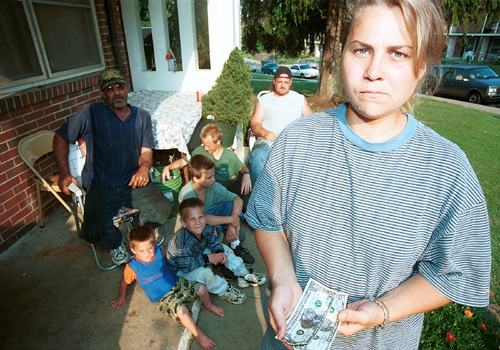
Teresa Arabie, 28, holds the $6.50 respresenting her hourly wage at a Charlottesvilles gas station where she works less than 30 hours per week to support her family of four children, her husband who is disabled and his father, also disabled. Considered under the federal poverty level, Teresa (who has only an eighth grade education) cannot afford the $35 cost to take the GED test which would help her to get a better job.
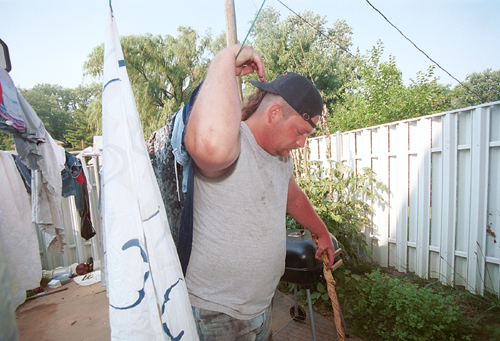
Teresa's husband, Wayne Arabie, Jr., 25, was struck by a car as he was crossing the street after work in March 1999, leaving him with multiple leg fractures. After several surgeries and still more to go, Arabie is considered disabled and unable to work to help support his wife and family. In the tiny back yard of their lower income housing apartment, Wayne tends to two small strips of ground used to grow vegetables for the family, cutting down on money spent on groceries. Arabie vows his family will never go hungry, "I make it a point that they don't have to do without. No matter what, we've always got food." |