Bridge Parallel Configuration Gainclone
Introduction:
In audio applications, there are times when the power output of a single chip amplifier is inadequate. A simple solution would be to bridge two identical chipamps to increase power output. However, bridging amps will make them see only half of the load which is one disadvantage that increases power dissipation but by paralleling two chipamps before bridging can make the whole amp handle a lower load. This technique has one major drawback, components must be chosen carefully and matched closely so that the four chips would share the same work as close as possible. Matching also minimizes dc offset for each amps so no current flows to a single amp and thereby increasing it's dissipation even at no load. Aside from matching components, dc blocking capacitors must be used to even minimize current flow between each chipamps.
For this prototype, I chose to use the OPA549 but other power opamps can also be used. A balance line driver is used in the input that splits the signal for the positive and negative side of the amp.
Schematic Diagram:
Coming soon...
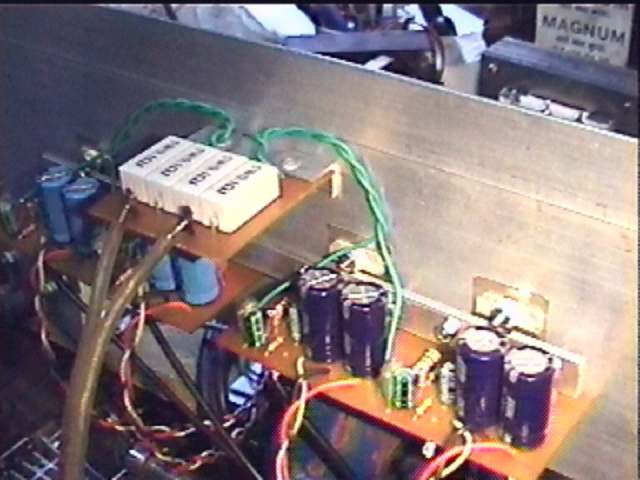
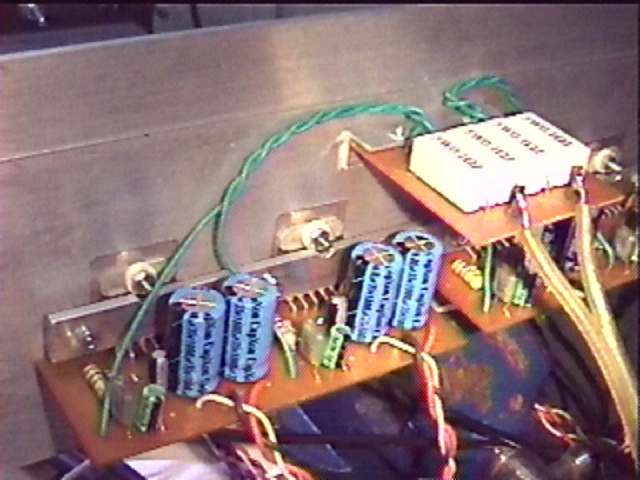
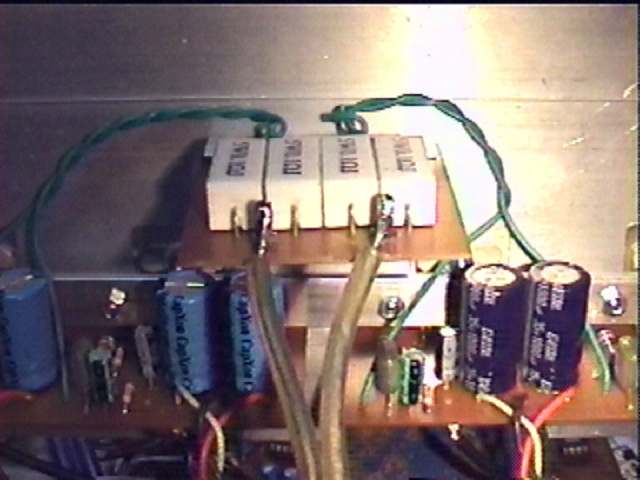
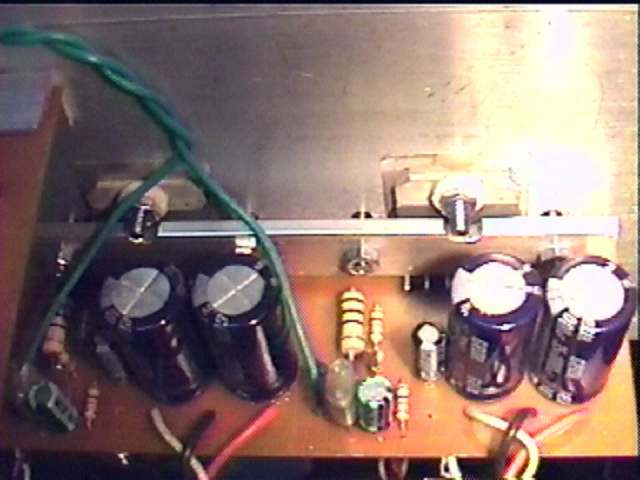
The following are pictures of my bridge parallel amp:
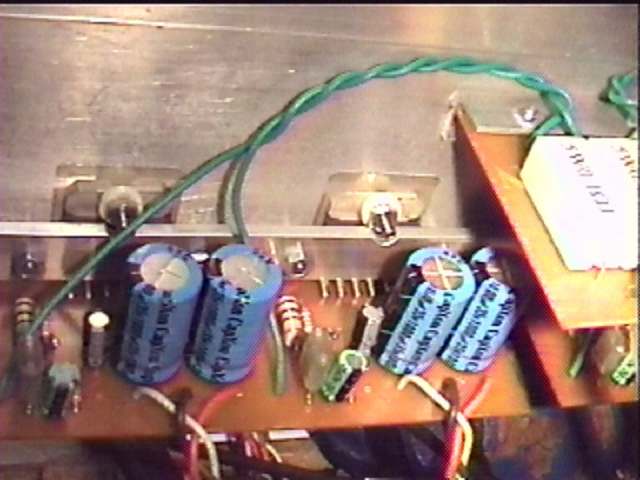
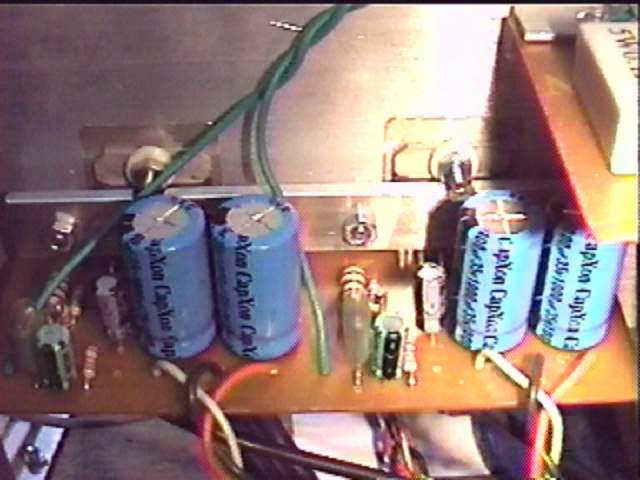
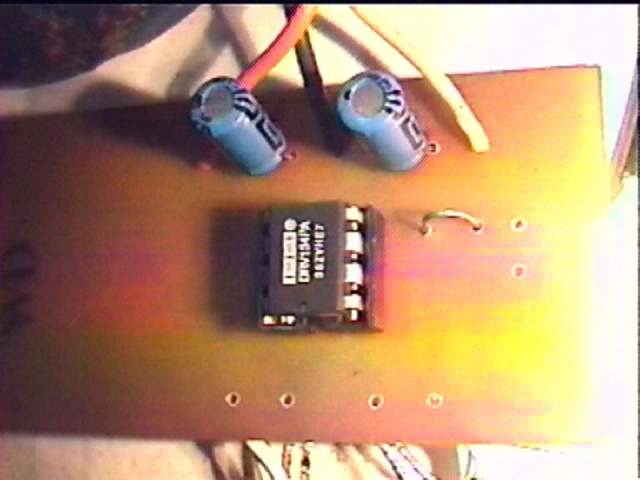
The balance line driver that I used for the input:
The amp performs well under high volumes and the heatsink seems to be enough to handle the heat dissipation. It has been tested using 8 ohms and recently a 4 ohms load for almost 12 hours.