ANTIFREEZE: what kind? Make absolutely when doing your own winterizing of your camper that you use an RV or marine non-toxic antifreeze. The non-toxic part is crucial because all your plumbing except for the fresh water tank and water heater will be full of the antifreeze all winter. Automotive antifreeze is toxic and if used by mistake, will be the source of serious medical problems even after the system is flushed. RV antifreeze can be bought at any RV dealership, Wal-Mart and other stores that may have an RV department.
APPLIANCES: On or off when travelling? RVers are nothing if not of two minds on this issue.
AWNING CARPET: a good idea? Generally yes, but get one of the new ones that allow water to seep through. Otherwise, go with cheap astroturf and replace every year.
BATTERIES: why plural? If you are going to be a serious boondocker or more often than not, find yourself boondocking not by choice, two 6V golf cart batteries are better over the long run than one 12V battery. If you go this route, check out available web sites and/or RV forums for guidance on how to do this properly and ultimately, safely.
BATTERY: in winter? Unless there's no danger of it freezing, remove it and store it in a safe location away from any source of ignition and with some air circulation but first top up the water level with distilled water then trickle charging till fully charged. Check the charge once a month and trickle charge when necessary. Don't forget to remove the smaller batteries in radios and smoke detectors in the winter.
BEARS: what do I do about them? First off, check with the relevant park admin and see if hybrids are allowed in bear territory. They may not be, but may be if you can keep your bunk ends up. As for a face to face 0encounter, definitely do NOT run away. Even a dog can't help chasing you for fun, but the bear's after a meal.
BEDDING: any way to improve on factory offerings? Absolutely. If you have the money, time and inclination, you can change your bunks into real beds away from home, complete with cushy (but light) mattresses, Obusform pillows; expensive, fitted sheets; a light, expensive blanket and for cooler times, a plushy duvet. Actually, quite a number of campers are using aerobeds which I understand are a big improvement not only over standard RV mattresses but air mattresses too. Did I mention heated mattress pads?
BIKE RACK: can I attach a bike rack to the rear bumper of my trailer? Generally, no, although it has been done. Considerations: the kind of bumper you have, weight, weight distribution, sway, insurance, vehicles behind you and the mayhem caused when the bumper, rack and bikes hit the road.
BIKES: inside the trailer? Some people have arranged things or made an apparatus so that their bikes can be safely transported inside their trailer. It can be a bit tough getting them through the doors but the pros will loosen up the handlebar stem, turn the bars around and tighten the stem as well as removing the pedals. Others have folding bikes, a good option unless you intend to pound the trails with them. They don't have the geometry or the components to take it for any length of time.
BLACK WATER: what is it? In short, it's your dumpings in the toilet. Brown water would have been a more accurate description. It gets dumped first by the way.
BOONDOCKING: what is boondocking? It's minimalist camping. No hookups, usually because you are somewhere that doesn't have them. Consequently, you have to rely on big-enough holding tanks, the battery for electricity; propane for the stove, fridge & water heater, and you get your water from a tap somewhere close, hopefully.
BRAKE CONTROLLER: what is it? It's an adjustable apparatus that coordinates the braking of the tow vehicle and the trailer. By all accounts, Tekonsha is the one used most, but there are others.
BUNK CLAMPS: can they be a pain? Yes, for several reasons but all can be remediated. Depending upon the pad material for example, when the pad makes contact with the bunk end frame, it "creeps" until it hits the screw that prevents it from going any further. Do that all the time however and the pad gets smaller in diameter until one day, the clamp slips below the screw. Solution? Hold the clamp in poisition while turning down. Another problem is overtightening the clamps. This can cause two problems, stressing the retaining screws to the point where they pull out of the their holes and secondly, compressing the rubber gasket so that over time, it won't function properly leading to leaks when travelling in wet weather. Tighten enough to compress the gasket all around and that's enough.
BUNKS: how much weight will they take? The general concensus is about 1,000 lbs. each. They may take more but you don't want to find out in bear country. To your surprise, they may take less. You dono't want to find that out in bear country either. Check with the dealer and/or manufacturer if you're not sure.
BUYING LONG DISTANCE: a good idea? That depends upon the distance, money saved, the attitude of your local dealer and the time and cost to return to the source for servicing if said dealer has an attitude. He'll be thinking that you won't deal with him for a trailer but you'll expect him to service it. Question: under these circumstances, will buying long distance be worth it? A tough one to call especially if he has what you want but won't give you a competitive deal on it.
CAMPERS FACTORY OUTLET: a good place to buy from? Apparently so, but I guess it depends how far you have to travel to pick it up, whether or not your dealer will match CFO's prices (or come close) and whether your local dealer will be willing (happily) to service your trailer. Some dealers are SOBs.
CAULKING: what to use for around the windows? Your dealer will have what you need. If it's expensive, read the label to find out what kind it is (latex, etc.) and try to find it cheaper somewhere else. You can't use the same kind on the roof by the way because of the chemical composition of the roofing material. I'd stay with the dealer's offerings on this one; it doesn't pay to be penny wise and pound foolish with a roof.
CHECK LISTS: are there any available? Yes. If you go to the Yahoo hybridRV forum, check the side menu where you will find either a file and/or an URL that will take you to at least two check lists.
CLEANING: what do I use to clean my hybrid? You need one soap product for washing (many people use Simply Green), one wax product for waxing (a boat wax with UV inhibitors is good) and perhaps a specialized product to get rid of black streaks (carried by all Wal-Marts everywhere). A special cleaner is needed for the roofing material.
CONDENSATION: how can it be prevented? All or a combination of the following: leaving a bunk end window or two unzipped a little, run a fan, have a heater on, cover the bunk roof with a survival blanket. If you had a pop-up before and never had this problem, it's because your whole trailer was quite porous, permitting cross ventilation. A hybrid on the other hand is enclosed except for the bunk ends where the condensartion occurs, so now you have to provide the ventilation on demand.
COVERS (TRAILER): a good idea and what kind? A good idea especially if the trailer is stored outdoors all year. Although the gel coat over the fibreglass contains UV inhibitors, it deteriorates over time. If you buy one, make sure it is waterproof AND breatheable. Plastic and polyethelene covers do not breathe, possibly causing condensation and mildew problems inside the trailer.
DRAIN HOSE CONTAINERS: HybridRV members are very inventive in this regard and can describe a wide variety of solutions to more hose storage space. Lengths of pipe, replacing rear bumpers, making boxes attached to the tongue or rear. Definitely do-able.
DSI: a good idea? Quite a few people have had them retrofitted and are quite happy with them. Sounds like a good upgrade to me.
ELECTRICAL PLUGS/SOCKETS: in winter? Part of my winterizing procedure is to spray any exterior plugs and sockets with a spray-on water repellant which at the same time, improves contact between the plug and socket. It can be bought at most hardware stores but particularly at automotive stores and places like Radio Shack. It should help eliminate some cleaning of the contacts with emery paper but it wouldn't hurt to do that anyway come camping season.
FIBREGLASS: are repairs possible? Yes, but whether you can do it or whether it has to go to a dealer or specialty shop depends upon how bad it is. If we're talking about a small scrape or worn spot in the fibreglass Filon, the trade name, it can be repaired by preparation - sanding, shaping and cleaning the spot to accept a filler, not unlike what you would do on an automobile. Information on the exact procedure and materials is available.
FRS/FSR (Family Radio Service): handy? You bet. We use ours when backing into a site. Mine is on, open and up front receiving instructions/questions from the boss out back. No hand signals, no yelling; just talking me in as if I was landing a module on the moon. Off-site in malls, I go my way and she goes hers and at designated times, we turn them on so each knows where the other one is and when and where to meet. I imagine they could be handy on bike trails too when people get separated.
FURNACE: it won't run. What now? Hmmm, well, there's the thermostat to consider as well as a little switch that has to be flicked on too (at least, on our '98 B17) and a fuse. Sometimes, some part of the electronics has to be adjusted too, but that's a dealer job I believe. Of course, checking out all of the above is no good if you've forgotten to turn on the propane....
GEAR RATIOS: what difference do they make to anything? In short, the lower the number (i.e. 3.25) the worse it is for towing a trailer, but you get better gas mileage 10 months a year. The higher the number (i.e. 4.10) the better for towing but your gas mileage suffers the same 12 months a year. Towing 'cogniscenti' like a number in the 3.8 to 3.9 range as a compromise.
GENERATORS: a good idea? If you find one to be necessary and/or convenient, not to mention quiet in consideration of your neighbours, I guess it can be a good idea. If your neighbours disagree however, it could generate more than electricity.
GRANDFATHERING: Hmmm? It's when a former hybrid owner is allowed/permitted/whatever by the group to continue to attend rallies even though they don't have a hybrid any more. Grandmothering is OK too.
GREY WATER: what is it? This is a more accurate desciption as it is water from sinks, showers and bathtubs. It gets dumped after the black water 'cause it helps clean out the drain hose.
HEAT STRIPS: a good idea if appropriate for your situation and there are no better alternatives.
HEATERS: do I need one even though I have a furnace? They do come in handy when one has access to campground electricity and you want to save your propane. Ceramic heaters with an automatic shut-off switch are preferred. Check with the campground owner first though. Some campgrounds still only have 20 amp service so a heater could blow the fuse. For whatever reason(s), you may want to use your trailer during the off season in which case, a heater will keep the chill off and warm up the trailer quite nicely. It's not suggested that you leave it plugged in overnight however, in the event of a malfunction.
HITCHES: what kind should I get? I don't know and that's because there are so many different kinds and everyone who has one swears by them. Then there's weight distributing hitches which set off a howl amongst those who prefer this one to that one. Generally, dealers know what they're doing so take your clue from them, otherwise, check around at the distributors and installers of the different brands - or on the web - then discuss your results with someone at HybridRV.
HONEYWAGON: what is it? It's usually blue, has wheels, comes in different sizes and is used to transport black and/or grey water drained from your holding tanks to the dump station. You'll probably need one if you A) have small holding tanks B) stay on one site for a week or two and don't want to tow the trailer to the dump station C) your site obviously does not have full facilities such as a sewer hook-up. They are also called totes.
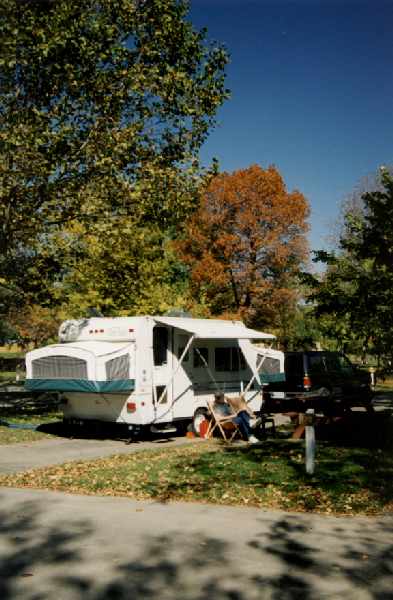
HYBRIDS: should I get one? If you want all the conveniences of a regular travel trailer plus the light, sounds, smells and fresh air of a pop-up, yes. Then there's the versatility of no ends, one end or both ends down. I could go on but then, I'm biased.
IHCA: I've seen this somewhere. What is it? It's the International Hybrid Camper Association. It's a bunch of organized campers who camp and organize an annual rally for themselves. Recently, regional organizations have established themselves and run their own rallies.
INDEXES: are there any? Yes there are, for postings up to 10,000 at the old site. Check the Links for the URLs. Index/INDEX is for postings 1-5000 and go back to the emergence of hybrids in 1998. INDX2 is for postings 5001-10000. Headings are more specific and the information is more up-to-date. Every topic in this FAQ is covered in one or both indexes. You just need a little research time.
INSURANCE: what company should I go with? No idea. Some are better than others and of course, not all companies operate in both Canada and the U.S.A. As for health insurance, an excellent idea if you are going out of the country and in Canada, even if you're going out of the province. In general though, a company that specializes in RV insurance is the best way to go. Automobile and home insurance companies may/will cover you to some extent but none will give you replacement value for up to 5 years (for example) as some RV insiurers do. Also, auto and home insurers may not have adjusters knowledgeable enough - if at all - about RVs to put together a proper report and evaluation of damage or loss incurred.
LEAKS: there's a problem with leaks in hybrids? There used to be lots of problems with leaks 1998 - 2000 and some 2001 makes and models but by and large, the manufacturers/assemblers have resolved almost all the earlier problems through redesign. There's the odd problem with quality control that by and large, the dealers can handle. Just make sure you get anything done while the warranty is in effect.
LIGHTS: what have people done about additional lighting? In most cases, folks have added light/fan combos at the bunk ends. I understand these plug into already available receptacles. In older trailers, I think you have to clip them on or add the receptacles.
MAXXAIRE VENTS: a good idea? People who have them like them and some who didn't have them, got them and all are in agreement.
MICE: can they be a problem? Yes, but in over 20,000 postings, there are only 4 relating to mice so it's not a big problem. Main thing is to block off any possible entry holes if there are any.
MILDEW: is it a problem and if so, how do I get rid of it? It can be a problem. Closing up damp then not drying out as soon as possible guarantees mildew. There are a number of solutions for preventing or stopping further mildew. Don't forget you'll have mildew on your awning too. The fastest way of finding out is to check with your dealer and/or the good people at YahooHybridRV and/or rverscorner.
MINIVANS: do they make good tow vehicles? It depends upon which van, its components (h.p., axle ratio, wheelbase, etc.,) and what size/weight trailer you plan on towing with it. In general though, the front wheel drive setup and general geometry of a minivan doesn't make for a good tow vehicle of anything bu pop-ups or the smallest of travel trailers. The exception is the Chevrolet Astro/Safari which is truck-based and has rear wheel drive. With a tow package including a tranny cooler, etc., it is an excellent tow vehicle.
MIRRORS: the best extension mirrors? There are slip-ons that clamp on, slip-ons that strap on, McKesh that are complete in themselves themselves and cheaper McKesh knock-offs. The best are the McKesh but other folks are happy with the slip-ons and knock-offs. depends upon your wallet I guess.
MODIFICATIONS: can I modify my trailer? There are all kinds of things you can do to improve your trailer to suit yourself. If you're handy, do it yourself. If not, let your dealer have a go. Best of both worlds is a friend or neighbour who is very handy and subscribes to the concept of the underground economy. We've been talking about things like adding towel racks, cupboards or drawers here. For REAL modifications to enable your trailer to go anywhere as in frame, suspension and holding tank modifications, check in with "cortezdeepdiver" at the forum; he has what he describes as a hybridzilla.
OPTIONS: what do I need to know about them? Some are really good like air conditioning and an awning not to mention the spare tire. The built-in stereos are duds though and a lot of people have replaced them. Be aware of the weight of each option too because they all count when adding up how much you can tow and how much more you can pack into your trailer.
OVERDRIVE: can I use overdrive? You can, but it's not recommended. Misuse of overdrive can cause overheating of the transmission leading to big $$$$s in tranny repairs.
PLUMBING: what problems have been reported on this topic? Mostly poor fittings at the factory, fittings coming loose due to travel, burst water heating tanks because of poor maintenance and plastic couplings breaking at the pump and water heater. Overall however, most trailers are mostly free of any plumbing problems. Some, more RVers eplace the factory PEX fittings with QUEST fittings. Find out more at RVerscorner.
PROPANE: anything I should know here? Yes. It's a good idea to turn it on when setting up; could save you some embarrassment sometime. Make sure you clean out the venturi tube of the water heater if it hasn't been used for some time. Propane takes a while to move through the system. Lighting the indoor stove first will lessen the time you have to wait to light the water heater. Of course, if you have DSI, that's not a problem. Propane tanks now have to have an overfill protective device - OPD. If yours doesn't, no one will refill it. Make sure you have a propane detector in your trailer. As for whether you should have the propane on and the refrigerator running while travelling, people either do it or they don't for their own reasons. There is no middle ground.
RV CAMPGROUND MEMBERSHIPS: a good idea? Some people have found them to be a good thing, others have been very disappointed. It depends upon your circumstances, comfort level and being able to assume that all participating campgrounds keep their campgrounds as advertised.
RV SHOWS: Are they worthwhile attending? For a first time buyer, you won't find a better collection of different makes and models anywhere. Knowing what to look for and the right questions for you to ask are the problems. There are differences in construction, in quality, in workmanship and in specifications that can make a big difference down the road, especially if you're going to keep the trailer for a long time. For seasoned RVers, they get to see what changes have been made and even if not buying, they often can pick up some good ideas re: modifications and upgrades, etc., they can do themselves or at their dealers.
RV WEB SITES: there are some? You bet. Lots! Run a search and find out. The one that seems to be referred to most often at YahooHybridRV is rverscorner. Many sites have links so use those too.
SANITIZING: referring to what? Usually the fresh water tank. After sitting around all winter, any water left in the tank needs to be diluted, drained and the whole tank sanitized. Information is available regarding the proportions of bleach to water for doing this. Dress in white for this job.
SCREEN ROOMS: are available for hybrids? Yes they are You'll have to do some research regarding from whom and at what cost.
SECURITY: How secure are hybrids? Any RV can be broken into, especially since the manufacturers use generic door handles, locks and keys. This includes bunk end locks. The advantage of adding security items such as padlocks where possible is that of forcing an intruder to take more time or to produce noise when breaking and entering. He/she may actually pass up your trailer for an easier one. To stop thieves from making a quick getaway with your parked trailer (especially if in storage), buy a hitch lock.
SHOWERS: outdoor, a good idea? Some people think so, even to the point of having them retrofitted by a dealer if one doesn't come with the trailer. Location is a problem for some, though. At the front is where you usually have your "patio" so there could be a mess there. At the back, sometimes showerers are in close proximity to the sewer hookup which is not ideal either. Some people have them and have never used them.
SOLAR PANELS: should I get some? Hmmmm, what for? Are they really necessary? Would two, 6 volt golf cart batteries (deep cycle) be better? Cost effectiveness is probably the guiding light here but if you must have them, check out all available systems carefully before buying.
STEREO SYSTEM: How good are the optional stereo systems from the factory. According to HybridRV forum members, they're not worth it. Some have replaced them after finding out how poorly they perform, while others have installed their own.
STORAGE SPACE: any ideas for more? Yes, check out folks at YahooHybridRV. There's a ton of folks who have made all sorts of renos in their hybrids and not just storage space either.
SWAY: I need to worry about this? It depends. I gather some pickups/SUVs and trailer combos don't use an anti-sway device because the tow vehicle is so big/heavy, the tail doesn't wag the dog. In most cases though, I think it's a very good idea. There are different kinds and your dealer should be able to help you out with the right kind. An equalizing hitch may be necessary too.
TABLE, DINETTE: any ideas? Yes. You could cut off the other corner too. You could make your own of a size and shape that better fits what you want it to do. Some folks put it outside and use it like a patio table. Inside, they use something smaller to put their drinks and copies of Real Simple on.
TIRES: what's the problem here? Generally there isn't one, but there's nothing wrong with being cautious. Just make sure that you have tires manufactured for trailers, that they have the proper rating for the total weight of your trailer and if you are buying a new trailer, that the tires are new. (Dealers have been known to switch propane tanks and batteries, why not tires?). You should also upgrade the tires on the tow vehicle so they will perform better over a longer period of time when towing, something regualr passenger tires are not equipped for.
TOW VEHICLE: which is the best tow vehicle? That depends upon what it's going to tow and what else it's going to be used for. Some factors to take into account too are vehicle weight, trailer weight, tow limits, rear axle gear ratio, torque, h.p. and wheelbase. There's more but that's a start. You'll find more detailed information in earlier postings at the current site as well as the previous one. Check out the indexes for specific topics and posting numbers.
TOW COMBOS: Can I find out if my vehicle will tow a certain trailer? Yes, in INDX2 (see Links), tow vehicles and trailers pulled such as Astro/21' Kiwi are commented on by their owners. They're in alphabetical order by tow vehicle.
TRAILER: which is the best hybrid trailer? The best hybrid trailer is the one that best meets your needs. There are differences in quality between manufacturers (actually, they're assemblers) but even owners of those considered to be poorly constructed are happy with them because, well, their trailer meets their needs. Best thing to do is get in touch with the owners of each kind to get their points of view which should help you make your decision.
TRAILER PRICES: what are some trailer prices? There are no definitive prices. They're all over the map from dealer to dealer, in different states and from one RV show to another. For what it's worth and depending upon where you live, prices at CFO seem to be the best anywhere.
TRAILER RECOMMENDATIONS: Can I find out what trailers are recommended? Yes, you can. In both Index and INDX2, you will find the numbers of postings in which hybrid owners expound on the benefits of their trailers and why they recommend them. They are listed under the same heading as above and are in alphabetical order by trailer.
WAL-MART: what are THEY doing here? Well, believe it or not, just about every Wal_Mart carries a basic line of RV articles from batteries to sewer hoses. In addition, their return/exchange policy just can't be beat. And to some campers, Wal-Marts that allow overnight camping (free) just can't be beat when on a long trip. If you need to know more, contact kelojean at YahooHybridRV.
WARRANTIES: is an extended warranty a good idea? The general opinion seems to be they're a rip-off but that depends upon your comfort level. If you're a Nervous Nellie, it could be a good idea just from the point of view of peace of mind. If you're a sceptic, you have probably already decided not to take one out even if you don't know it yet.
WATER, FILTERS & PRESSURE: ? The quality of water differs from campground to campground. Some are on city systems, others or on wells. We assume the water is tested regularly, but that's only an assumption. Consequently, most campers use an in-line filter at one end of the hose or the other. Some people use bottled water for drinking and camp water for washing. As for water pressure, too high a pressure will damage your plumbing so it's a small price to pay to buy a water pressure regulator that fis in-line too.
WATER HEATER BY-PASS KIT: Do I need one? Not if there's one already installed and it's easy to tell if so. If there is a pipe leading from the top valve to the bottom valve on the water heater, each with a brass open-closed "tap", that's the by-pass. If you don't have one, get one installed as it makes winterizing the plumbing system easier for the dealer or yourself if you do your own. The purpose of the by-pass is to avoid filling the water heater with 6 gallons of antifreeze it doesn't need.
WATER, PUMP: any solutions to the noise? Inherently noisey, the sound can be diminished somewhat by installing a rubber pad underneath the pump to minimize vibrations. Some campers have installed an accumulator that reduces the number of times the pump recycles when small amounts of water are used.
WEIGHTS: how do I calculate whether my rig is overweight and how much I can carry? First off, don't trust weights given on the trailer sticker. Secondly, if you've bought options like an AC and awning, you need to know what they weigh ( don't forget the propane tanks and battery(ies). Thirdly, you can do one of three things: a) to to rverscorner, a web site b) go to the indexes of the old hybridtrailers site look for weight(s) or c) ask someone in the HybridRV group. At least one person in the group has contributed greatly to the mathematical calculations to be found at the old site.
WINTER CAMPING: Is it possible to winter camp in a hybrid amongst the snow and ice of, well, Michigan? Yes. It has been done, mostly by members of the Great Lakes Hybrid Camper Association group. Experienced people to contact are "rmvs" (Ron Van Sickle) and "bantam_1998" (Mark) by posting to them at hybridRV.
WINTER STORAGE: Is it necessary to store our trailer? It depends upon where you live and what you mean by "store". There are members who store their hybrids in sheds or barns, others who leave them outdoors on a dealer's or friend's lots and at least two members store their trailer in a cave. An alternative is to cover your trailer with a breatheable but waterproof cover. Any way in which you can keep your fibreglass trailer out of the sun is good, no matter how much you've washed and waxed it. UV degredation of the fibreglass is a slow, insidious process; the less the better.
WINTERIZING: How do I winterize my trailer? There are differences in plumbing plans amongst different trailers but the bottom line is to make sure all the water is out of the lines, the water heater and as much as possible out of the fresh water tank. The grey and black water tanks have to be dumped too. Bypass the water heater before pumping RV antifreeze into the lines. Pour some antifreeze down the sink, shower and toilet so that it replaces any residual water. Remove all foodstuffs, batteries in alarms, radios, etc., as well as the main battery(ies). Back the trailer onto pieces of wood if the trailer is being stored on an asphalt surface. These are the basics. More info can be found under Links.
Last update: January 7, 2004
j_m