
My Navy Page
AWARDS:

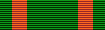
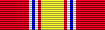
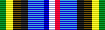
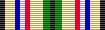
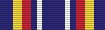

6 Navy Achievement Medals
6 Sea Service Ribbons
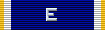
5 Battle "E" Ribbons
4 Letters of Commendation
4 Good Conduct Medals
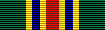
3 Meritorious Unit Commendations
2 National Defense Medals
Enlisted Surface Warfare Specialist
Enlisted Aviation Warfare Specialist
Armed Forces Service Medal
Southwest Asia Service Medal
Kuwaiti Liberation Medal (Kuwait)
Global War On Terrorism Service Medal
Armed Forces Expeditionary Medal
DUTY STATIONS:
US Air Force, 1985
US Navy Recruit Training, Great Lakes, Illinois, 1985-86
Service School Command, Great Lakes, Illinois, 1986
USS Dwight D. Eisenhower CVN-69, 1986-91
Naval Technical Training Center, Treasure Island, California, 1988
Service School Command, Great Lakes, Illinois, 1991-92
USS Theodore Roosevelt CVN-71, 1992-94
Naval Amphibious Base, Little Creek, Virginia (YTB-816), 1994-97
USS Platte AO-186, 1997-99
Service School Command, Great Lakes, Illinois, 1999
USS Bataan LHD-5, 1999-2003
EWTGLANT, Little Creek, Virginia, 2003
Resolute AFDM-10, 2003-2004
Port Operations, Little Creek, Virginia, 2004-2005
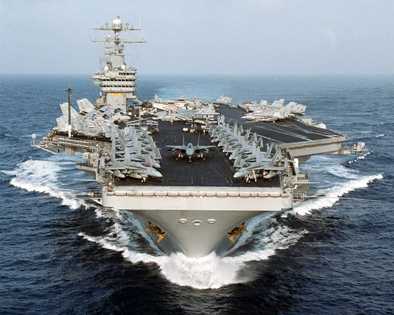
Aircraft Carrier (CVN) --- I served on two carriers, The USS Dwight D. Eisenhower CVN-69 and USS Theodore Roosevelt CVN-71. I served on the Eisenhower from 1986 to 1991; I reported there straight from EM "A" school. I made EM2 during my tour, and also earned my ESWS pin. After completing a "C" school, I went to the Theodore Roosevelt and served from 1992 to 1994. I worked in Weapons Department on both ships because of my school - I was an elevator technician, and the work kept me busy at times. However, I did not stand any watches underway so I was free to pursue courses and earn my surface warfare pin.
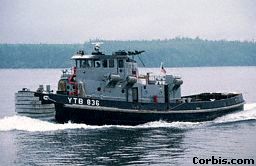
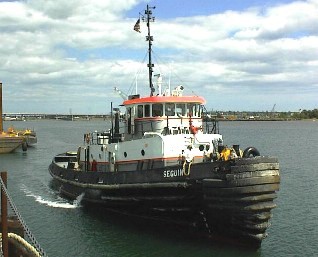
Yard Tug, Big (YTB) --- during my shore duty at Naval Amphibious Base Little Creek, I served on the tug Campti YTB-816; I also cross-trained on Shabonee YTB-833, Santaquin YTB-824, and various pusher and other small boats and oil recovery craft. The tugs, part of the Navy's workhorse fleet, have been decommisioned and replaced with civilian-owned tugs. During my tour I had the opportunity to serve with a man who was a legend among tugmasters and harbor pilots - BMCM(SW) Tim Joyce. Master Chief Joyce was very supportive of my professional and personal goals during my stay, and we became good friends. After he retired in 1999, we stayed in touch until his untimely passing in November 2001. For those who served with him over the years, he will be truly missed. YTB-816, the tug I where spent the most time, was purchased by a contractor in 2000 and is shown with a totally different paint job than when she was in the Navy. Thanks to NavyTugs.Com for the new photo.
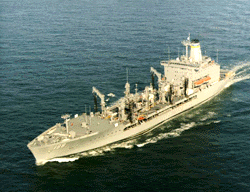
Fleet Oiler (AO) --- I served onboard USS Platte AO-186 until she was decommissioned in June of 1999. The Platte was one of 5 Cimarron-class fleet oilers; her job was to provide underway refueling to US and allied ships. Often the oilers spent much time underway, steaming independently from one customer to the next. The refueling services are now provided by AOEs and Military Sealift Command oilers (T-AO-187 class).
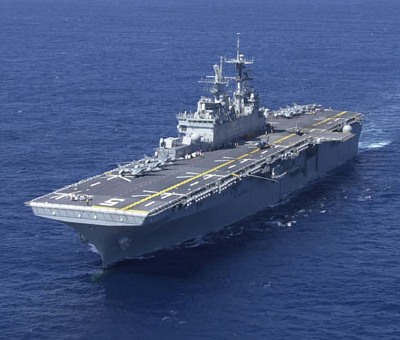
Multi-Purpose Amphibious Assault Ship (LHD) --- I served on the USS Bataan LHD-5 from 1999 to 2003. I met the ship early in her maiden deployment while she was in Israel; during that cruise we saw many ports. I saw the Enduring Freedom Cruise (2001-2002) as well. USS Bataan was the first ship I served on which received back-to-back Battle "E" awards, plus she earned numerous other fleet awards. She built up a solid reputation as the best LHD on the East Coast; I was able to earn dual warfare (ESWS and EAWS) designation during my tour, plus impart that knowledge to many shipmates. I made many friends onboard, and we still keep in touch.
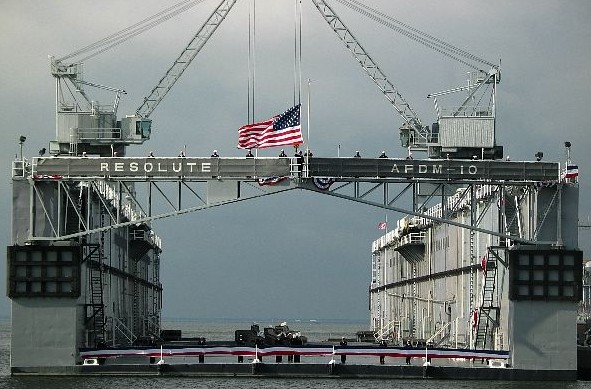
Auxiliary Medium Floating Drydock (AFDM) - A service craft used to drydock ships; I served on the Resolute AFDM-10, which was used to drydock submarines, from 2003 to 2004. I was proud to have been part of her final docking/undocking of a submarine and her subsequent deactivation.
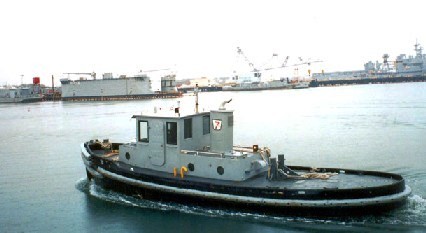
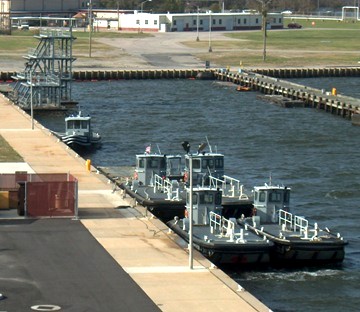
Yard Tug, Little (YTL) --- When I reported to Port Operations Little Creek in April 2004, the base still used a YTL along with the modifed LCM-6 boats to move barges and other objects in the harbor. YTL-711 was the last small tug in service on the East Coast. At one time there were quite a few of these tugs along with the YTBs, but due to outsourcing and budget cuts the Navy use of Navy harbor tugs has faded into the annals of history. On 28 April 2005 YTL-711 was sold to a private contractor, closing the long history of Navy tugs in the Hampton Roads, Virginia area.
FINAL CALL...
The sailor stood and faced his God
Which must always come to pass
He hoped his shoes were shining
Just as brightly as his brass.
"Step forward now, you sailor
How shall I deal with you?
Have you always turned the other cheek?
To My Church have you been true?"
The sailor squared his shoulders and said,
"No, Lord, I guess I ain't
Because those of us who carry guns
Can't always be a saint.
I've had to work most Sundays
And at times my talk was tough,
And sometimes I've been violent,
Because the world is awfully rough.
But, I never took a penny
That wasn't mine to keep...
Though I worked a lot of overtime
When the bills got just too steep,
And I never passed a cry for help,
Though at times I shook with fear,
And sometimes,
God forgive me, I've wept unmanly tears.
I know I don't deserve a place
Among the people here,
They never wanted me around
Except to calm their fears.
If you've a place for me here, Lord,
It needn't be so grand,
I never expected or had too much,
But if you don't, I'll understand."
There was a silence all around the throne
Where the saints had often trod
As the sailor waited quietly,
For the judgment of his God,
"Step forward now, you sailor,
You've borne your burdens well,
Walk peacefully on Heaven's streets,
You've done your time in Hell."
REFLECTIONS OF A BLACKSHOE by VAdm Harold Koenig, USN (Ret)
I like the Navy.
I like standing on the bridge wing at sunrise with salt spray in my face and clean ocean winds whipping in from the four quarters of the globe - the ship beneath me feeling like a living thing as her engines drive her through the sea. I like the sounds of the Navy - the piercing trill of the boatswains pipe, the syncopated clangor of the ship's bell on the quarterdeck, the harsh squawk of the 1MC and the strong language and laughter of sailors at work.
I like the vessels of the Navy - nervous darting destroyers, plodding fleet auxiliaries, sleek submarines and steady solid carriers. I like the proud sonorous names of Navy capital ships: Midway, Lexington, Saratoga, Coral Sea - memorials of great battles won. I like the lean angular names of Navy 'tin-cans': Barney, Dahlgren, Mullinix, McCloy - mementos of heroes who went before us.
I like the tempo of a Navy band blaring through the topside speakers as we pull away from the oiler after refueling at sea. I like liberty call and the spicy scent of a foreign port. I even like all hands working parties as my ship fills herself with the multitude of supplies both mundane and exotic which she needs to cut her ties to the land and carry out her mission anywhere on the globe where there is water to float her.
I like sailors, men from all parts of the land, farms of the Midwest, small towns of New England, from the cities, the mountains and the prairies, from all walks of life. I trust and depend on them as they trust and depend on me - for professional competence, for comradeship, for courage. In a word, they are "shipmates."
I like the surge of adventure in my heart when the word is passed
"Now station the special sea and anchor detail - all hands to quarters for leaving port", and I like the infectious thrill of sighting home again, with the waving hands of welcome from family and friends waiting pierside. The work is hard and dangerous, the going rough at times, the parting from loved ones painful, but the companionship of robust Navy laughter, the 'all for one and one for all' philosophy of the sea is ever present.
I like the serenity of the sea after a day of hard ship's work, as
flying fish flit across the wave tops and sunset gives way to night. I like
the feel of the Navy in darkness - the masthead lights, the red and green navigation lights and stern light, the pulsating phosphorescence of radar repeaters - they cut through the dusk and join with the mirror of stars overhead. And I like drifting off to sleep lulled by the myriad noises large and small that tell me that my ship is alive and well, and that my shipmates on watch will keep me safe.
I like quiet midwatches with the aroma of strong coffee - the lifeblood of the Navy - permeating everywhere. And I like hectic watches when the exacting minuet of haze-gray shapes racing at flank speed keeps all hands on a razor edge of alertness. I like the sudden electricity of "General quarters, general quarters, all hands man your battle stations", followed by the hurried clamor of running feet on ladders and the resounding thump of watertight doors as the ship transforms herself in a few brief seconds from a peaceful workplace to a weapon of war - ready for anything. And I like the sight of space-age equipment manned by youngsters clad in dungarees and sound-powered phones that their grandfathers would still recognize.
I like the traditions of the Navy and the men and women who made them. I
like the proud names of Navy heroes: Halsey, Nimitz, Perry, Farragut, John Paul Jones. A sailor can find much in the Navy: comrades-in-arms, pride in self and country, mastery of the seaman's trade. An adolescent can find adulthood.
In years to come, when sailors are home from the sea, they will still remember with fondness and respect the ocean in all its moods - the impossible shimmering mirror calm and the storm-tossed green water surging over the bow. And then there will come again a faint whiff of stack gas, a faint echo of engine and rudder orders, a vision of the bright bunting of signal flags snapping at the yardarm, a refrain of hearty laughter in the wardroom and chief's quarters and messdecks. Gone ashore for good they will grow wistful about their Navy days, when the seas belonged to them and a new port of call was ever over the horizon.
Remembering this, they will stand taller and say, "I WAS A SAILOR
ONCE. I WAS PART OF THE NAVY & THE NAVY WILL ALWAYS BE PART OF ME."
