
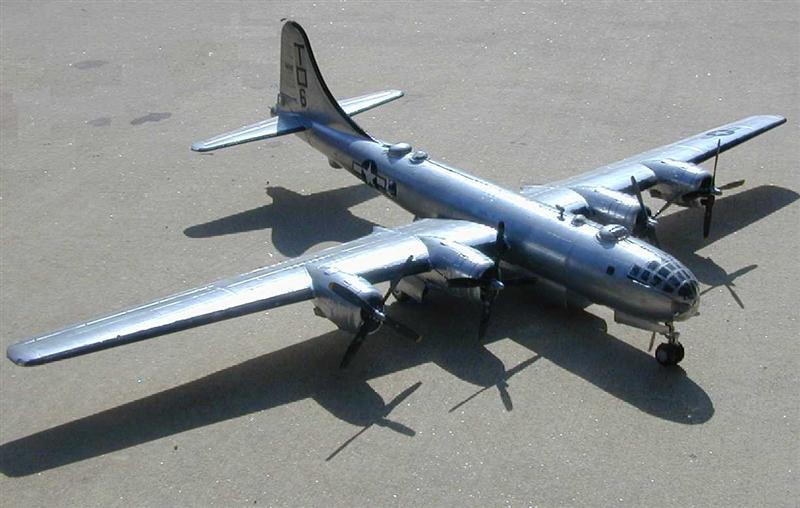
Boeing B-29 Superfortress
The B-29 Superfortress was the hugest bomber from World War II. Its payload of 20,000 pounds of bombs and range of over 4,000 miles let it drop huge amounts of bombs far from base. Although it was originally conceived in 1937, the first prototype did not fly until September 21, 1942. By the time it was into production, the war had turned over Germany and the Flying Fortresses were bombing Europe. So, the Superforts were sent to the Pacific theater. The first mission to bomb Japanese territory was commenced on June 15th, 1944. The bombers were based in China and India, but once the Mariana Islands had been cleared of the Japanese, the B-29s could operate there.
The B-29s bombed Japan frequently at high level. In June 1945, the B-29s, now launching from Okinawa, fire-bombed Tokyo. They flew at low level and each dropped 200 incindiary bombs (100 pounds each). Since Japanese buildings were made of paper and other flammable materials, the Superforts destroyed much of downtown Tokyo, and the resulting firestorm killed more than 200,000 people. On August 6th, and again August 9th one lone B-29 dropped the most destructive bomb ever dropped in combat: the Atomic Bomb.
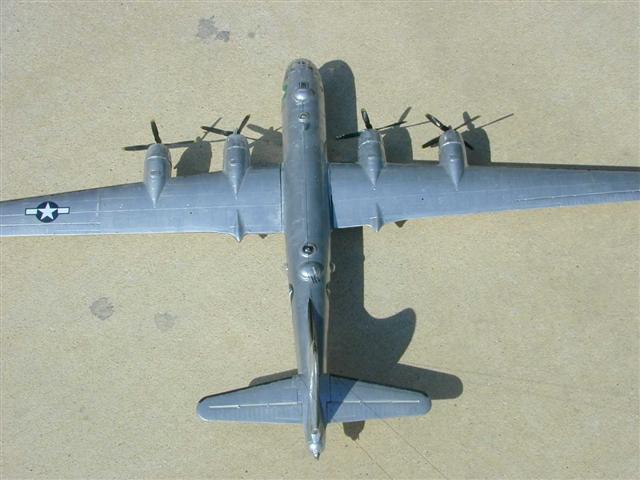
Superforts had not one, but two bomb bays to accomodate all munitions.
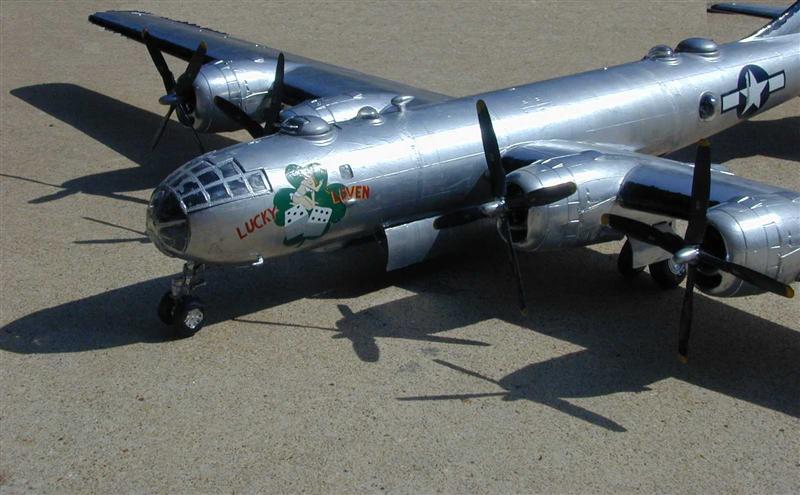
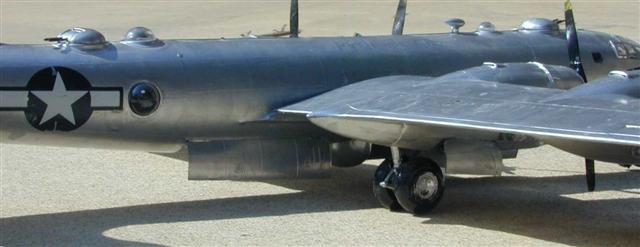
The fuselage is round because this was the first plane to be pressurized inside. That allowed it to fly much higher and without oxygen masks.
| Crew | 10 |
| Armament | Ten defensive machine guns and one 20 mm cannon in remotely operated turrets |
| Maximum Speed | 358 mph |
| Engine | 4 Wright R-3350-57 Cyclone engines |
| Other Weapons | 20,000 pounds of bombs |
| Uses | Used in the Pacific as a land-based strategic bomber |

